Best 4-Inch Duct Collar Options for HVAC Ducting
Answering the most common buyer questions, these 4-inch duct collars are designed to connect round ducts, improve airflow, and reduce leaks and noise in various HVAC, exhaust, and ventilation setups. This guide highlights five practical choices for different needs—from heavy-duty galvanized steel to flexible rubber couplings—so you can pick the best fit for residential, commercial, or industrial applications. Each product is described with its ideal user, key benefits, and any limitations to consider.
Summary Table
| Product | Best For | Material | Notes |
|---|---|---|---|
| Otoolling 2 Pcs 4 Inch Roof Vent Cap Duct Collar Connector | Residential kitchens and bathrooms needing backflow prevention | Stainless Steel | Curved cap design improves airflow and reduces noise |
| Hicarer 4 Inch Duct Connector Flange | Deeper insertion and secure connections in demanding HVAC runs | Galvanized Steel | Deep insert design enhances stability |
| PATIKIL 4″ Duct Connector Flange | General HVAC and wall/ceiling mounting with easy installation | Galvanized Iron | Mounting holes and durable coating |
| PATIKIL 4 Inch Duct Connector Flange (Grey) | Durable wall mounting in professional installations | Galvanized Iron | Multiple dimensions provided for precise fit |
| Lambro 244 4-Inch Aluminum Duct Connector | Lightweight, quick-connect ducting in US-made products | Aluminum | Durable and easy to handle |
Otoolling 4 Inch Roof Vent Cap Duct Collar Connector
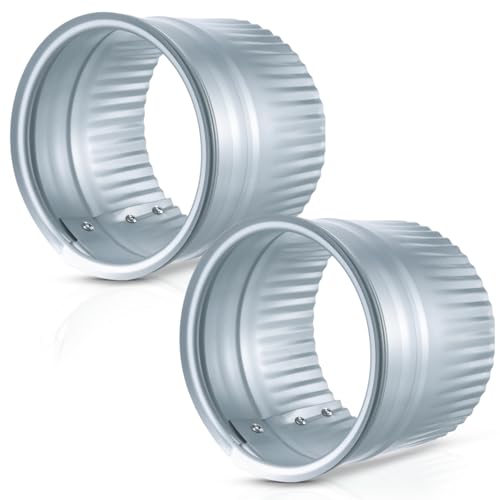
The Otoolling duct collar set provides a pair of 4-inch connectors compatible with most roof vent caps. Its curved cap design reduces wind resistance and accelerates airflow, which can help improve ventilation efficiency in kitchens, bathrooms, and attics. The design also aims to minimize backflow of noise and odors, supporting quieter operation. Best for homeowners upgrading duct runs where backdrafts and external wind intrusion are concerns.
Best for: Residential setups needing a simple, effective way to connect 4-inch ducts while reducing wind noise and backflow. Choose this if you want a compact, two-pack option that supports easy replacement or expansion.
Caution: Availability may vary with roof vent cap compatibility; confirm the exact cap style and flange diameter before purchase.
Hicarer 4 Inch Duct Connector Flange

The Hicarer flange is designed for 4-inch ducts and can connect flexible or rigid metal ducts, ideal for exhaust fans, dryer vents, and HVAC outlets. Made from galvanized steel, it offers durability, heat resistance, and corrosion protection, outperforming plastic alternatives in robust ventilation scenarios. The deep insert design enables more secure, long-lasting connections under higher airflow demands.
Best for: Projects requiring a sturdy, metal-to-metal connection with a deep insert for stability. If you need a long-lasting joint in a busy system, this is a solid choice.
Caution: The deep insert design requires precise alignment during installation; ensure flange positioning allows full insertion without kinking the duct.
PATIKIL 4 Inch Duct Connector Flange (Grey)

PatikIl’s grey galvanized iron duct connector flange offers a straightforward mounting solution with screw holes for easy attachment to walls, ceilings, or ducts. The flange base includes standard mounting holes and a durable galvanized coating, making it suitable for professional installations where stable, corrosion-resistant joints are needed. The product emphasizes ease of use through direct mounting and simple alignment.
Best for: Professionals seeking a reliable, easy-to-mount flange that can be quickly secured with screws. Choose this if you want a simple install with robust corrosion protection.
Caution: Ensure proper wall or duct access for mounting screws and verify overall dimensions to prevent clearance issues with adjacent components.
Lambro 244 4-Inch Aluminum Duct Connector
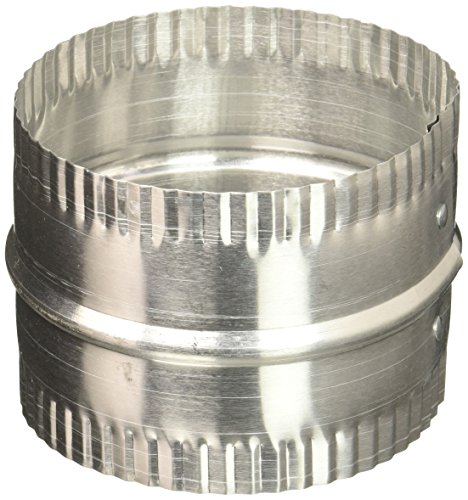
The Lambro 244 connector is a lightweight 4-inch aluminum option, manufactured in the United States. It is described as easy to use and highly durable, making it suitable for quick installations where weight is a consideration or where a metal-to-metal connection is preferred. Aluminum construction helps with corrosion resistance and ease of handling in tight spaces.
Best for: Projects prioritizing lighter weight and quick assembly in both residential and light commercial settings. If you need a fast, simple connector, this option is advantageous.
Caution: Aluminum connectors may not offer the same rigidity as steel in high-vibration environments; ensure the duct run is not subject to strong movement without additional stabilization.
Buying Guide
What to check before buying a 4-inch duct collar
- Duct material compatibility: Match the connector material (galvanized steel, stainless steel, aluminum, or rubber) to your duct type (rigid, flexible, or fabric).
- Insertion depth and flange design: Deeper inserts provide sturdier connections, while curved or streamlined collars can improve airflow and reduce noise.
- Mounting method: Some collars provide screw holes for surface mounting; others rely on direct duct connections. Ensure you have access for installation.
- Weather and environment: For outdoor roof vents, consider corrosion resistance and wind resistance features to minimize backdrafts and noise.
- Compatibility with existing components: Verify that flange OD/ID and mounting hole spacing match your existing ducts or fixtures.
Material and durability considerations
- Galvanized steel offers robust durability and corrosion resistance, suitable for harsher environments.
- Stainless steel provides excellent corrosion resistance, but at a higher cost.
- Aluminum is lightweight and easy to handle, ideal for quick installations or portable setups.
- Rubber couplings help seal connections and dampen vibrations but may wear faster in high-heat scenarios.
Installation tips for best results
- Prepare surfaces by cleaning edges and ensuring a clear path for insertion or mounting.
- Align duct ports carefully to avoid kinks or stress on the collar.
- Use appropriate fasteners or clamps to secure connections; avoid overtightening which could warp components.
- Test for leaks with a light air flow, listening for whistling or feeling for air leaks around joints.
Common pitfalls to avoid
- Choosing a collar that’s too short or too long for the intended insertion depth.
- Overlooking wind effects on roof-mounted collars in exposed locations.
- Using plastic connectors in high-temperature or high-humidity zones where metal collars perform better.
FAQ
- What defines a 4-inch duct collar?
A 4-inch duct collar typically refers to a connector designed to fit 4-inch diameter ducts and provide a flange or cap interface for joining components. - Which material is best for household ventilation?
Galvanized steel and aluminum are common due to durability and cost; aluminum is lighter, while galvanized steel offers strong performance for longer life. - Can I install a duct collar without professional help?
Many 4-inch collars are DIY-friendly if you have basic tools and follow mounting instructions, but complex roofs or high-pressure systems may require a pro. - Will a curved vent collar reduce noise?
Curved designs can help minimize wind-induced noise and backflow in certain configurations, particularly on roof vents. - How do I choose between a flange and a cap collar?
Flanges are ideal for mounting to walls, ceilings, or ducts; cap-style collars better suit roof vent connections and airflow guidance. - Are these collars compatible with both rigid and flexible ducts?
Many are; verify the exact product specifications for your duct type to ensure a secure fit.