Best 3 Foot Electric Baseboard Heaters for Quick Home Heating
When selecting a 3-foot electric baseboard heater, homeowners look for reliable warmth, easy installation, and safety features. This guide highlights five compatible options from Cadet and KING that deliver steady convection heat across compact spaces. Each option supports standard 3-foot room coverage and varies in voltage and wattage to fit different wiring setups. Use the buying guide to compare installation needs, safety features, and compatibility with existing thermostats.
Product Overview (selected models at a glance):
| Product | Brand | Wattage | Voltage | Key Benefit |
|---|---|---|---|---|
| Cadet F Series 3F750W (36″) | Cadet | 750 W | 240/208 V | Universal wiring, quick install |
| King 3K1207BW 750W (3′) | KING | 750 W | 120 V | Hard-wired, full-length safety cutout |
| King 3K2407BW (3′) 750-563W | KING | 750-563 W | 240/208 V | Hard-wired, versatile heat range |
| Cadet F Series 3F750-1W (36″) | Cadet | 750 W | 120 V | Thermostat compatible, sturdy construction |
| King 3K2405BW (3′) 750-563W | KING | 750-563 W | 277-240 V | Hard-wired, robust safety features |
Cadet F Series 3F750W (36″) Baseboard Heater
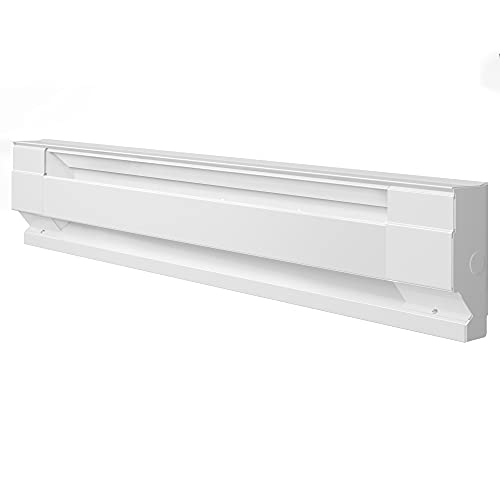
The Cadet F Series 3F750W baseboard heater provides a strong convection heat output at 750 W with 240/208 V options. It features universal wiring and pre-punched knockouts for straightforward installation, reducing wiring hassles during setup. The unit is designed to circulate warm air evenly, helping maintain consistent comfort in small to medium rooms. This model is a solid choice when a 3-foot footprint needs reliable, long-lasting performance and straightforward maintenance.
King 3K1207BW 750-Watt 120-Volt Baseboard Heater

This King 3K1207BW unit is a 750-watt heater designed for 120 V hard-wired operation. It emphasizes safety with a full-length safety cutout and a robust aluminum ribbon fin element to promote efficient heat distribution along the baseboard. It’s suitable for steady heating in compact rooms where a plug-in model is not preferred or required.
King 3K2407BW K Series Baseboard Heater (3′) 750-563W

The King 3K2407BW offers a versatile heat range between 750 W and 563 W with 240/208 V operation. It is designed for hard-wired installation, featuring an aluminum ribbon fin element and a full-length safety cutout. This model suits rooms that require flexibility in heat output across different seasons or room sizes.
Cadet F Series 3F750-1W Baseboard Heater (36″)
The Cadet 3F750-1W is a 750 W, 120 V model designed for simple thermostat integration. Its 25-gauge steel construction and 20-gauge junction box with grounding support durable installation. All-metal construction and powder coating provide long-lasting performance in residential settings. This option is ideal when a 120 V solution with straightforward thermostat control is needed.
King 3K2405BW K Series Baseboard Heater (3′) 750-563W

The 3K2405BW model is designed for 277-240 V operation with 750-563 W heat range and hard-wired installation. Like other K Series units, it includes an aluminum ribbon fin element and a full-length safety cutout for enhanced protection. This heater is suitable for homes or spaces that require higher voltage compatibility and robust safety features.
Buying Guide
Key considerations when choosing a 3-foot electric baseboard heater include voltage and wiring compatibility, heat output range, installation method, and safety features. For homes with existing 120 V circuits, consider plug-in or hard-wired options with appropriate thermostats. In rooms with higher heating demands or multiple zones, models offering a 750 W baseline with an adjustable range (750-563 W) provide flexibility across seasons. Safety features to look for include full-length safety cutouts and sturdy metal construction. Universal wiring and pre-punched knockouts can simplify installation and reduce labor costs. Finally, verify size compatibility with the space directly behind or beside furniture to ensure proper clearance and efficient heat distribution.
- Voltage compatibility: match the heater’s voltage to your home’s electrical supply.
- Heat output range: select a model with a suitable wattage range for your room size.
- Installation method: determine whether a plug-in or hard-wired setup is required.
- Safety features: prioritize full-length cutouts and durable construction.
- Thermostat integration: ensure compatibility with your preferred thermostat controls.