Best 3/4 HP Blower Motors for HVAC Systems and Furnaces
Answering common buyer needs: this guide highlights 3/4 HP blower motors that fit residential furnaces, air handlers, and light commercial equipment. It compares five solid options, noting ideal buyers for each, installation notes, and practical cautions. Use these details to pick a motor that matches horsepower, voltage, frame size, and RPM for smooth, reliable airflow.
Summary table of selected products:
| Product | HP | RPM | Voltage | Frame | |
|---|---|---|---|---|---|
| VEVOR 3/4HP Furnace Blower Motor | 0.75 | 1075 | 208-230V | 48 | CW/CCW |
| DL1076 Blower Fan Motor (SEAHEE) | 0.75 | 1075 | 115V | 48 | Not specified |
| Diversitech 6207E Evergreen EM ECM | 0.75 | 1075 | 208-230V | Unknown | ECM (Electronic) |
| CHIOWO DL1076 Blower Fan Motor | 0.75 | 1075 | 115V | 48 | Not specified |
| ClimaTek Upgraded Furnace Blower Motor | 0.75 | 1075 | 115V | Not stated | Not specified |
VEVOR 3/4HP Furnace Blower Motor

Reference features: 3/4 HP, 1075 RPM, 5 speeds, 208-230V, 48 frame, 0.5″ shaft, 4.8″ shaft length, CW/CCW rotation, includes a 10μF/450V capacitor and hold hoop. This motor is designed for direct-drive blowers in residential and light commercial furnaces and air handlers.
Best for: Homeowners upgrading a conventional 3/4 HP blower that runs at 208-230V and needs flexible RPM control. It suits users seeking a direct-drive replacement with multiple speed options and a CW/CCW option for installation versatility.
Why selected: It provides a full 0.75 HP rating with a robust 5-speed range, useful for dialing in airflow and noise. The 48 frame with a 0.5″ shaft matches common furnace configurations while staying compatible with standard circuitry via a 10μF capacitor.
Caution: Verify that the nameplate horsepower and electrical specs match your existing system to avoid mismatches in start-up current or fan performance.
DL1076 Blower Fan Motor (SEAHEE)

Reference features: 3/4 HP, 1075 RPM, 115V, 9.5A, 48-frame design, 1/2″ shaft with 4-1/2″ shaft length, direct replacement for multiple brands, includes a 15μF capacitor.
Best for: Those replacing a wide range of legacy brands (Carrier, Fasco, GE, Marathon, Rheem, Emerson) with a 48-frame motor, especially when you need broad compatibility across control boards and harnesses.
Why selected: Its broad compatibility reduces the need for adapter wiring or extensive reconfigurations. The 15μF capacitor supports reliable starting and running in standard HVAC systems.
Caution: Check if your system requires a higher or lower capacitor value; incorrect capacitor sizing can affect starting reliability and motor longevity.
Diversitech 6207E Evergreen EM ECM
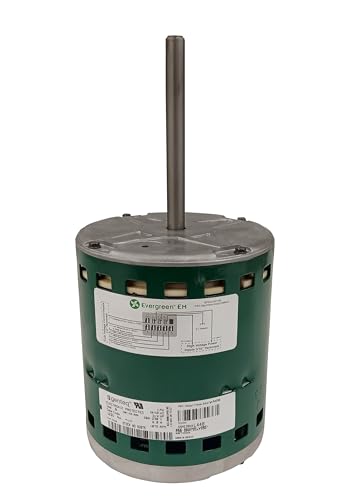
Reference features: ECM blower motor, 3/4 HP, 208V, 1075 RPM. Classified as an electronically commutated motor designed for energy efficiency, commonly used in residential and light commercial installations.
Best for: Installers prioritizing energy efficiency and ECM technology to reduce operating costs and improve control precision in HVAC systems.
Why selected: ECM technology can offer smoother variable speeds and better efficiency compared to PSC motors, which can help with zoning and airflow balancing.
Caution: ECM motors may require compatible drive electronics and controls; verify compatibility with your furnace or air handler fan circuit before purchase.
CHIOWO DL1076 Blower Fan Motor

Reference features: 3/4 HP, 1075 RPM, 3 speeds, 115V, 9.5 A; compatible with major brands including A.O. Smith, Fasco, GE, Marathon, Rheem, Emerson, and many others per model lists.
Best for: Replacement in systems with a long compatibility list, where the motor can substitute multiple brand models without extensive wiring changes.
Why selected: The extensive compatibility makes it a versatile choice for older units with varied model numbers, reducing the chance of incompatible fitment.
Caution: Always confirm exact shaft diameter and mounting dimensions (frame and shaft) to ensure a perfect physical fit in your blower housing.
ClimaTek Upgraded Furnace Blower Motor

Reference features: 3/4 HP, 1075 RPM, 115V, replaces GE Genteq 5KCP39NGZ205S and similar numbers; brand claims strong replacement part quality.
Best for: Users seeking a modern replacement that aligns with common GE/Genteq part numbers and known cross-compatibility in older furnaces.
Why selected: This option emphasizes straightforward cross-compatibility with several well-known part codes, simplifying ordering and installation for standard requests.
Caution: Verify the exact replacement part number required by your system; mismatch in model numbers can lead to fit or performance issues.
Buying Guide: Key Considerations For 3/4 HP Blower Motors
Choosing the right 3/4 HP blower motor hinges on several practical factors. Use these questions to compare options and determine fit for your HVAC system.
- What is the furnace or air handler’s voltage requirement? Common values are 115V or 208-230V. Choose a motor that matches your equipment’s electrical supply.
- Is your system wired for a standard PSC motor or an ECM/EC motor? ECMs offer energy efficiency and smoother speed control, but may require compatible controls.
- What is the frame size and shaft dimensions? Most 3/4 HP residential units use a 48-frame with a 1/2″ shaft; verify shaft length and mounting hole alignment for a clean install.
- How many speeds do you need? Five-speed or three-speed options provide more granular airflow control and noise mitigation.
- Is there a need for a capacitor value? Some motors include a specific capacitor (e.g., 10μF, 15μF) that must match the control circuit for reliable start-up.
- What is the physical fit in the blower housing? Check diameter, shaft length, and overall motor depth to ensure it will clear housing supports and pulleys or belts if applicable.
- What brands or cross-compatibility matters? If replacing a legacy unit, broad compatibility reduces the risk of non-fitting parts.
Frequently Asked Questions
- What does 3/4 HP mean for blower performance?
HP (horsepower) indicates the motor’s rated power. A 3/4 HP motor provides balanced airflow for standard residential furnaces and air handlers, enabling adequate air movement without excessive energy use.
- What is the difference between PSC and ECM blowers?
PSC motors run at fixed speeds with simple on/off control, while ECM motors are electronically controlled and can adjust speed for efficiency and precise airflow. ECMs may require compatible controls.
- How important is frame size when replacing a blower motor?
Very important. The 48-frame size with a 1/2″ shaft is common for 3/4 HP units. Mismatched frame or shaft dimensions can prevent proper mounting and alignment.
- Is capacitor size critical when replacing a motor?
Yes. Some motors include a capacitor (for example, 10μF or 15μF). Using an incorrect capacitor can hinder starting and running performance.
- Can I reuse existing wiring and controls with a direct replacement?
Often, yes for PSC motors with similar control schemes. For ECM motors, control compatibility is more critical and may require new drive electronics.
- What should I consider about motor rotation direction?
Most installations require clockwise or counterclockwise rotation based on the blower wheel and housing. Verify rotation direction before wiring to avoid improper airflow or motor damage.