Best 2.5 Ton AC Split System Options for Medium Rooms
Answering the common buyer question: which 2.5 ton split-system choices fit medium-sized spaces and energy goals? This guide highlights five practical models for American homes, focusing on efficiency, installation needs, and typical use cases. Each product is described with its strengths, best-for scenarios, and a clear caveat to help you compare quickly. Whether you need a full outdoor compressor with evaporator, a versatile inverter system, or a simple central unit, these selections cover inverter, multi-position coil, R32 or R454B refrigerants, and compatible back-up heating options for year-round comfort.
Overview at a glance. The table summarizes key buyer considerations for the five selected 2.5-ton split-systems.
| Product | Best For | Notes |
|---|---|---|
| MRCOOL VersaPro 2.5 Ton | Mid-size homes needing efficient cooling with DIY line set | 15.2-18.8 SEER2, DC inverter |
| ACiQ Essentials 2.5 Ton 18 SEER2 | Energy-conscious buyers seeking inverter control | Inverter with multi-position capabilities |
| ACiQ 2.5 Ton 15.2 SEER2 Split System | Balanced efficiency and cost | Multi-position evaporator coil |
| Goodman 2.5 Ton 14.3 SEER2 Partial Split | Intermediary upgrade with coil integration | Requires compatible furnace/blower for full system |
| ACiQ 2.5 Ton 14.3 SEER2 Condenser Unit | Condenser-only upgrade for existing systems | Central cooling focus; simple replacement |
MRCOOL VersaPro 2.5 Ton Ducted Heat Pump Split System

Best for: Homeowners seeking a versatile, DIY-friendly option with strong cooling efficiency. The VersaPro delivers 2.5 tons of cooling with a 15.2-18.8 SEER2 range and DC inverter technology for smoother temperature control and potential energy savings. This unit is suitable for medium-sized spaces and climates where precise comfort matters. It is also designed for multiposition installation, which helps fit awkward layouts.
Why selected: It combines reliable cooling capacity with modern inverter efficiency, and its pre-charged line-set reduces installation complexity for DIY setups. The higher SEER2 potential supports long-term energy savings in medium rooms.
Limitations: The data emphasizes cooling efficiency and inverter operation; specific local compatibility and installation requirements should be reviewed before purchase. Also, the unit’s performance depends on proper ducting and air distribution in your space.
ACiQ 2.5 Ton 14.3 SEER2 Central Air Conditioner Split System
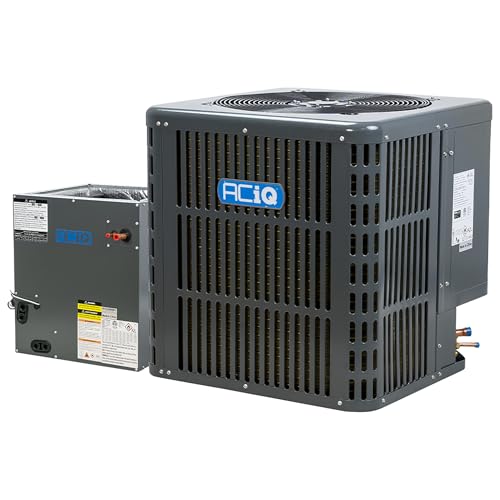
Best for: Buyers needing a straightforward 2.5-ton central system with solid cooling capacity for small-to-medium homes. This model provides a 14.3 SEER2 rating suitable for steady energy performance and reliable central cooling. The included components help ensure dependable operation and AHRI-certified performance with R32 compatibility.
Why selected: It offers a balanced blend of cooling power and efficiency, suitable for homes replacing older 2.5-ton units without inverter complexity. The R32 refrigerant helps keep energy use in check while maintaining cooling reliability.
Limitations: It is a single-stage setup, which may be less quiet or precise than inverter models during rapid load changes. Ensure your ductwork and air handler compatibility align with the unit requirements.
ACiQ Essentials 2.5 Ton 18 SEER2 Inverter Split System
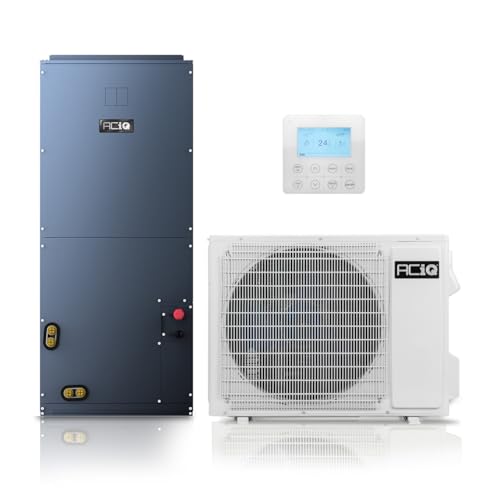
Best for: Homes where energy savings and precise temperature control are priorities. The Essentials model employs inverter technology to modulate power in response to demand, delivering steady comfort and potentially lower electricity bills. It supports multi-position evaporator coils for flexible installation.
Why selected: High SEER2 rating at 18 makes it one of the more energy-efficient options in this set. Inverter operation helps reduce temperature swings and can improve overall comfort in variable climates.
Caution: Inverter systems can have higher upfront costs and more complex servicing. Ensure qualified installation for best performance and warranty compliance.
1HVAC ACiQ 2.5 Ton 14.5 SEER2 Central Heat Pump Split System
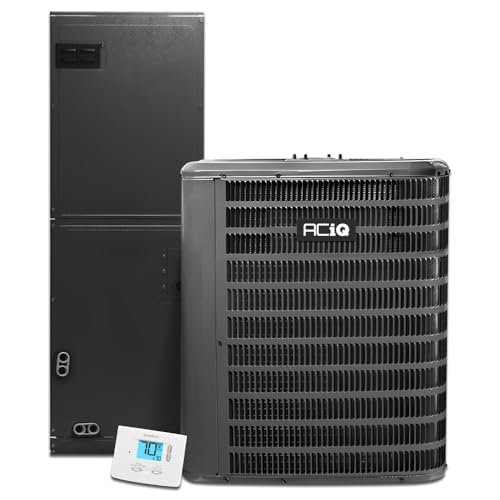
Best for: Buyers seeking a combination heat pump system with an economical cooling option and practical back-up heat support. This unit features a 14.5 SEER2 rating and a multi-position evaporator coil, suitable for homes needing reliable year-round climate control.
Why selected: The model emphasizes cost-effective operation with central heating and cooling in a single system. It also includes a factory-installed TXV kit and an all-aluminum evaporator for efficiency improvements.
Limitation: This option may require careful integration with existing ductwork and may depend on compatible backup heating solutions for winter months.
ACiQ 2.5 Ton 14.3 SEER2 Central Unit Condenser

Best for: Homeowners upgrading an existing 2.5-ton system who need a dedicated condenser unit. This condenser-focused option centers on cooling capacity with a reliable 14.3 SEER2 rating and R32 refrigerant for efficiency.
Why selected: It is a straightforward upgrade path for replacing the outdoor portion of an existing split system, especially when paired with an appropriate indoor air handler. The focus on cooling performance makes it a practical choice for mid-sized homes.
Limitation: Condenser-only units require compatible indoor units and ductwork; ensure you have or plan for a matching air handler to complete a full system.
Buying Guide: Two-Tier Considerations for 2.5 Ton Split Systems
- Energy efficiency vs. upfront cost: Inverter (variable-speed) models typically offer higher SEER ratings and potential long-term savings, but may have higher initial costs. Choose inverter models for variable climates and frequent temperature changes.
- Refrigerant type and environmental impact: R32 and R454B refrigerants have different pressures and global-warming potentials. Verify local regulations and compatibility with your existing ducting and outdoor unit.
- System type and integration: Consider whether you want a full split system with a furnace or heat pump backup. For existing furnaces, a compatible heat kit or coil may be necessary.
- Installation approach: DIY line-set options can reduce labor costs but require careful handling and potential warranty implications. Professional installation is essential for complex configurations, refrigerant charging, and system performance.
- Space and layout: Multiposition coils and duct adaptability help in tighter spaces or unconventional room layouts. Ensure adequate airflow and duct design to realize rated capacity.
- Back-up heating and climate: If you live in colder regions, models with integrated or compatible back-up heat are advantageous. Review operating temperature ranges for cooling and heating.
Frequently Asked Questions
- What does SEER2 mean, and why does it matter? SEER2 reflects efficiency in cooling. Higher numbers indicate better energy efficiency over a typical cooling season, which can lower operating costs.
- Is inverter technology worth it for a 2.5-ton system? Yes for variable climates or homes with fluctuating cooling needs. It provides smoother temperature control and can save energy over time.
- Do I need a new thermostat with these systems? Many models include thermostats or kits, but some may require an additional thermostat to maximize energy savings and control features.
- Can I install these systems myself? Some models offer DIY-friendly components, but refrigerant handling and system charging typically require a licensed HVAC technician to meet safety and warranty requirements.
- What refrigerants are used in these units? Common options include R32 and R454B. Check local regulations and compatibility with your existing equipment.
- Which 2.5-ton option is best for a small to medium home? For a balance of cost and efficiency, consider ACiQ Essentials 2.5 Ton 18 SEER2 or the ACiQ 2.5 Ton 15.2 SEER2 for strong efficiency with reliable cooling.