Best 1/4-Inch Refrigeration Access Valves for HVAC and AC Systems
Answering the needs of HVAC technicians and serious DIYers, these 1/4″ refrigeration access valves are designed for pressure testing, refrigerant charging, and system servicing. This guide highlights five solid options across brass-copper builds, compact stems, and durable cores. Pick the model that best fits your refrigeration or air conditioning setup, whether you need a compact 1.6″ stem or a longer 2.95″ stem for hard-to-reach connections. Each pick is evaluated for best use cases, ease of use, and potential limitations to aid a clear buying decision.
| Product | Best For | Key Benefit |
|---|---|---|
| AUTOKAY 10PCS | Pro kits needing multiple valves | Comprehensive 10-piece set, 1/4″ SAE x 1/4″ OD x 2.75″ stem |
| BesNPT Brass & Copper (Pack of 2) | Budget-friendly pairs | Double-pack, 1.6″ stem, robust brass/copper |
| YTFRL 10 PCS | Maintenance on various systems | Brass and copper, 2.95″ stem, reliable sealing |
| FANOVO 20Pack | High-volume service | 20 valves, 4.7″ length, thickened design |
| WISSCOOL 10PCS | Standard kit with reliability | 2.5″ stem, spring-loaded core |
AUTOKAY 10PCS Stem HVAC AC Schrader Kit
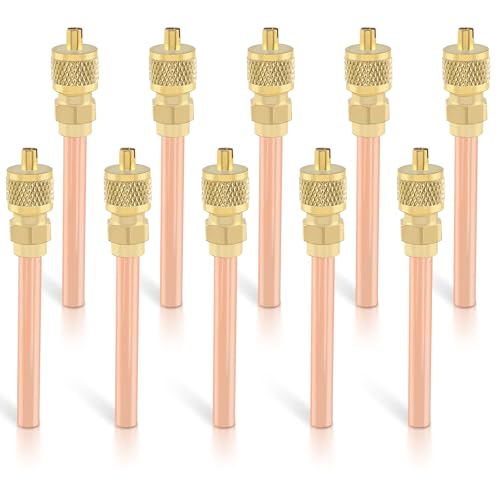
Best for: technicians who need a complete starter or replacement kit for 1/4″ systems. The 10 valves cover common service tasks, including vacuum, charging, and leakage checks. The core is a spring-assisted poppet design, threaded into the stem, with a cap and valve core remover for quick maintenance. Use this when you require a broad selection in one purchase and easy access to spare cores.
Limitation: as a multi-valve kit, some users may prefer individual valves tailored to specific lengths for tight spaces.
BesNPT Brass & Copper 1/4″ Valve Set (Pack of 2)

Best for: budget-conscious buyers needing two reliable valves for basic service tasks. These 1.6″ stem valves are made from brass and copper with good high-temperature and anti-freeze capabilities. The self-contained stem opens to admit gas while staying sturdy under typical HVAC workloads. Ideal when you want a dependable pair for routine maintenance or cross-checking during service.
Limitation: shorter stem length may limit access in deeper compressor outlets or crowded engine bays; verify fit before installation.
YTFRL 10 PCS Service Access Valve
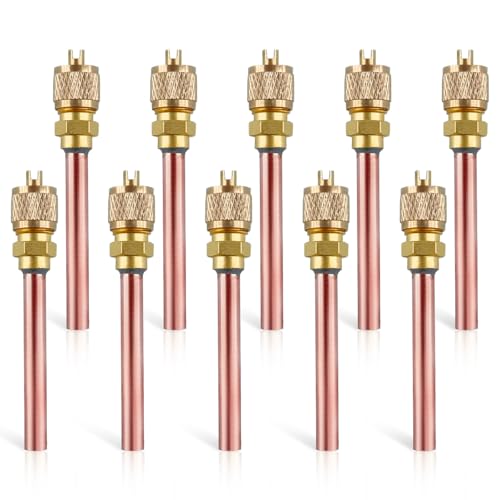
Best for: technicians needing reliable sealing and corrosion resistance across multiple systems. The set uses premium brass and copper, with a 2.95″ stem length that facilitates access in constrained spaces. The design supports pressure testing and refrigerant charging while protecting the system from dirt and water intrusion.
Limitation: longer stems may not fit compact units; measure access point clearance before purchasing.
FANOVO Service Access Valve 20Pack

Best for: shop environments or service teams needing bulk valves for continuous maintenance. Each valve is 1/4″ SAE x 1/4″ OD with a 4.7″ length and a thickened body for added durability. This kit is well-suited for field technicians who perform frequent service on multiple units and want rapid accessibility.
Limitation: bulk packaging may increase inventory management needs and require organization to avoid misplacing fittings.
WISSCOOL 10PCS HVAC Service Valves
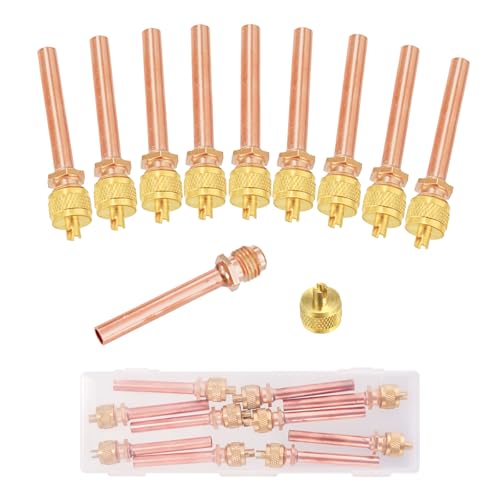
Best for: standard service kits requiring dependable core operation. These 1/4” SAE x 1/4” OD valves feature a 2.5” stem and a spring-loaded valve core for quick cycling during evacuations and charging. The kit is a practical middle-ground choice with clear size specs.
Caution: verify stem length matches your system’s service port to avoid fit issues during use.
Buying Guide
What to ask before buying: Is the valve length appropriate for your service ports? Do you need a bulk kit for ongoing work, or a smaller set for occasional maintenance? Are you servicing high-temperature applications where brass and copper corrosion resistance matters?
- Size and length: Ensure the 1/4″ SAE port and the stem length fit your equipment, especially in tight spaces.
- Material: Brass and copper offer good durability and heat resistance; assess compatibility with refrigerants used in your system.
- Sealing quality: A reliable seal minimizes leaks and protects the system’s cooling efficiency during maintenance.
- Core design: Spring-loaded cores enable quick opening and closing, improving service throughput.
- Pack size: Choose a kit size that aligns with your workflow—single valves for specific tasks or larger sets for teams.
Usage considerations: Use protective caps and core removers to maintain valve life. When replacing valves, confirm thread compatibility and ensure the system is safe to work on, with precautions for refrigerant handling in your jurisdiction. For high-demand environments, opt for thicker stems and corrosion-resistant materials to reduce replacements and downtime.
FAQ
- What is a 1/4″ refrigeration access valve used for?
It provides controlled access to refrigerant lines for pressure testing, charging, and evacuation during service.
- Do longer stems matter for service valves?
Yes. Longer stems reach deeper ports or crowded areas; shorter stems save space but may limit access.
- Are brass valves better than copper?
Both materials offer durability; brass often provides higher corrosion resistance in some environments, while copper is lightweight and easy to machine.
- Can I buy valves in bulk for a shop?
Yes. Bulk kits like the 20-pack are designed for technicians performing frequent servicing on multiple units.
- What should I check before installing a service valve?
Verify port size, stem length, and compatibility with refrigerant systems. Ensure proper sealing and follow safety guidelines for refrigerant handling.
- Are these valves compatible with all HVAC systems?
Most are designed for standard 1/4″ SAE ports, but always confirm port type, thread, and stem length for your specific model.