Best Attic Fan for Hip Roofs: Top Picks for Efficient Ventilation
Choosing the right attic fan for a hip roof can improve comfort and reduce energy costs by improving attic ventilation. The following five models are selected for their high airflow, durability, and compatibility with hip roof installations. Each product includes a built-in relay, thermostat control, or energy-saving features that help manage attic temperatures effectively.
| Product | Brand | Airflow (CFM) | Key Feature |
|---|---|---|---|
| ERV6BL Powered Roof Mount Attic Fan | Master Flow | 1500 | Thermostat/Humidistat control |
| ERV6BLHT Powered Roof Mount Attic Fan | Master Flow | 1500 | Humidistat with thermostat and built-in screen |
| PT6 1000 CFM Power Roof Mount Attic Vent | Master Flow | 1000 | Low energy use, galvanized steel |
| Quietcool AFR PRO-1.3 | Quietcool | 1266 | Two-speed, plug-and-play |
| Cool Attic CX1600 Gable Mount | Cool Attic | 1600 | 4.5-Amp motor, attic spaces up to 2,400 sq ft |
Note: All options are suitable for gable-style or hip-roof installations, offering robust airflow to reduce heat buildup, protect shingles, and improve overall home comfort during hot months.
Master Flow ERV6BL 1500 CFM Roof Attic Fan

The ERV6BL model from Master Flow is designed to cool attics up to 2,800 square feet with a high airflow capacity of up to 1,500 CFM. It uses galvanized steel construction for durability and includes a built-in screen to deter pests. The thermostat controller helps optimize cooling by turning the fan on as temperatures rise, supporting energy efficiency on sunny days.
Key considerations
- Suitable attic size up to 2,800 sq ft
- Galvanized steel construction for rugged use
- Built-in screen for protection and durability
Master Flow ERV6BL Weathered Wood Roof Attic Fan

This version emphasizes a weathered wood aesthetic while delivering the same high airflow (up to 1,500 CFM) and attic coverage. It integrates with energy-saving operations and remains suitable for large hip-roof installations where appearance matters as well as function.
Master Flow 1000 CFM Power Roof Mount Attic Vent Fan

This 1000 CFM model focuses on energy-efficient operation with up to 55% less electricity usage compared to conventional vents. Its galvanized steel construction supports durability for hip roof installations, and the unit helps reduce overall heating and cooling costs by improving attic ventilation.
Quietcool AFR PRO-1.3 Roof Mount Attic Fan

The Quietcool AFR PRO-1.3 offers a resilient two-speed operation with a 1,266 CFM rating. Its design emphasizes a one-piece stamped steel hood and cylindrical housing, along with UV-resistant paint to protect against sun exposure. The unit is well-suited for hip roofs where quiet operation and durable exterior finishes are valued.
Cool Attic CX1600 Gable Mount Power Attic Ventilator
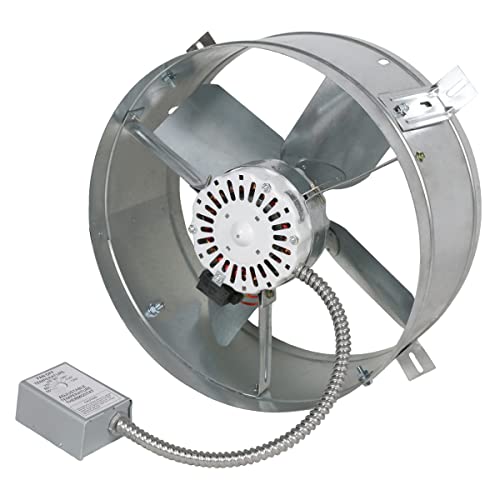
The CX1600 model from Cool Attic delivers up to 1,600 CFM for robust attic cooling. It uses a 4.5-amp motor and is designed for attic spaces up to 2,400 square feet. It includes a 14-inch blade and is suitable for hip roof configurations that require strong airflow with reliable thermostat control to maintain comfortable indoor conditions.
Buying Guide
Key purchase considerations for attic fans used on hip roofs include airflow needs, energy efficiency, durability, and installation compatibility with gable or hip designs.
- Airflow capacity (CFM): Match the fan’s CFM to attic size. Larger attics need higher CFM for effective cooling, but oversized fans can waste energy.
- Control features: Thermostats and humidistats help automate operation. Look for models with built-in sensors and external thermostats if you plan to tie the fan into broader HVAC strategies.
- Construction and durability: Galvanized steel housings resist corrosion in outdoor installations. Some models offer powder-coated finishes for additional weather resistance.
- Installation compatibility: For hip roofs, ensure the unit is designed for gable mount or roof-mount configurations and fits existing louver spaces or vent openings.
- Noise levels: Consider models with quiet operation, especially for bedrooms or living spaces near the attic access.
- Energy impact: Compare energy use and potential electricity savings. Units claiming up to 50–60% less electricity than older vents can provide meaningful long-term savings.
- Maintenance: Built-in screens or protective housings reduce debris entry. Easy access for blade cleaning and motor inspection is beneficial over time.
- Warranty and support: Favor brands offering robust warranties and accessible customer support for hip roof installations where weather exposure matters.
When selecting among these options, consider attic size, climate, existing insulation levels, and whether you want an automatic thermostat-based approach or a simpler, manual operation. A balanced choice will deliver consistent attic cooling without excessive energy use, benefiting both comfort and roof longevity in homes with hip roofs.