Best Gas Unit Heaters for Garages and Workshops
When choosing a gas unit heater for a garage or workshop, efficiency, venting options, and reliable performance matter most. The following list highlights five top choices that balance BTU output, versatility, and ease of installation. Each product section includes practical details drawn from typical specs to help you compare at a glance.
| Product | Brand | BTU | Coverage |
|---|---|---|---|
| Mr. Heater F260550 Big Maxx MHU50NG | Mr. Heater | 50,000 | Up to 1,250 sq. ft. |
| Mr. Heater F260560 Big Maxx MHU80NG | Mr. Heater | 80,000 | Up to 2,000 sq. ft. |
| Reznor UDXC-60 | 1HVAC | 60,000 | Large garages and shops |
| Modine HD45AS0111 Natural Gas Heater | Modine | 45,000 | Residential/commercial spaces |
| ProCom MN300TBA-B | ProCom | 30,000 | Smaller spaces up to ~1,400 sq. ft. |
Mr. Heater Big Maxx 50,000 BTU Gas Heater
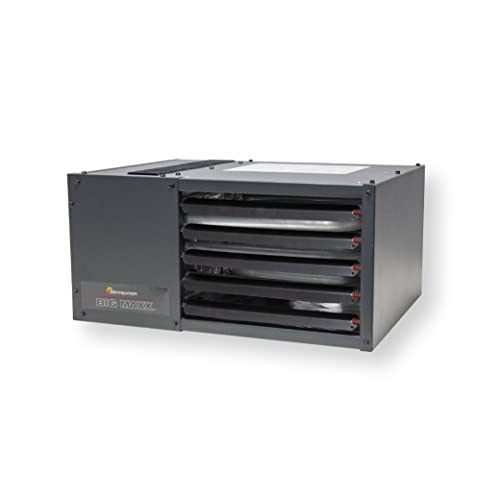
This unit delivers 50,000 BTU per hour, efficiently heating spaces up to about 1,250 square feet. It supports flexible venting with a powered exhaust, allowing vertical or horizontal venting to fit most garage layouts. An accessible thermostat and gas connection outside the unit simplify installation and service. The compact design helps conserve space in tight garages while delivering dependable warmth when temperatures drop.
Key considerations include venting options and exterior access, which streamline maintenance. The unit’s heating capacity suits mid-size garages or large workshops without excessive energy use. For safety and reliability, ensure proper clearance and venting per local codes, especially in well-insulated spaces where heat loss can affect performance.
Mr. Heater Big Maxx 80,000 BTU Gas Heater
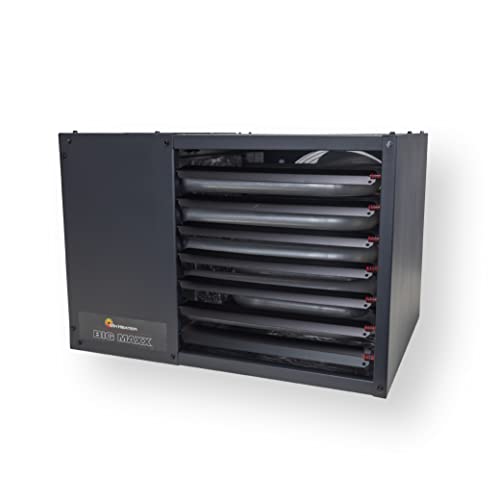
The 80,000 BTU model covers up to roughly 2,000 square feet, making it a strong choice for larger garages or multi-zone workshops. It ships with mounting hardware and supports common venting configurations, though thermostat and regulator components are typically separate purchases. The footprint is larger than the 50K model but remains within a garage-friendly profile for many users.
Pros include high heating capacity and flexible venting. Potential downsides involve the need for precise clearances and a robust vent run to maximize efficiency. For spaces with cooler winters or higher heat demand, this model can provide rapid warmth start-up, reducing cooldown times after door openings.
Reznor UDXC-60 Gas Unit

The Reznor UDXC-60 is a 60,000 BTU indoor gas heater designed for garages, shops, and light industrial spaces. It features strong performance with an 83% thermal efficiency rating and supports ceiling-mounting or wall mounting with optional hardware. This unit is well-suited for larger spaces requiring steady heat output and durable operation in demanding environments.
Ventilation and mounting options are central to maximizing efficiency. Ceiling mounting helps keep heat evenly distributed and out of the way of workspace. When installing, follow manufacturer guidelines for clearances, venting, and mounting hardware to ensure safe operation in a garage or shop setting.
Modine HD45AS0111 45,000 BTU Natural Gas Heater
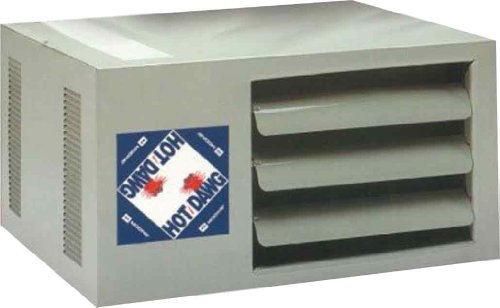
The Modine 45,000 BTU heater is designed for residential and light commercial use, with a low-profile design and a neutral gray finish. It emphasizes quiet operation and reliability in compact spaces. This makes it suitable for garages that require unobtrusive heat with solid performance during cold months.
Consider pairing with proper ventilation and an appropriate thermostat system to modulate heat delivery efficiently. The unit’s footprint and lower BTU output are ideal for smaller workshops or garages with moderate heating needs, ensuring energy-efficient operation without sacrificing comfort.
ProCom MN300TBA-B Natural Gas Heater

The ProCom MN300TBA-B offers 30,000 BTU and heats spaces up to about 1,400 square feet. It uses a blue flame design, which can be appealing for office or living areas adjacent to a garage. A thermostat control supports High/Medium/Low settings, and the unit includes mounting options for wall or floor placement, making it versatile for various garage layouts.
In terms of suitability, this model works well for smaller garages or workshops with moderate heat needs. It provides a balance between heat output and energy efficiency, while the optional wall or floor mounting allows flexible installation to maximize space usage in your workspace.
Buying Guide: Key Considerations For Gas Garage Heaters
- BTU and space coverage: Match the heater’s BTU to your garage size and insulation. Bigger spaces require higher outputs to maintain comfortable temperatures.
- Ventilation and venting options: Decide between vertical or horizontal venting and ensure you have a safe, compliant vent route. Some models support powered exhaust for easier venting installation.
- Installation flexibility: Ceiling-mount, wall-mount, or floor placement options affect heat distribution and workspace layout. Consider the space above your vehicles or workbenches when planning mounting.
- Thermostat control: Look for built-in thermostats or compatible external controls. Adjustable settings help manage energy use and comfort year-round.
- Efficiency and operating costs: An 80%+ thermal efficiency rating typically translates to lower fuel waste and cooler surfaces in the space, which is important for long garage sessions.
- Gas type compatibility: Confirm whether the unit supports natural gas or propane (LP). Some models are dedicated to one fuel type and may require conversion kits or separate components.
- Noise and airflow: Consider units with quieter fans for a comfortable workspace. Proper airflow reduces cold drafts and improves heat uniformity.
- Maintenance access: Exterior access to gas connections and thermostats simplifies servicing and winterization. Exterior access to essential components can save labor during setup.
- Code compliance: Follow local building and venting codes. Proper installation by a qualified professional helps ensure safety and warranty validity.
- Price versus durability: While higher BTU units cost more upfront, they often deliver longer service life in demanding workshop environments. Weigh upfront costs against expected use and maintenance needs.
These considerations help compare options across brands and models. When selecting, prioritize the space you’re heating, your venting plan, and how you intend to use the garage seasonally. A properly chosen gas unit heater can deliver reliable warmth, reduce cold-weather downtime, and support safer and more productive workshop activities.