Best RV Air Conditioner With Heater for All-Season Comfort
Travelers who spend time on the road know that a reliable RV air conditioner with a heater can make all the difference. The best units offer energy-efficient cooling and dependable heating, smart controls, and compatibility with a range of RV sizes. Below you’ll find five top options that balance performance, ease of installation, and durability, along with a practical buying guide to help you choose the right fit for your travels.
Summary Of Chosen Products
- TOSOT 16000 BTU GO Cool RV Air Conditioner with Heat Pump — White
- RV Air Conditioner, 12V 10000 BTU Rooftop Unit — outequip
- RecPro RV Air Conditioner 15K Ducted or Non-Ducted — White
- TURBRO 10,000 BTU Under-Bench RV Air Conditioner with Heat Pump — Lapland LL10V
- RecPro RV Air Conditioner 15K Non-Ducted — White
The following sections highlight features, performance notes, and installation considerations for each unit. All information is drawn from manufacturer-reported specifications and commonly observed usage scenarios for RVs and trailers across the U.S. market.
TOSOT 16000 BTU GoCool RV Air Conditioner With Heat Pump

The TOSOT GoCool series delivers robust cooling with 16,000 BTU and a substantial 12,500 BTU heating capacity, designed for spaces up to 600 square feet. This non-ducted rooftop unit is compatible with smart home controls via WiFi using the Gree+ app and a remote for convenient adjustments from anywhere in your RV. It’s built to perform across a wide outdoor temperature range, from 23°F to 115°F, while keeping indoor comfort within an adjustable band of 61°F to 86°F. The unit is suitable for RVs in the 16–24 foot range, offering a strong balance of power and efficiency for mid-sized layouts.
Key considerations: It requires a rooftop mounting approach and may necessitate professional installation for a perfect seal. The heat pump feature provides climate versatility in shoulder seasons, and the app-based control supports remote operation, enhancing convenience on longer trips. Noise levels are not specified here, but as with many rooftop units designed for RV living, expect a moderate operating sound within typical highway speeds.
RV Air Conditioner 12V 10000 BTU With Heating — outequip

This 12V rooftop unit delivers 10,000 BTU of cooling with an additional 4,500 BTU PTC heater to provide supplementary warmth. It’s designed for quick cooling in small to mid-sized RVs, offering a practical solution for users who rely on battery power or limited shore power. The unit’s construction uses UV-stabilized ABS materials, with weather-facing gaskets and a zinc-coated condenser to improve durability in varied climates.
Key considerations: While the heater is suitable for mild to moderate chill, it should not be treated as a primary heat source in extreme cold or very large spaces. The 12V operation can be a plus for off-grid or solar setups, but total energy draw must be managed with your RV electrical system. Installation may require compatible roof penetration, sealant, and electrical wiring to ensure proper performance and longevity.
RecPro RV Air Conditioner 15K Ducted or Non-Ducted

The RecPro 15K unit is versatile, designed for both ducted and non-ducted RV configurations. It emphasizes low amperage draw for energy efficiency, making it suitable for solar-powered setups or generator-assisted RVs. The system sports durable UV-resistant plastics and an aerodynamic footprint to reduce drag, while delivering a whisper-quiet operation at around 55.4 dB. This makes it well-suited for sleepers and living areas where minimizing noise is a priority.
Key considerations: If you’re planning to duct air throughout the RV, ensure your ducting layout aligns with the unit’s ducted option. For non-ducted installs, you’ll want to carefully manage airflow paths to maintain even temperatures across living areas. The unit’s rugged design aims to withstand road vibrations and outdoor weather exposure, a common demand for RV rooftops.
TURBRO Lapland LL10V 10,000 BTU Under-Bench RV A/C
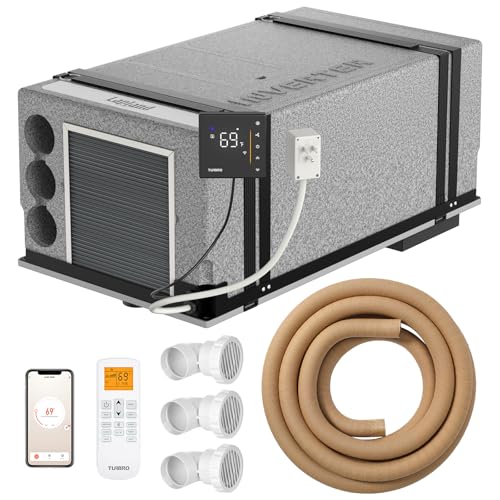
The Turbro Lapland LL10V provides 10,000 BTU of cooling and 9,500 BTU of heating in an under-bench, space-saving design. It’s powered by a 115V 60Hz supply and includes an LCDI plug, wall pad thermostat cable, and a lengthy air duct, which supports flexible installation in cabinets or under seating areas. This unit’s compact footprint helps preserve roof space for solar panels or storage, appealing to RVs where rooftop space is at a premium.
Key considerations: Under-bench installation reduces external profile and roof load but requires precise compartment sizing and ventilation planning. The included ducting supports customizable airflow, but you’ll want to verify compatibility with your RV’s interior layout. Energy efficiency is improved through an inverter-style operation, contributing to steadier temperatures and lower draw than traditional on/off systems.
RecPro RV Air Conditioner 15K Non-Ducted — Quiet and Efficient

This RecPro 15K unit emphasizes low-amp draw and quiet operation, designed for non-ducted installs. It supports off-grid or solar-assisted setups while keeping energy consumption in check. Built with UV-resistant plastic and a streamlined, aerodynamic shape, it fits a range of RVs and helps reduce drag. Noise at 55.4 dB makes it suitable for restful sleeping or quiet work inside the RV, aligning with expectations for modern mobile comfort systems.
Key considerations: Non-ducted installations require mindful airflow planning to ensure consistent cooling across living areas. The unit’s robust exterior is designed for travel durability, but you should verify roof compatibility and the necessary mounting hardware for your particular RV model. If you anticipate frequent off-grid use, pairing this unit with a suitable power source or generator will help maintain comfort without overloading your electrical system.
Buying Guide: Key Purchase Considerations
- Compatibility with RV size and layout: Larger RVs may benefit from 15K–16K BTU units, while compact trailers can be comfortable with 10K BTU options. If you plan to duct air, verify ducted vs. non-ducted options and cabinet or roof space allowances.
- Heating capability and climate range: A unit with a dedicated heat pump provides efficient heating for shoulder seasons and some winter warmth. Check heating capacity in BTU and the minimum/maximum ambient temperature ranges the unit supports.
- Power supply and energy use: RV systems may run on shore power, generators, or off-grid solar. Look for units with low amp draw or inverter-compatible operation to balance comfort with energy availability.
- Smart controls and remote operation: WiFi-enabled control via apps can simplify management when you’re away from the RV. A remote control is also valuable for quick adjustments from inside the coach.
- Durability and installation: Rooftop units must withstand road vibration and weather exposure. If you’re not planning rooftop changes, consider under-bench or cabinet-mounted options that still deliver effective climate control.
- Noise levels: Quiet operation enhances comfort when sleeping or working. Target units around 50–60 dB in typical use to minimize disturbance.
- Maintenance and support: Look for models with accessible service options, spare parts availability, and clear installation guides to simplify upkeep on the road.
In choosing the best RV air conditioner with a heater, balance BTU capacity with the RV’s living space, insulation quality, and occupant count. For frequent fully off-grid trips, prioritize low-amp or inverter-driven units paired with efficient heating options. For users who place more emphasis on interior quiet and long-term durability, focusing on models with robust housings and durable seals helps protect against weather and road conditions.