Best Electric Hot Water Heaters for Instant to Full-Home Use
Electric hot water heaters come in a range of styles—from compact point-of-use units to whole-home tankless systems. This guide highlights five solid options that balance efficiency, installation needs, and on-demand performance for American homes. Each product is evaluated on capacity, power requirements, flow rate, and energy-saving features to help you choose the right fit for your needs.
| Product | Type | Flow Rate (GPM) | Key Benefit | Power |
|---|---|---|---|---|
| Orbek 14kW Tankless | Tankless | Up to 3.38 | Compact, instant hot water for 2–3 uses | 240V/60A |
| Orbek 18kW Tankless | Tankless | Up to 4.17 | Higher flow for multiple fixtures | 240V/40A x 2 |
| BOSCH Tronic 3000 ES2.5 | Mini-tank | Not in GPM | Under-sink convenience, 2.5 gal | 120V |
| WINTEMP 27kW Tankless | Tankless | Up to 6.5 | High-capacity whole-home supply | 240V/113A |
| CAMPLUX 18-Gallon Tank | Tank | Not specified | Large capacity, 18 gal | 120V |
Orbek 14kW Tankless Electric Hot Water Heater

Engineered for on-demand hot water, this 14kW Orbek model delivers up to 3.38 GPM to serve 2–3 points of use. It requires a 240V/60A two-pole breaker, 6 AWG wiring, and 1/2″ NPT water connections. The unit emphasizes quick heating, producing hot water within seconds while maintaining energy efficiency through water-electricity separation to minimize scale and corrosion. Potential electricity savings are highlighted when compared to traditional tank systems.
Orbek 18kW Tankless Electric Instant Hot Water
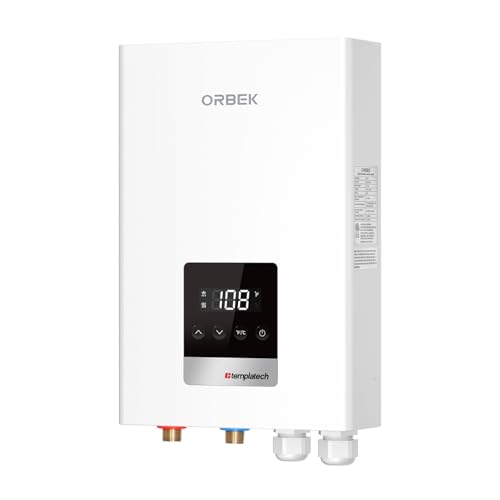
This 18kW Orbek model supports up to 4.17 GPM and serves 2–3 fixtures simultaneously with stable temperature control. It requires two 240V/40A two-pole breakers and 3/4″ NPT water connections. Like the smaller model, it uses water-electricity separation to reduce scale and corrosion and aims to deliver endless hot water in seconds while offering notable energy efficiency compared with tank heaters.
BOSCH Tronic 3000 ES2.5 Mini-Tank
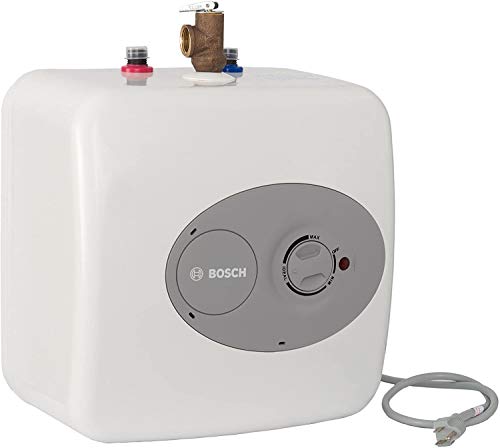
This 2.5-gallon point-of-use mini-tank brings hot water right under the sink for quick access. With 98% thermal efficiency and glass-lined durability, it operates at 120V and 12A. It plugs into a standard outlet for flexible installation and independent operation from larger hot water systems, making it ideal for under-sink usage or compact setups.
WINTEMP 27kW Tankless Electric

This high-capacity unit is rated at 27kW (240V) and can deliver up to 6.5 GPM, supporting multiple fixtures with stable temperature. It requires three 40A double-pole breakers and 8 AWG wires, along with a robust 250A electrical service. Self-regulating control helps optimize energy usage while meeting demand, with potential energy savings compared to conventional tank systems.
XWDZSWGS Electric Tankless 110V 3000W

Under-sink, 110V operation with 3000W, this compact unit raises water temperature quickly to meet single-point needs. It features an LED display, a compact design, and temperature settings in Fahrenheit or Celsius. Safe operation is supported by multiple protections, including water-electric isolation and overheating prevention. Not recommended for shower use due to flow constraints, but suitable for kitchen or bathroom fixtures with lower demand.
CAMPLUX 18-Gallon Electric Tank

This 18-gallon electric water heater is designed for home use with a built-in thermostat and 1500W heating power. It provides up to 60 minutes of hot water at a steady temperature range of 91°F to 150°F. The unit emphasizes insulation to minimize heat loss and energy consumption, and it includes a T&P relief valve and an anode rod for longer tank life. Suitable for households needing more hot water in a compact footprint.
Buying Guide
- Type selection: Tankless units provide endless hot water and compact footprints but require higher electrical service; mini-tanks are convenient for point-of-use needs; larger tank or multi-point setups suit families with higher simultaneous hot water demand.
- Electrical requirements: Check circuit capacity, breaker sizes, and wire gauge. Tankless models often require substantial electrical service (e.g., multiple 40A or 60A breakers); ensure your electrical panel can support the load.
- Flow rate vs. temperature: Tankless units report GPM at a given water temperature. In colder regions, efficiency drops and higher power may be needed to maintain desired temperatures.
- Installation location: Under-sink mini-tanks and point-of-use units minimize run times but offer limited capacity. Whole-home systems may need professional installation and proper venting for non-electric models, though these are electric here.
- Energy efficiency: Look for water-electricity separation designs and self-regulating power to reduce scale, corrosion, and operating costs over time.
- Durability and maintenance: Glass-lined or ceramic elements extend life. Consider models with easily serviceable elements and accessible replacement parts.
- Safety features: IP ratings, leakage protection, overheating safeguards, and shutoff protections help prevent hazards in wet environments.
- After-sales support: Favor brands with solid warranty coverage and widely available replacement parts.