Best Square Kerosene Heaters for Reliable Home Heating
Square kerosene heaters provide compact, efficient warmth for spaces like workshops, garages, cabins, and living rooms. This guide highlights top square models designed to heat up to about 1,000 square feet without electrical power. Each option is evaluated on heat output, fuel capacity, safety features, and portability to help you choose the right heater for emergency readiness, off-grid living, or supplementary heating needs.
Summary of selected products:
| Product | Brand | BTU | Coverage | Key Notes |
|---|---|---|---|---|
| Dyna-Glo Indoor Kerosene Convection Heater WK95C8 | Dyna-Glo | 23,000 BTU/hour | Up to 1,000 sq ft | No electricity needed; convection design |
| Sengoku Indoor & Outdoor Kerosene Heater (Black) W/ 23,500 BTU | KeroHeat | 23,500 BTU | Up to 1,000 sq ft | |
| Sengoku Indoor & Outdoor Portable Kerosene Heater (White) W/ 23,500 BTU | HeatMate | 23,500 BTU | Up to 1,000 sq ft | |
| Dyna Glo Delux KFA80DGD 80,000 BTU | Dyna-Glo | 80,000 BTU | Up to 1,900 sq ft | |
| Dyna-Glo WK24BK 23,800 BTU | Dyna-Glo | 23,800 BTU | Up to 1,000 sq ft |
Dyna-Glo Indoor Kerosene Convection Heater WK95C8

Dyna-Glo’s WK95C8 delivers 23,000 BTU per hour and is designed to heat spaces up to 1,000 square feet. It operates without electricity, making it suitable for outages and off-grid use. The convection-style heater ensures even heat distribution, and its compact footprint supports versatile placement in workshops, living spaces, or garages. Safety features typically include a shut-off mechanism in case of tip-over or overheating and a protective grill. Fuel efficiency and maintenance requirements depend on kerosene quality and proper ventilation to reduce odor and smoke. Ideal for users prioritizing electrical independence and steady convection heat.
Sengoku Indoor & Outdoor Black KeroHeat 23,500 BTU

This 23,500 BTU kerosene heater from Sengoku is designed for both indoor and outdoor use, capable of heating up to 1,000 square feet. Its 1.9-gallon fuel capacity supports long runtimes—up to about 12 hours—ideal for garages, basements, or patios. It emphasizes safety with features like automatic shut-off, tip-over protection, and protective grills. The cordless design means it operates without electricity, and an EZ Flame adjuster helps control flame intensity. Its dual-use versatility makes it a strong choice for mixed indoor/outdoor heating needs where electrical access is inconsistent.
Sengoku Indoor & Outdoor White KeroHeat 23,500 BTU
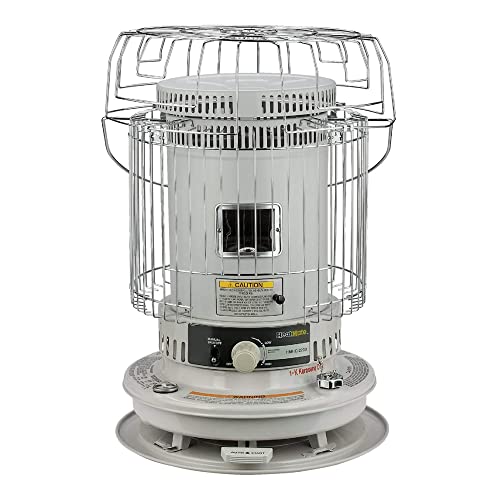
The HeatMate HMC-23K offers 23,500 BTU of heat with a 1.9-gallon reservoir, capable of supporting spaces up to 1,000 square feet. It is designed for indoor and outdoor use, making it suitable for emergencies or poorly insulated areas like garages. Features include automatic safety shut-off, a flip-to-start push-button ignition, and a robust grill guard for added safety around children and pets. A warning to consider is the need for proper ventilation due to kerosene combustion and odor considerations in confined spaces.
Dyna Glo Delux KFA80DGD 80,000 BTU

The Delux model delivers a high heat output of 80,000 BTU and can heat up to around 1,900 square feet, making it suitable for larger spaces and workshops. It includes a Comfort Control Thermostat for better fuel economy and temperature stability. As with all kerosene heaters, ensuring adequate ventilation and following safety guidelines is essential to minimize fumes and odors. This unit is best for larger, well-ventilated areas needing robust warmth.
Dyna-Glo WK24BK 23,800 BTU Indoor Kerosene Convection Heater
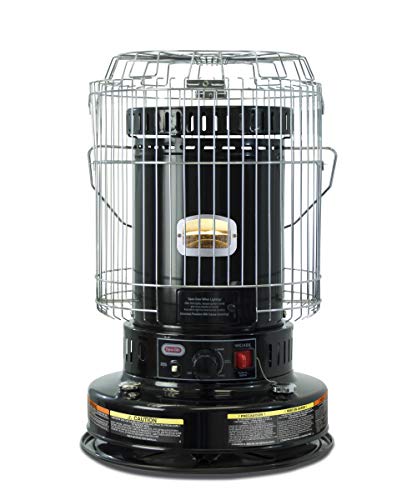
The WK24BK provides 23,800 BTU and heats up to 1,000 square feet with no electrical power required. Its convection design ensures even warmth distribution across rooms or workshops. The compact form factor allows flexible placement, but like other kerosene heaters, performance depends on the fuel and room ventilation. This model balances heat output with portability, making it suitable for weekend projects or backup heating in larger spaces that lack reliable electricity.
Buying Guide
Heat output and space needs: Match BTU ratings to your target space. Larger rooms near 1,000 square feet typically do well with 23,000–24,000 BTU units, while smaller spaces can use lower-output models without sacrificing comfort.
Fuel capacity and runtime: Look for fuel tanks around 1.9 gallons for extended runtimes (roughly 8–12 hours on a single fill depending on heater efficiency and flame settings). Consider fuel availability and storage space when planning usage for emergencies or off-grid living.
Electrical independence: If you need operation during outages, prioritize kerosene heaters that run without electricity. Verify ignition type (manual push-button or automatic) and assess how the ignition performs in cold conditions.
Safety features: Reputable heaters include tip-over switches, automatic shut-off on overheating, and protective grills. Check that the unit has a tested certification and follows local ventilation guidelines to minimize odor and emissions.
Ventilation and placement: Ensure adequate ventilation in any indoor use. Do not operate in unventilated spaces, and place heaters on stable, non-flammable surfaces away from combustibles. Consider room layout to maximize heat distribution using convection or forced-air designs.
Maintenance and fuels: Use clean lamp kerosene or a recommended fuel type to reduce smoke and odor. Regularly clean the air intake, vents, and flame area to maintain efficiency and reliability. Replace worn seals or gaskets as needed to prevent leaks and ensure safe operation.
Portability and setup: If you need heat in multiple spaces, choose a lighter model or one with a simple handle design. While heavier units deliver greater BTU, ensure you can safely move the unit when needed and anchor it if required by safety guidelines.
Environmental and health considerations: Smoke, odor, and particulates can affect indoor air quality. Prefer models with good flame control, efficient combustion, and safety grills. Use only in well-ventilated spaces and follow all manufacturer recommendations for maintenance and operation.