Best Electric Convector Heater Options for Quick Home Warmth
Staying cozy during chilly seasons often hinges on reliable heating that’s efficient, easy to use, and adaptable to different spaces. The following hand-picked electric convector heaters and related thermostats offer modern controls, smart integration, and steady warmth for bedrooms, living rooms, and home offices. This guide highlights five top picks and compares features to help you choose the best fit for your climate, insulation, and lifestyle needs.
Product Overview
| Product | Brand | Key Feature |
|---|---|---|
| Dreo Smart Wall Heater | Dreo | Smart control, 120° oscillation, Alexa compatible |
| Honeywell RLV3150A1004 Thermostat | Honeywell Home | Non-programmable digital thermostat, up to 3000W |
| Dreo Space Heater | Dreo | 15 00W PTC ceramic, multi-mode, remote |
| Mysa Smart Thermostat LITE | Mysa | Line voltage, 120V/240V, home automation |
| DeLonghi Convection Panel Heater | De’Longhi | Energy saving ECO PLUS, portable and wall-mount options |
In selecting these options, the focus is on a mix of smart-enabled convectors and compatible thermostats that address different room sizes, installation preferences, and energy management goals. Each entry below provides practical details drawn from the product features to help compare heat delivery, control options, and safety considerations.
Dreo Smart Wall Heater With Smart Features

The Dreo WH719S combines broad air distribution with modern smart control. Its 120-degree vertical oscillation helps spread warm air quickly from top to bottom, warming corners that often stay cool with standard heaters. An adjustable thermostat supports 41–95°F with 1°F increments, delivering precise comfort. Smart integration enables scheduling, remote control via the Dreo app, and voice control through Alexa and Google Assistant. This makes it suitable for bedrooms or living areas where hands-free operation and consistent temperature are valued. The unit’s fast heat response helps reduce cold spots in small-to-medium rooms.
Key considerations: Installation requires mounting, and compatibility with voice ecosystems adds convenience but depends on your existing smart setup. The 1500W capacity supports moderate heat loads; for larger spaces, pairing with other sources may be necessary. Safety features include stable operation and standard overheat protections typical of modern convectors. Overall, a solid all-around option for smart, compact wall heating with broad room coverage.
Honeywell Home RLV3150A1004 Digital Electric Heat Thermostat
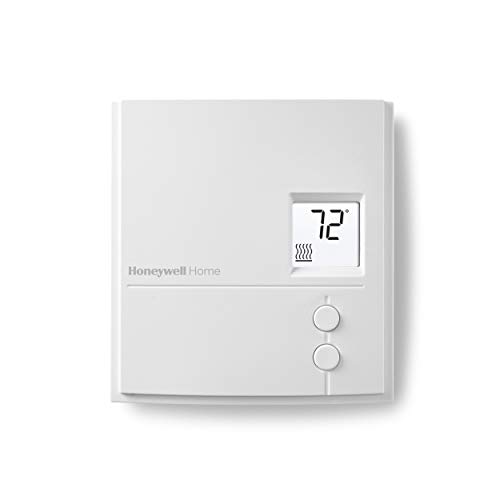
The RLV3150A1004 is a non-programmable digital thermostat designed for line-voltage heating systems, including baseboards and convectors. With up to 3000W @ 240V capacity, it supports substantial heat output in larger rooms. Its straightforward push-button interface makes manual adjustments quick, while the digital readout helps maintain precise temperatures. This model excels in simplicity and reliability, with solid performance for electric baseboards and related convectors. If you want a dedicated thermostat without smart connectivity, this is a dependable, high-capacity option.
Key considerations: This thermostat focuses on precise temperature control rather than automation. It is best for users who prefer straightforward, reliable operation and don’t require app control or voice assistants. The 240V compatibility makes it ideal for higher-wattage heating scenarios, but installation should be performed with attention to wiring safety and local electrical codes.
Dreo Space Heater With Digital Controls

This portable Dreo space heater pairs a 1500W PTC ceramic heating system with a smart design to deliver warmth quickly and efficiently. The device boasts a wide heating reach—up to 200% farther than traditional heaters—thanks to a new heat funnel design. Safety is reinforced with a tilt-detection sensor, flame-retardant materials, overheat protection, and ETL certification. The thermostat supports 41–95°F with 1°F increments, enabling fine-grained temperature control. A 12-hour timer and multiple modes provide flexible operation for home offices, bedrooms, and living spaces.
Key considerations: As a portable unit, it’s easy to move between rooms but may require closer supervision in rooms with pets or children due to tilt sensors and power usage. The combination of fast heat and safety features makes it a practical choice for quick warmth in medium rooms or zones where a fixed wall heater isn’t feasible.
Mysa Smart Thermostat LITE
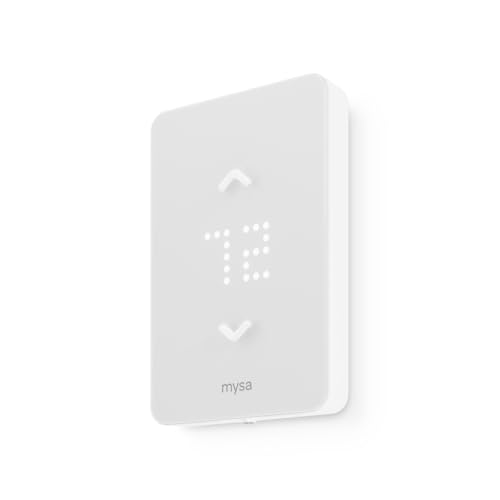
The Mysa LITE is a line-voltage thermostat designed for 120V or 240V electric baseboard heaters, fan-forced heaters, and convector units. It enables Wi-Fi control, scheduling, and energy reports without ongoing subscription fees. The app supports remote control and smart integrations, allowing users to optimize heating patterns for each day, reduce usage when away, and maintain comfort when at home. This option is particularly attractive for users seeking a budget-friendly, subscription-free smart control solution that integrates with popular ecosystems like HomeKit, Alexa, and Google Assistant.
Key considerations: It requires compatible line-voltage heaters and proper installation, which may involve wiring adjustments. The energy-saving features can lead to noticeable reductions in monthly heating costs when paired with well-insulated spaces. If you want smart control without replacing existing convectors, Mysa LITE offers a flexible path to automation and monitoring.
De’Longhi Convection Panel Heater

De’Longhi’s 1500W Convection Panel Heater uses energy-efficient convection to distribute heat evenly across a room. It can be used freestanding or wall-mounted, depending on your space and preference. The ECO PLUS feature adapts heat output for economical warmth, balancing comfort with efficiency. Its slim design and quick heat distribution make it suitable for bedrooms and home offices where a quiet, unobtrusive heater is desirable. The panel shape helps integrate into a variety of decors while maintaining solid performance in medium rooms.
Key considerations: While designed for efficient heating, it may not provide the same rapid warmth as high-powered fan heaters, especially in chilly spaces with poor insulation. Installation options offer flexibility but require adequate wall or floor space. ECO-related savings depend on usage patterns and room characteristics.
Buying Guide: Key Purchase Considerations
- Room size and heat output: Match the heater’s wattage to the space. Smaller rooms often do well with 500–1500W units, while larger rooms may benefit from higher wattage or supplemental thermostats and zoning strategies.
- Control and automation: Decide between smart features (app control, voice assistants, scheduling) and simplicity (manual thermostats). Smart devices can save energy when used with accurate room targeting and consistent routines.
- Installation preferences: Wall-mounted convectors save floor space but require mounting hardware and access to electrical wiring. Portable heaters offer flexibility but may need more supervision and safety measures.
- Safety features: Look for overheat protection, tip-over sensors, flame-retardant materials, and ETL or UL certification. These features are crucial for homes with children or pets.
- Energy efficiency: ECO modes and programmable scheduling can significantly affect long-term costs. For line-voltage thermostats, accurate temperature control helps minimize heat fluctuations and waste.
- Smart ecosystem compatibility: If you already use Alexa, Google Assistant, or Apple HomeKit, choose models that integrate smoothly to avoid adding isolated devices.
- Maintenance and durability: Durability varies by material and build quality. Consider units with solid safety sensors and materials that resist overheating and wear over time.
When selecting an electric convector solution, consider whether you prefer a fixed wall heater with centralized control or a portable option for zone heating. For homes with interconnected smart systems, prioritizing models with reliable app integration and voice compatibility can deliver the most seamless experience. Additionally, pairing a smart thermostat with a dedicated convector can offer precise temperature control in frequently used spaces, while non-programmable thermostats remain dependable for straightforward operation in medium-to-large rooms.