Best Indoor Kerosene Heaters With Thermostats for Reliable Warmth
When choosing an indoor kerosene heater, reliability, heating capacity, and safety features matter most. This guide highlights five top options designed to keep spaces comfortable without relying on electricity. Each model brings distinct strengths, from precise thermostat control to robust heating power, making it easier to compare for busy American homes, garages, and workshops.
| Product | BTU / Heating Area | Key Feature |
|---|---|---|
| VEVOR Kerosene Forced Air Heater | 215,000 BTU; up to 12,600 ft³ | Thermostat and room temp display |
| Sengoku HeatMate HMC-23K | 23,500 BTU; up to 1,000 ft² | Automatic safety shut-off |
| Sengoku Indoor & Outdoor Kerosene Heater | 23,500 BTU; up to 1,000 ft² | EZ lighting, tip-over switch |
| Dyna-Glo WK95C8 / WK24BK | 23,000–23,800 BTU; up to 1,000 ft² | No electricity needed |
| Dyna-Glo KFA50DGD | 50,000 BTU; up to 1,200 ft² | Easy mobility handle |
VEVOR Kerosene Forced Air Heater

The VEVOR kerosene heater is designed for large-space heating with a substantial 215,000 BTU output. It delivers rapid warmth suitable for workshops, barns, or industrial settings, capable of heating spaces up to about 44,496.6 cubic feet. A standout feature is its thermostatic energy efficiency: a built-in thermostat knob and room temperature display allow users to set a preferred comfort level, with automatic shutoff when the room reaches the target temperature. Overheat protection enhances safety, and dual-fuel filtration reduces smoke and odor. Fuel gauge helps monitor consumption, while a pressure gauge aids in system monitoring. This model supports kerosene and diesel fuels, though only one type should be used at a time.
Sengoku Indoor & Outdoor Kerosene Heater (HMC-23K)

The Sengoku HMC-23K delivers 23,500 BTU with a practical 1,000 square foot heating zone, suitable for homes, garages, and larger rooms. It operates without electricity, using a push-button start and EZ Flame adjuster for easy lighting and control. Safety features include a tip-over switch and protective grills to reduce the risk of burns, making it a solid option for emergencies or off-grid spaces. The heater’s 1.9-gallon capacity balances long runtime with manageable refueling.
Sengoku Indoor & Outdoor Portable Kerosene Heater (HeatMate HMC-23K)
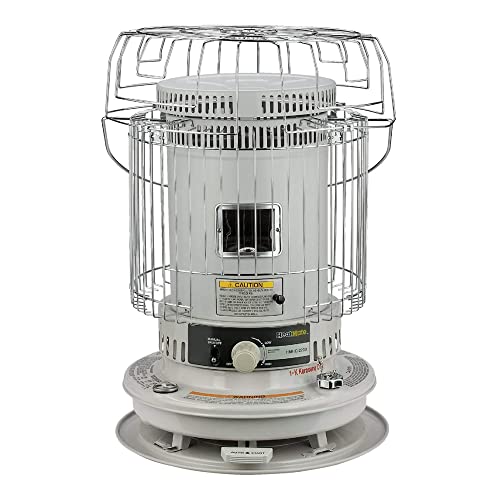
The HeatMate HMC-23K provides versatile indoor-outdoor heating with a strong 23,500 BTU capacity and a 1,000 square foot zone. It runs for up to about 12 hours on a 1.9-gallon fill, making it suitable for sustained sessions in poorly insulated spaces or during outages. Safety features emphasize automatic shutoff, a tip-over switch, and protective grills. Its cordless design supports use in areas without electrical outlets, making it a practical emergency heater.
Dyna-Glo WK24BK 23,800 BTU Indoor Convection Heater
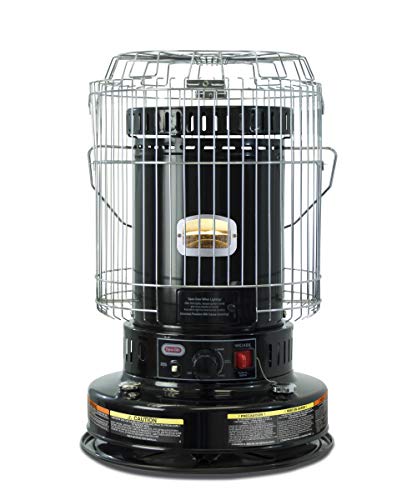
The Dyna-Glo WK24BK provides a robust 23,800 BTU capacity for heating up to 1,000 square feet, with the convenience of no electricity required. This model is suitable for spaces where electrical access is limited or during power outages. While it emphasizes high heat output, it does not explicitly advertise a thermostat, which may be a consideration for those seeking precise ambient control. Its convection design helps distribute warmth more evenly across rooms.
Dyna-Glo KFA50DGD 50,000 BTU Kerosene Forced Air Heater

The Dyna-Glo KFA50DGD offers strong heating power at 50,000 BTU for larger spaces up to about 1,200 square feet. Its design includes an easy lift carrying handle, aiding mobility between rooms or work areas. This model is well-suited for spaces requiring quick, high-output warmth, though it may consume kerosene more rapidly given its larger output. As with other kerosene heaters, ensure proper ventilation and follow safety protocols.
Buying Guide: Key Purchase Considerations
- Heating capacity and space size: Match BTU output to the area you intend to heat. Larger rooms require higher BTU but consider insulation levels to avoid overheating.
- Thermostat and temperature control: A built-in thermostat helps maintain comfortable ambient conditions and can save fuel by preventing over-heating.
- Fuel type and availability: Most kerosene heaters use regular kerosene; some models support diesel as an alternative. Check fuel type compatibility and storage considerations.
- Safety features: Look for automatic shut-off, tip-over protection, safe grills, and flame-guard design. Off-grid use should emphasize reliable ignition and user safety.
- Ventilation and emissions: Ensure adequate ventilation in enclosed spaces. Choose models designed to minimize smoke and odor, and follow manufacturer guidelines for operation.
- Portability and footprint: If you need warmth in multiple rooms, consider models with carrying handles or wheels. Verify the heater’s footprint fits your space.
- Maintenance and filtration: Some units include dual fuel filters and gauges to monitor fuel and pressure, contributing to cleaner operation and easier upkeep.
- Durability and warranty: Prefer products with solid build quality and clear warranty terms, especially for frequent or industrial use.
- Electricity independence: If you require off-grid operation, prioritize models advertised as not needing electricity, while recognizing the trade-offs in features and control.
- Ventilation safety for homes with children or pets: Favor heaters with protective grills and stable bases to reduce burn risk in active spaces.
For consumers evaluating indoor kerosene heaters with thermostat capability, the VEVOR model stands out for thermostat control in a high-output package, while Sengoku options provide strong non-electric performance with emphasis on safety. Dyna-Glo’s WK series offers solid heat delivery with simple operation, and the KFA50DGD delivers higher BTU output for larger rooms. When selecting, prioritize space sizing, safety features, and whether you need off-grid operation or precise ambient control.