Best 100,000 BTU Unit Heaters for Large Spaces and Tough Temps
Finding a reliable 100,000 BTU unit heater involves balancing heating capacity, venting options, fuel type, and installation requirements. This guide highlights five high-performing options that cover natural gas, propane, and portable units. Each product is evaluated for efficiency, safety features, and practical installation considerations to help you compare effectively and choose the right heater for workshops, garages, and other sizeable spaces.
| Product | Fuel Type | BTU Range | Vent Type | Best For |
|---|---|---|---|---|
| Mr. Heater MHU125NG | Natural Gas / LP (with conversion kit) | 125,000 BTU | Vertical or Horizontal Venting | Large garages and workshops |
| Mr. Heater F260560 Big Maxx MHU80NG | Natural Gas | 80,000 BTU | Vertical venting | Medium to large spaces where 80k BTU suffices |
| Dura Heat GFA150A | Propane | 120,000–150,000 BTU | Ventless options with forced air | Portable or backup heat |
| Mr. Heater MH170QFAVT | Propane | 170,000 BTU | Outdoor/industrial use | Large job sites and outdoor spaces |
| Goodman GR9S921004CN | Natural Gas | 100,000 BTU | Upflow gas furnace (LP conversion kit) | Whole-home heating in tight spaces |
Mr. Heater MHU125NG NG 125K BTU Unit Heater
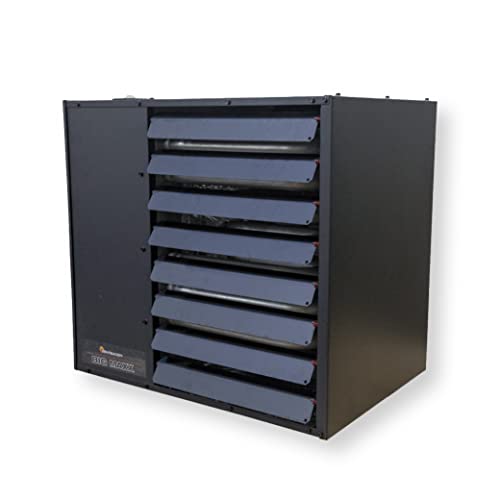
Engineered for robust performance, this model delivers 125,000 BTU of heat with reliable ignition and safety features. The unit supports both liquid propane and natural gas configurations (conversion kit included), enabling flexible fuel choices based on availability and cost. Powered exhaust helps manage combustion byproducts, extending venting options and potential installation locations. A compact footprint makes it suitable for large garages and shop spaces that require consistent warmth during cold seasons.
Key features
- Electronic ignition for dependable starts
- Powered exhaust to vent safely from indoor installations
- Liquid propane conversion kit included for flexibility
Mr. Heater F260560 Big Maxx MHU80NG Natural Gas Unit Heater
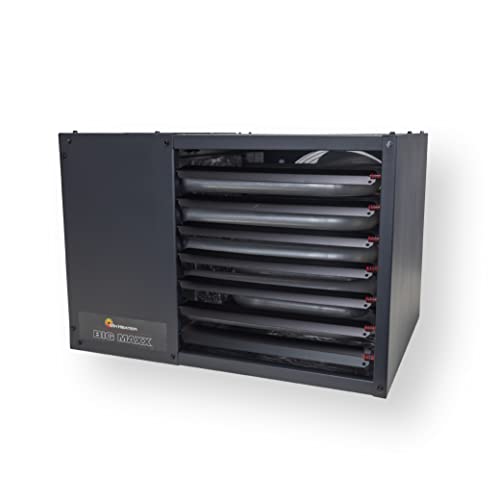
This Big Maxx model provides up to 80,000 BTU and is designed for vertical venting with solid external access to thermostat and gas connections for straightforward maintenance. While its BTU is lower than the 125k option, it remains a strong choice for sizable spaces that don’t require maximum output. The unit emphasizes dependable operation and adaptable mounting, making it a practical option for workshops and larger rooms with efficient heat distribution.
Key features
- Heats up to about 1,000–1,250 sq ft depending on conditions
- Powered exhaust supports flexible venting installations
- Accessible thermostat and gas connection from outside
Dura Heat GFA150A Propane Forced Air Heater
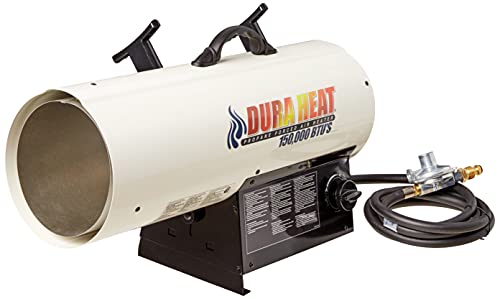
Designed for propane operations with a broad heat range, this unit can output 120,000–150,000 BTU. It offers a compact, portable solution with fan-forced hot air distribution, making it suitable for temporary heating on job sites or in garages where a high-heat source is needed on demand. The model is built to handle longer runtimes on LP cylinders and supports straightforward deployment in open layouts.
Key features
- Variable output within 120k–150k BTU
- Propane-only operation with durable construction
- Fan-forced air distribution for rapid space heating
Mr. Heater MH170QFAVT 170,000 BTU Portable Heater

This high-output portable heater delivers 125,000–170,000 BTU per hour and is designed for large areas up to about 4,250 sq ft. It’s suitable for outdoor use, garages, and industrial spaces that require robust heat at a distance from the unit. Safety features include a high-temperature limit switch and thermoelectric safety valves, ensuring reliable protection during operation. A rugged build and portability help it cover expansive work zones and cold-weather work routines.
Key features
- High-output heating for large spaces
- Built-in safety features for reliable operation
- Quiet burner technology and durable construction
Goodman 100,000 BTU Up-Flow Gas Furnace GR9S921004CN

Although categorized here among larger heating options, this 100,000 BTU unit serves as a compact, high-capacity solution for whole-home heating in spaces where a single, integrated system is preferred. It includes a heavy-duty heat exchanger and a stainless-steel secondary exchanger. A single-stage gas valve allows for straightforward operation, and it’s compatible with LP conversion kits for fuel flexibility. Ideal for homeowners seeking reliable, centralized warmth with efficient fuel use.
Key features
- Heavy-duty aluminized-steel tubular heat exchanger
- Stainless-steel secondary exchanger for durability
- Single-stage gas valve for dependable control
Buying Guide
When choosing a high-BTU unit heater, consider space size, insulation quality, and how the unit will be vented. Here are purchase considerations from multiple perspectives to help you decide what matters most in real-world use.
- BTU sizing and space coverage: Larger spaces typically require higher BTU outputs. Determine the ceiling height, square footage, and insulation level. For garages and workshops with poor insulation, bump BTU up to maintain comfort during cold spells.
- Fuel type and availability: Natural gas often provides lower operating costs than propane, but gas availability and line sizing matter. Consider conversion kit options if you anticipate switching fuels.
- Ventilation and venting options: Some units support vertical, horizontal, or ventless configurations. Proper venting is essential for safe operation and to manage combustion byproducts indoors.
- Installation and mounting: Fixed units may offer stable, long-term heating, while portable models provide flexibility for seasonal use. Check clearance requirements (from floor, walls, and ceilings) and the need for electrical connections.
- Safety features and control options: Look for high-temperature limit switches, oxygen depletion sensors, and reliable ignition systems. Some units include self-diagnostic controls to reduce downtime.
- Maintenance and accessibility: Units with external access to gas connections and thermostats simplify servicing. Consider the ease of filter or burner inspection where applicable.
- Energy efficiency and operating cost: Higher efficiency reduces running costs over time. Compare standby losses, ignition type, and venting losses to estimate long-term expenses.
- Portability vs. permanence: If you need heat for short-term events or temporary spaces, portable units may be cost-effective. For ongoing uses, a permanently installed unit often provides better performance and safety.
- Installation restrictions: Local codes may dictate venting routes, clearance from combustibles, and exhaust must vent outdoors. Verify compliance before purchasing.
These considerations help balance upfront cost against long-term operating expenses and safety. The highlighted products provide a spectrum of BTU ranges, fuel types, and installation styles to match different space requirements and climate conditions.