Best 4′ Baseboard Heaters for Efficient Home Heating
The following guide highlights five top-rated 4-foot baseboard heaters commonly used in American homes. Each model offers distinct advantages in terms of wattage, voltage, and installation style. This article compares features to help you choose a safe, energy-efficient option for small to medium rooms while considering ease of installation and long-term reliability.
| Product | Brand | Wattage | Voltage | Type |
|---|---|---|---|---|
| Cadet F Series 48″ | Cadet | 1000/750 W | 240/208 V | Hard-wired or plug-in capable baseboard |
| KING 4K1210BW | KING | 1000 W | 120 V | Hard-wired |
| KING 4K2410A | KING | 1000/750 W | 240/208 V | Hard-wired |
| King 4K2410BW | KING | 1000/750 W | 240/208 V | Hard-wired |
| King 4CB2407BW | KING | 750 W | 240 V | Ceramic core, natural convection |
Cadet F Series 4′ Electric Baseboard Heater
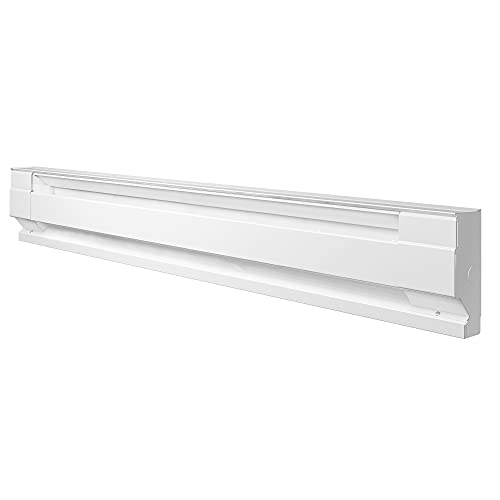
The Cadet F Series model provides strong heating output with 1000/750 watts at 240/208 volts, suitable for small to medium rooms. It offers universal wiring and pre-punched knockouts at 1-inch intervals, simplifying floor or wall mounting and reducing installation costs. A high-temperature safety shutoff adds a safety margin to protect occupants and property. This combination of power, ease of installation, and built-in safety features makes it a common choice for retrofit projects and new installations in American homes.
K KING 4K1210BW Baseboard Heater, 4′ / 1000W / 120V

The KING 4K1210BW is a 4-foot, 1000-watt heater designed for 120V circuits and hard-wired installation. Its aluminum ribbon fin element supports efficient heat transfer, while a full-length safety cutout enhances protection against overheating. This model is ideal for spaces where wall hard-wiring is preferred, and it provides solid performance in typical home room layouts that require reliable baseboard heating without plug-in options.
K KING 4K2410A Baseboard Heater, 4′ / 1000-750W / 240-208V

This King 4K2410A model supports 1000-750 watts across 240/208 volts with a hard-wired setup. An aluminum ribbon fin element delivers consistent heating while the full-length safety cutout protects against overheating. It is well-suited for rooms needing robust heat with a compact, 4-foot footprint, and it fits into standard baseboard installations with durable construction for long-term use.
K KING 4K2410BW 4′ Baseboard Heater, 1000-750W
The 4K2410BW variant is a 4-foot, dual-wattage baseboard heater capable of 1000/750 watts at 240/208V. As a hard-wired model, it uses an aluminum ribbon fin element for efficient convection heating and includes a full-length safety cutout to prevent overheating. This unit suits mid-sized rooms where a steady, even heat output is desirable, and aligns with standard 4-foot baseboard installations.
K KING 4CB2407BW Ceramic Core Baseboard Heater, 4′ / 750W / 240V

The 4CB2407BW uses a ceramic core with natural convection for warmth, delivering 750 watts at 240 volts. Ceramic core technology typically offers rapid warmth with stable output and quieter operation. This model provides a different heating approach compared to aluminum ribbon fin designs, which can appeal to spaces prioritizing steady, low-noise convection in a 4-foot footprint.
K KING 4CB2007BW Ceramic Core Baseboard Heater, 4′ / 750W / 208V
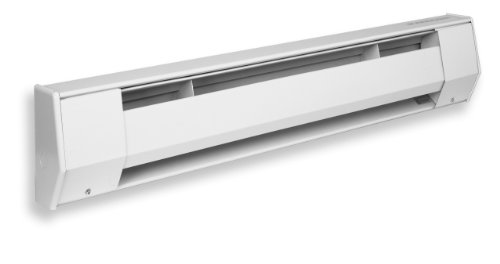
The 4CB2007BW Ceramic Core Baseboard Heater operates at 750 watts on 208V. It features a ceramic heating core and natural convection for quiet, steady warmth. Suitable for homes that use 208V supply, this model emphasizes efficient, consistent heat with a compact 4-foot design, while maintaining a straightforward installation profile for addition to existing baseboard runs.
Buying Guide: Key Considerations For 4′ Baseboard Heaters
- Wattage and voltage compatibility: Match the heater’s wattage to room size and your home’s electrical capacity. Higher wattage on larger spaces may require dedicated circuits or professional wiring.
- Installation type: Decide between plug-in and hard-wired models. Plug-in options offer easier retrofits, while hard-wired units often provide cleaner aesthetics and buffer against accidental unplugging.
- Heating technology: Aluminum ribbon fin elements heat quickly and distribute warmth evenly; ceramic core units deliver stable convection with a different acoustic profile. Consider room layout and desired heat feel when choosing.
- Safety features: Look for high-temperature shutoff and full-length safety cutouts to prevent overheating, particularly in bedrooms or occupied living areas.
- Size and fit: Ensure the 4-foot length aligns with your baseboard space and floor-to-plate clearance. Some covers and endcaps can affect overall fit in older homes.
- Maintenance and durability: Aluminum elements resist corrosion; ceramic cores may require different service considerations. Long-term reliability depends on enclosure quality and material build.
- Cost of installation: Factor in electrical wiring complexity, wall mounting, and potential need for a licensed electrician for hard-wired options.