Best Forced Air Heaters for Garages, Workshops, and Job Sites
When selecting a forced air heater, American buyers look for reliable warmth, safety features, and practical performance for large spaces like garages and workshops. This guide reviews top options, compares fuels, and explains what to consider before you buy. Learn which models deliver quick heat, robust coverage, and easy operation for demanding spaces.
| Product | Fuel Type | Approx. BTU / Heat Capacity | Best For |
|---|---|---|---|
| InoKraft Maxheat MH125 | Propane | 125,000 BTU | Large garages up to 3200 sq ft |
| VEVOR Kerosene Forced Air Heater | Kerosene | 215,000 BTU | Very large spaces, indoor/outdoor use |
| Dura Heat EUH1465 Electric Forced Air Heater | Electric (240V) | 5,120 BTU (equiv. 1,500W) | Smaller spaces, indoor garages where gas isn’t practical |
| InoKraft MaXheat MH68 | Propane | 30,000 – 68,000 BTU | Medium garages and job sites |
| Mr. Heater MH170QFAVT | Propane | 125,000 – 170,000 BTU | Large outdoor areas, big job sites |
Overview: The following sections highlight five highly relevant options, drawing on their heat output, fuel versatility, safety features, and suitability for typical American spaces like home garages, workshops, and construction sites. Each product section provides a concise overview, key features, and practical considerations to help you compare quickly.
InoKraft Maxheat MH125 — High-C BTU Propane Heater

The Maxheat MH125 delivers 125,000 BTUs to heat large spaces quickly, covering up to 3200 square feet. It features a smart Auto On/Off control from 25–95°F, enabling hands-free operation in fluctuating temperatures. The heater is designed for garages, job sites, and utility spaces, with a rapid warm-up time and a broad heat distribution thanks to a heavy-duty forced air fan. A notable safety emphasis includes overheat protection and auto shut-off to prevent gas leakage, with CSA certification for reliability. Consider this unit if you need robust warmth for sizable spaces and dependable protection features.
VEVOR Kerosene Forced Air Heater — 215,000 BTU

This portable kerosene/diesel heater delivers a powerful 215,000 BTUs and can heat large workshops, barns, or indoor spaces up to 1260 cubic meters. It uses a thermostatic control and a room temperature display to manage energy use, with built-in overheat protection. The dual-fuel design supports kerosene or diesel (one type at a time), and it includes fuel gauges and dual filters to help minimize odor and smoke. It’s ideal for environments where electricity is scarce or where substantial heat is needed in a short time, though fuel handling and ventilation are important considerations.
Dura Heat EUH1465 Electric Forced Air Heater
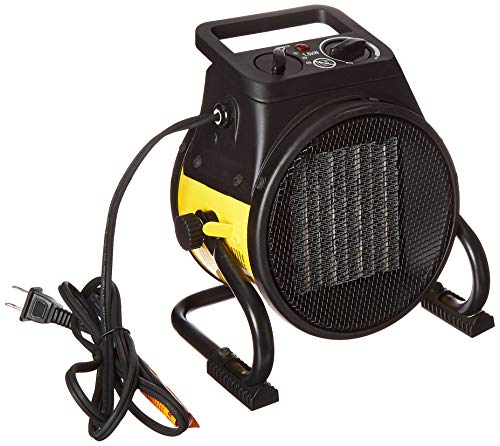
The EUH1465 provides electric warmth with 5,120 BTU (about 1,500 watts) of forced air heating. Its rugged steel construction makes it a solid choice for garages and workshops that require a hard-wired heating solution. It offers heat and fan-only modes for versatile use, and its design concentrates airflow to quickly circulate warm air. A remote thermostat option adds convenience for maintaining a comfortable environment without manual adjustments, though installation is required for 240V service. This is a practical electric alternative when gas fuels are impractical or restricted.
InoKraft MaXheat MH68 — Mid-Range Propane Heater

The MH68 model offers adjustable output from 30,000 to 68,000 BTUs, suited for 1600 square feet and up to six-car garages. It provides rapid heating via a heavy-duty fan and wide heat distribution, with safety features including overheat protection and auto-shutoff. Like the MH125, it is CSA certified and portable for mobility across job sites. If you need flexible BTU control for mid-sized spaces, the MH68 presents a balanced option between power and portability.
Mr. Heater MH170QFAVT — High-Output Propane Workhorse

The MH170QFAVT is designed for large outdoor workspaces and job sites, delivering 125,000–170,000 BTU per hour and warming as much as 4,250 square feet. It emphasizes safety with high-temperature limit switches and thermoelectric valves, while its quieter burner technology reduces noise for better working conditions. Rugged construction and a heavy-duty handle enhance durability in harsh environments. This model is ideal when you need substantial heat output for outdoor or semi-enclosed areas where ventilation is available.
Buying Guide: Key Purchase Considerations
- Fuel type and availability: Propane, kerosene/diesel, or electric. Propane and kerosene provide high BTU, but require proper ventilation and fuel management. Electric units avoid exhaust but rely on electrical capacity and supply. Choose based on space, ventilation, and access to fuel or electricity.
- Heating area and BTU range: Match the unit’s BTU output to your space. For garages, bulky workshops, or job sites, higher BTUs deliver faster warmth but may require more fuel and ventilation planning.
- Ventilation and safety: Gas-powered heaters require adequate ventilation to prevent buildup of fumes. Look for automatic shut-off features, low-oxygen shutoff, and CSA/ETL certifications for safety credibility.
- Portability and setup: Consider weight, handles, and hose length. A longer hose and mounting flexibility can improve placement options in cluttered spaces.
- Electrical requirements: Electric heaters need appropriate circuit capacity and sometimes professional installation. Ensure wiring and breakers meet the heater’s wattage and local codes.
- Noise and comfort: Some models operate quietly enough for a workshop. If you require long hours of use, noise levels become a practical factor for productivity and safety.
- Maintenance and fuel management: Fuel filters, gauge monitoring, and regular cleaning extend life and performance. Kerosene and diesel use careful fuel handling to minimize odors and smoke.
- Economy and sustainability: Thermostatic controls and auto-shutoff conserve fuel and energy. Programs with temperature regulation help maintain consistent comfort while controlling running costs.
- Warranty and support: Check manufacturer warranty terms and availability of replacement parts and service centers.
Selecting a forced air heater involves balancing heat output, space size, and practical constraints like ventilation and power. The five models covered here provide a spectrum from electric options suitable for smaller spaces to high-BTU propane and kerosene units designed for large garages and job sites. Assess your space, safety requirements, and fuel accessibility to determine the best fit for reliable, year-round warmth.