Best Thermostat for Heat and AC: Reliable Climate Control for Your Home
Choosing the right thermostat helps optimize comfort and energy use for homes with traditional heating and cooling systems. This guide compares popular, non-programmable and programmable options that support 1 heat/1 cool configurations, covering compatibility, ease of installation, and key features. Learn how different models handle single-stage systems and what to verify before purchasing to ensure a smooth setup and reliable performance.
| Product | Brand | Key Benefit | Compatibility Note |
|---|---|---|---|
| Sensi Smart Thermostat (ST55) | Emerson | Energy-saving, easy DIY install | 1H/1C conventional systems; some setups may not require a c-wire |
| Amazon Smart Thermostat | Amazon | Alexa-enabled, simple upgrade | Most homes; c-wire may be needed for full features |
| Riseem Non-Programmable Thermostat | Riseem | Budget-friendly, straightforward install | 1H/1C conventional single-stage systems |
| Honeywell Home Non-Programmable | Honeywell Home | Reliable brand with clear display | 1H/1C compatible, straightforward replacement |
| Heagstat Non-Programmable Thermostat | Heagstat | Clear wiring guidance, solid performance | 1H/1C conventional systems; verify wire base |
Below are five product sections highlighting each model’s essentials. Links in headings point to Amazon product pages for quick reference.
Sensi Smart Thermostat
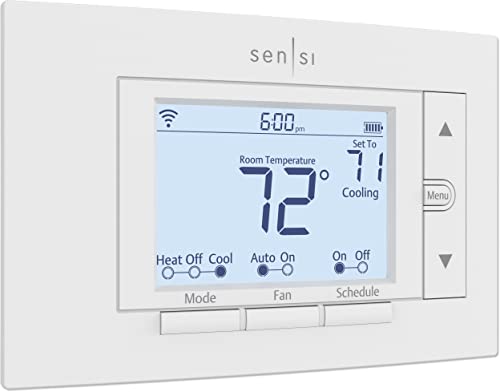
The Sensi Smart Thermostat by Emerson is a programmable option designed for energy efficiency and ease of use. It supports common installation in homes with 1 heating and 1 cooling stage and is compatible with most HVAC setups that do not require complex multi-stage configurations. The device emphasizes privacy protection and DIY installation using a built-in level and app-guided setup. While it reduces energy use with scheduling and remote access features, the setup may not require a c-wire in every case. Evaluate compatibility with your existing wiring before installing.
Amazon Smart Thermostat

The Amazon Smart Thermostat emphasizes ease of upgrade for existing systems and is designed to integrate with Alexa and Ring ecosystems. It’s positioned as a smart upgrade for basic 1H/1C configurations to help manage energy use automatically and via presence detection. The product highlights potential rebates after purchase, which can help offset costs. While it provides smart features, verify that your 1H/1C system can fully leverage the thermostat’s automation and any required c-wire compatibility for optimal operation.
Riseem Non-Programmable Thermostat

Riseem offers a non-programmable thermostat suitable for single-stage systems with 1 heat and 1 cool. It emphasizes easy DIY installation with large terminal blocks and a user-friendly backlit LCD display. Compatibility covers a broad range of conventional heating and cooling setups, including gas, oil, electric furnaces, and some boiler-based configurations. The device clarifies exclusions for multistage systems and certain high-voltage or specialized heating types; confirming your system matches the supported configurations helps prevent installation issues.
Heagstat Non-Programmable Thermostat

The Heagstat model is positioned for conventional single-stage heating and cooling systems. It includes specific installation guidance and notes about the base wire requirements. It supports up to 1 heat/1 cool configurations and warns about incompatibilities with multistage, heat pump, line voltage, and certain hydronic systems. This guidance helps buyers verify that their wiring and equipment align with the product’s limits, reducing the risk of improper installation or failure.
Honeywell Home Non-Programmable Thermostat

Honeywell Home’s non-programmable thermostat focuses on straightforward replacement for 1H/1C applications. It highlights a large screen and clear font for daily use, plus an installation plate that simplifies future upgrades. The model is suitable for standard single-stage heating and cooling systems and is known for reliable performance from a trusted brand. Before purchase, confirm wiring compatibility and ensure the device matches your HVAC configuration to avoid compatibility issues.
Buying Guide: Key Purchase Considerations
- System compatibility: Confirm your HVAC setup is single-stage (1H/1C) and does not require multi-stage or heat pump configurations. Review product notes about exclusions such as 2H/2C, 4H/2C, or line voltage systems.
- Wiring requirements: Many thermostats rely on a C-wire for stable operation and smart features. Check whether your current wiring matches the thermostat’s base and terminal layout described in the instructions.
- Display and usability: A backlit LCD or large display improves readability, especially in dim rooms. Consider models with clear controls and intuitive interfaces for quick adjustments.
- Smart features: Some options offer remote access, scheduling, and compatibility with voice assistants (Alexa, Google Assistant). Weigh the need for these features against potential privacy considerations and setup complexity.
- Energy savings potential: Look for models that emphasize energy management, status reports, and intuitive overrides that help reduce consumption without sacrificing comfort.
- Installation approach: Most listed thermostats are designed for DIY installation. Assess your comfort with basic wiring and mounting tasks, and follow the included instructions closely to avoid wiring mistakes.
- Brand reliability and support: Reputable brands often provide clearer installation guidance, longer-term firmware updates, and easier customer support paths if issues arise.
- Future-proofing: If you plan to upgrade to more advanced smart home features later, choose thermostats with robust app ecosystems, regular updates, and compatibility with common home automation platforms.
These options offer straightforward solutions for homes with conventional single-stage heating and cooling. When selecting, prioritize correct wiring compatibility, documented installation guidance, and whether smart features align with your energy goals and home automation plans.