Best Indirect Fired Construction Heaters for Reliable Warmth on Job Sites
Direct heat can be unsafe or inefficient on large worksites. Indirect fired construction heaters offer safer, steadier warmth with lower particulate emissions and quieter operation. Ideal for contractors, site foremen, and workshop managers, these units provide scalable heating for spaces from garages to full-scale construction zones. The following selections are among the most relevant options for American job sites, focusing on performance, fuel flexibility, and portability. The quick-reference table below helps you compare key features at a glance.
| Product | Fuel Type | BTU Range | Best For |
|---|---|---|---|
| Modine Hot Dawg, Gas Fired Unit Heater, 125,000 BTU | Natural Gas | 125,000 | Residential/Commercial spaces with ceiling clearance close to limit |
| Modine Hot Dawg Gas Fired Unit Heater Propane 75,000 BTU | Propane | 75,000 | Garage or smaller workshop with propane supply |
| VEVOR Kerosene Forced Air Heater, 215,000 BTU | Kerosene | 215,000 | Large spaces and workshops with kerosene/diesel flexibility |
| L.B. White CP170NU Tradesman 170NU | Natural Gas | 125,000–170,000 | Portable site heating with precise control |
| Reddy Heater 80,000 BTU Forced Air Kerosene Heater | Kerosene | 80,000 | Smaller-to-medium spaces needing quick heat |
Modine Hot Dawg 125,000 BTU Natural Gas Fired Unit Heater

Best for larger residential or commercial spaces that require reliable ceiling-slung warmth with minimal vibration. The Hot Dawg line is known for quiet operation and a compact footprint that fits areas with limited vertical space, making it suitable for garages or shops near the ceiling. The 125,000 BTU model provides steady heat output with natural gas compatibility for continuous operation.
Who it’s best for: site managers needing a durable, low-noise heater that can be mounted just one inch below the ceiling. Why selected: high efficiency, consistent heat, and a proven track record in tough environments. Caution: ensure proper venting and clearances as per local codes.
Modine Hot Dawg Gas Fired Unit Heater Propane 75,000 BTU

Best for smaller garages or workshops that rely on propane. This unit provides efficient, power-vented heating with 75,000 BTU input, making it a solid choice when space is tighter and propane availability is preferred. It offers an economical solution for mid-size areas without sacrificing warmth.
Who it’s best for: contractors who need a compact heater with propane compatibility and straightforward installation. Why selected: reliable performance in smaller footprints. Caution: check fuel supply and venting requirements to maintain safe operation in enclosed spaces.
VEVOR Kerosene Forced Air Heater 215,000 BTU
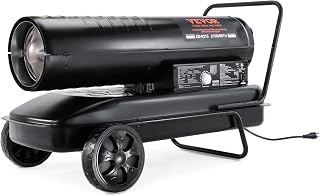
Best for very large workspaces or outdoor areas where building electrical or gas lines are not practical. This high-capacity kerosene heater delivers up to 215,000 BTU and supports thermostatic control for energy savings. It can operate on kerosene or diesel, expanding fuel flexibility for remote sites.
Who it’s best for: crews needing rapid, large-area heat with fuel flexibility in rough or open environments. Why selected: strong heating output, adjustable temperature, and built-in safety features. Caution: fuel choice must be consistent with the unit’s design; avoid mixing fuels in one run.
L.B. White CP170NU Tradesman 170NU

Best for portable site heating with precise control. The 170NU model offers a variable rate valve and thermostatic control to adjust output between 125,000 and 170,000 BTU per hour, promoting efficient fuel use and stable temperatures across varying job-site conditions.
Who it’s best for: operators who need adjustable heat on the move and consistent performance in workshop spaces. Why selected: portability, robust build, and flexible heat output. Caution: ensure the unit is securely mounted or stabilized during transport to prevent movement on uneven terrain.
Reddy Heater 80,000 BTU Kerosene Forced Air Heater

Best for medium spaces where quick, temporary heat is needed. The Reddy Heater 80,000 BTU model uses kerosene and provides a steady warmth suitable for garages or smaller construction zones. It includes fibrosis-friendly features like a thermostat and diagnostic indicators.
Who it’s best for: contractors seeking a cost-effective, mid-range heater with straightforward operation. Why selected: good balance of heat output, fuel versatility, and mobility. Caution: ensure adequate ventilation when using kerosene in enclosed spaces.
Buying Guide: Indirect Fired Construction Heaters
What matters most when choosing indirect fired heaters includes heat output, fuel availability, and portability. Consider the following questions to guide your decision:
- What is the square footage or volume to be heated, and what BTU range is required for comfortable warmth?
- Is natural gas, propane, kerosene, or diesel more accessible on the job site?
- Do you need ceiling-mounted installation or portable operation for frequent relocation?
- Are quiet operation and low emissions important for site safety and worker comfort?
- What are the required safety features, such as thermostat control, overheat protection, and automatic shutoffs?
Fuel and Installation Considerations
Natural gas and propane units typically offer lower operating costs and steady supply on many sites, but require proper venting and connection to a gas line or tank. Kerosene and diesel units provide fuel flexibility for remote locations but may require more ventilation and fuel management. When selecting a unit, verify compatibility with your current site infrastructure and local codes. Installation height, clearances, and mounting options influence efficiency and safety.
Portability Versus Capacity
Portable units are easier to move between rooms or trucks, but may have lower BTU ranges. High-capacity units cover large areas but require more space and fuel handling. For multi-space projects, a two-tier approach—one portable unit for mobile warmth and a larger, fixed unit for main work zones—can balance efficiency and convenience.
Safety and Compliance
Always follow manufacturer guidelines for ventilation, clearance distances, and shutoff mechanisms. Indirect fired heaters must be used with appropriate exhaust routes and carbon monoxide mitigation measures. On construction sites, ensure workers are trained on safe operation and emergency procedures.
Maintenance and Longevity
Regular inspection of fuel lines, filters, and ignition components helps prevent downtime. Keep units clean and free of dust, especially in dusty job sites. Periodic professional service can extend life and maintain efficiency in harsh environments.
FAQ
- Q: Which heater is best for a 1,500 sq ft workshop? A: A mid-range unit in the 100,000–170,000 BTU range or a combination of portable and fixed units can provide even warmth across the space.
- Q: Is natural gas safer than kerosene on construction sites? A: Natural gas generally offers steadier delivery and cleaner burn, but requires gas lines and venting; kerosene provides fuel flexibility where gas lines are not available.
- Q: Can I use a propane heater indoors? A: Yes, with proper ventilation and adherence to safety guidelines, including exhaust and clearance requirements.
- Q: How do I choose between portable and fixed heaters? A: Consider space layout, frequency of relocation, and total heat demand. Portable units offer flexibility; fixed units provide stable, long-term heating.
- Q: What maintenance steps are essential? A: Regularly inspect fuel lines, filters, ignition, and venting; clean dust; and schedule professional service periodically.