Best Humidistat for Crawl Space: Easy Humidity Control for a Healthier Home
Maintaining proper humidity in crawl spaces helps prevent wood rot, mold growth, radon migration, and musty odors that can affect whole-house air quality. A dedicated humidistat or dehumidistat-based control system can automatically regulate ventilation fans to keep moisture in check. This article highlights five reliable crawl-space humidistat solutions from reputable brands, explains how they work, and provides practical buying guidance.
Product snapshot: the following selected products are designed to manage crawl space humidity with built-in humidity controls, thermostat functions, or dual control modes. They range in complexity from simple dehumidistat controllers to integrated thermostat-humidistat units, all aimed at reducing moisture-driven issues in basements, attics, garages, and crawl spaces.
| Product | Brand | Key Benefit |
|---|---|---|
| Briidea Crawl Space Humidistat Controller | briidea | Two control modes with two outlets; UL-listed for safety |
| Tjernlund DH10 Crawlspace Dehumidistat | Tjernlund | Simple dehumidistat with broad RH range |
| Attic Fan Adjustable Thermostat and Humidistat | Quietcool | Replacement-ready for attic fans; adjustable climate controls |
| Hiorucet Attic Fan With Thermostat Humidistat | Hiorucet | High-precision start-up temp and humidity settings |
| CADPXS Crawlspace Ventilation Fan | CADPXS | Integrated humidistat and dehumidistat with freeze protection |
Briidea Crawl Space Humidistat Controller

The briidea model combines dehumidification control with thermostat function across two plug-in outlets. It supports dehumidistat and thermostat + dehumidistat modes, enabling automatic fan activation when humidity rises or when temperature thresholds are met. Both power cord and sockets carry UL listings for safety. This unit is designed to reduce crawl-space moisture, improving indoor air quality and helping prevent wood rot in the home above.
Tjernlund DH10 Crawlspace Dehumidistat

This dehumidistat is designed specifically for crawl space fans, adjusting from 20% RH to 80% RH and rated up to 10 amps at 115 VAC. It offers a straightforward option to trigger ventilation when humidity climbs, helping to reduce moisture and associated problems in supporting spaces like basements and attics.
Attic Fan Adjustable Thermostat And Humidistat

Designed as a replacement for malfunctioning attic fan components, this Quietcool unit combines an adjustable thermostat (50°F–120°F) with a humidistat (30%–90%). This dual capability supports automatic activation of attic ventilation to manage both temperature and humidity, making it a practical option for homes with attic venting needs.
Hiorucet Attic Fan With Thermostat Humidistat

This upgraded controller allows precise startup temperature settings (60°F–120°F) and a humidistat range of 30%–90%. It aims to maximize energy savings and ensure safe indoor conditions by coordinating ventilation with both temperature and humidity. The unit is noted for straightforward installation and broad applicability to attic fans, greenhouse exhausts, and other ventilated spaces.
CADPXS Crawlspace Ventilation Fan
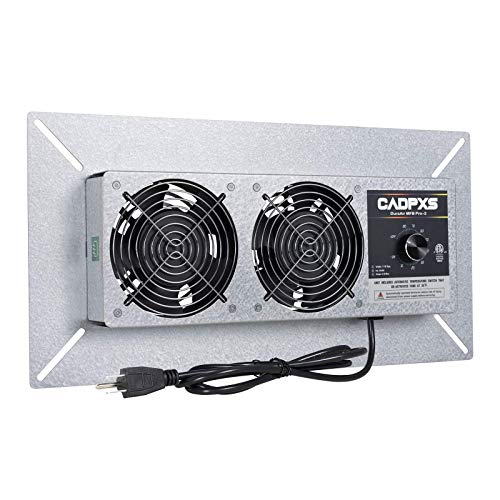
CADPXS combines a crawlspace ventilation fan with a built-in humidistat and dehumidistat, plus a freeze-protection thermostat for outdoor temperatures. With 220 CFM airflow and a six-foot power cord, it is designed to vent damp crawl spaces, balance indoor and outdoor air, and help prevent radon and moisture-related issues in the living areas above.
Buying Guide: Key Considerations For Selecting A Humidistat System
- Control type and integration: Decide whether you need a simple dehumidistat, a thermostat-humidistat combo, or a dual-node controller that can operate two outlets independently. Consider how it integrates with existing fans or ventilation equipment.
- Humidity setpoint range: Look for a unit with a flexible humidity range (commonly 20%–90% RH). Ensure the range covers your local climate and the specific moisture risks of your crawl space.
- Temperature monitoring: If you live in areas with cold winters, choose controllers with a frost protection feature or a built-in thermostat that prevents fans from running in freezing conditions unnecessarily.
- Electrical safety and compliance: Ensure UL listing or equivalent safety certifications for wiring, outlets, and components. If you require GFCI protection, verify whether it is included or optional.
- Ease of installation: Clear wiring diagrams and minimal tools can simplify installation. Some products are designed as replacements for existing attic or crawlspace components, reducing complexity.
- Energy efficiency: A controller that turns fans on only when needed helps minimize energy use and extends equipment life. Check for automatic shut-off features below your set thresholds.
- Durability and environment: For crawl spaces, select units built to tolerate humidity, dust, and possible radon exposure. Stainless steel or corrosion-resistant housings can offer longer service life.
- Warranty and support: Short-term warranties and responsive customer support are helpful in case installation or operation questions arise.
Choosing the right humidistat-based solution involves balancing ease of use, compatibility with your ventilation setup, and the level of automation you prefer. The models listed above provide a spectrum from straightforward dehumidistat control to more advanced thermostat-humidistat combinations, enabling you to tailor humidity management to your crawl space and overall home air quality goals.