Best Gas Boiler Power Venters for Efficient, Safe Venting in Homes
Power venters offer a compact, cost‑effective solution for venting gas boilers, enabling installation where traditional chimneys aren’t feasible. This guide highlights five top options, detailing how they support safe exhaust, easier retrofits, and flexible placement in both new builds and renovations. Each product below includes practical features to help you compare performance, ease of installation, and compatibility with common gas appliances.
| Product | Brand | Key Benefit |
|---|---|---|
| Tjernlund HSJ Gas Sidewall Power Venter Fan | Tjernlund | Flexible side‑wall venting with safety interlocks |
| Tjernlund HS-1 Power Venter | Tjernlund | Compact, easy to install with UC1 control |
| Tjernlund HS4 Gas Sidewall Power Venter Fan | Tjernlund | Ideal for renovations and multi‑story applications |
| Tjernlund HS3 Gas Sidewall Power Venter Fan | Tjernlund | Proven exhaust performance with sidewall venting |
| Field Controls 46198901 4MG1 4″ MG1 Barometric Draft Control | Field Controls | Precise draft control for gas appliances and sidewall venting |
| Tjernlund MAC4E Multiple Appliance Control | Tjernlund | Interlock multiple appliances via UC1 system |
Choosing a power vent system involves balancing suitability for the existing structure, safety features, and compatibility with your boiler or furnace. The following sections present five relevant options, focusing on reliability, installation practicality, and how each device handles venting, drafts, and interlocks. This overview helps homeowners and contractors select a solution that maintains proper combustion and safe venting, without the need for extensive chimney work.
Tjernlund HSJ Gas Sidewall Power Venter Fan

The HSJ model from Tjernlund is designed for side wall venting, commonly used when direct venting to a chimney is impractical. This unit supports electric to gas or oil conversions, renovations, and new constructions, helping to avoid costly masonry changes. Side wall venting reduces the need for extensive chimney runs across multiple stories, saving both time and materials. Built‑in safety interlocks help ensure the exhaust system operates correctly, addressing a key concern for modern homes with gas appliances.
Key aspects include a streamlined installation path that allows venting through an exterior wall, which can be especially advantageous in retrofit scenarios. The HSJ’s interlocks contribute to combustion safety by validating exhaust flow before ignition, and by confirming continued vent operation during run cycles. For homes upgrading older heating setups, the HSJ provides a practical, code‑compliant option that minimizes disruption while preserving reliability.
Tjernlund HS-1 Power Venter

The HS-1 Power Venter is a compact solution that handles 150–300 BTU capacity with straightforward operation. It includes a UC1 control, which centralizes safety features and interlocks for a reliable venting setup. Its compact footprint supports installations in tighter spaces often encountered in renovations or retrofits. Easy installation is a notable benefit, reducing labor and disruption during integration with existing gas appliances and venting paths.
In practice, the HS-1 aligns well with single‑appliance needs where a simple, dependable draft solution is required. The integrated UC1 control helps coordinate draft safety with other venting devices in the system, providing a clear path to safe operation without requiring complex wiring. When paired with compatible gas appliances, the HS‑1 offers a balanced mix of performance, simplicity, and safety for households updating their heating strategy.
Tjernlund HS4 Gas Sidewall Power Venter Fan
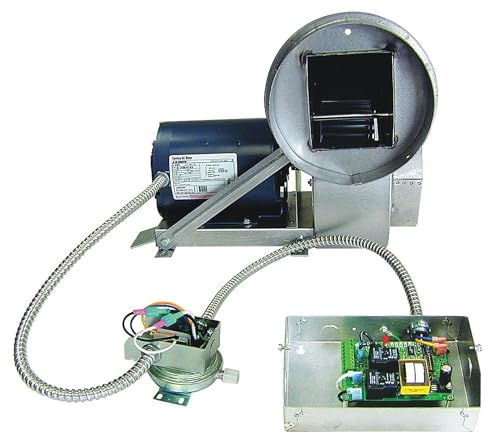
The HS4 is another sidewall venting option from Tjernlund, designed for situations such as renovations or multi‑story installations. This model continues the brand’s emphasis on time and material savings by enabling vent runs through an exterior wall rather than a full chimney system. The sidewall approach reduces construction complexity and associated costs while maintaining proper exhaust flow and safety interlocks to ensure compliant operation in residential settings.
With sidewall venting, key considerations include the ability to apply to gas or oil upgrades, compatibility with existing flue work, and the ability to consolidate vent routes for efficiency. The HS4 addresses these concerns by providing a solution that supports efficient installation, reliable exhaust, and integrated safety features. For homeowners looking to modernize or replace older venting in a multi‑story home, the HS4 offers a practical balance of performance and ease of installation.
Tjernlund HS3 Gas Sidewall Power Venter Fan

The HS3 model emphasizes reliable sidewall venting with an emphasis on practical installation in diverse homes. The product features a design language similar to other HS series units, focusing on enhancing exhaust performance while preserving safety interlocks that many modern gas appliances require. The HS3 aims to deliver a balanced solution for homes needing a sidewall vent option that can accommodate various installations.
Operators should consider how well the HS3 integrates with existing vent paths and draft controls, particularly in spaces where flue work is limited or where retrofits are necessary. By combining dependable venting with proven safety interlocks, the HS3 provides a robust option for households prioritizing consistent exhaust performance and straightforward installation during a retrofit or new build.
Field Controls 46198901 4MG1 Barometric Draft Control

The Field Controls 4MG1 MG1 is a barometric draft control intended for gas applications, including conversions, vented systems, and sidewall power venters. It provides precise draft management, addressing venting conditions that can challenge combustion stability. The double‑acting design allows it to respond to negative or positive draft scenarios, relieving pressure when needed and contributing to safer, more consistent operation in systems without traditional draft hoods.
Key advantages include its suitability for updrafts and mechanical vented configurations where accurate draft control is essential. Its adjustable draft range helps tune performance for specific appliances and venting layouts, supporting improved combustion stability and efficient venting in gas‑fired installations. For projects requiring meticulous draft control alongside power venting, the 4MG1 is a solid choice.
Tjernlund MAC4E Multiple Appliance Control

The MAC4E control enables interlocking of up to four additional appliances with fixed‑speed auto‑draft inducers and power venters, including gas and oil units. It coordinates with the UC1 Universal Control to ensure safe operation across multiple devices, reducing the need for complex wiring on job sites. This is especially useful when multiple venting or draft devices must operate in concert to maintain safe and stable combustion conditions.
By centralizing control through a dedicated interlock system, the MAC4E helps simplify multi‑appliance installations and supports adherence to safety circuits like fan prover controls. Contractors appreciate the reduced wiring complexity and the consolidated safety management, while homeowners gain greater confidence in the synchronized operation of their venting equipment.
Buying Guide: Key Purchase Considerations
- Vent location and installation: Sidewall venters are ideal where chimneys are impractical. Assess exterior wall availability, clearance, and potential need for additional supports or weatherproofing.
- Burner and appliance compatibility: Confirm the venter’s rated BTU range and input compatibility with your boiler or furnace to avoid oversizing or under‑venting.
- Safety interlocks and controls: Look for built‑in safety interlocks (e.g., UC1 compatibility) and draft controls that ensure exhaust is properly drawn and exhausted during operation.
- Draft management: Barometric and mechanical draft controls help stabilize combustion. Double‑acting designs can respond to a wider range of venting conditions.
- Electrical requirements: Check power needs, wiring complexity, and whether a central control (like UC1) is compatible with multiple devices needing interlocks.
- Maintenance and serviceability: Favor units with accessible components and clear service documentation to simplify routine checks and replacements.
- Noise and vibration: Some venters operate more quietly than others; consider mounting and duct routing to minimize disturbance.
- Code compliance: Ensure the system meets local building and safety codes for gas appliances and venting installations.
- Future compatibility: If you anticipate future appliance upgrades, choose a control strategy that can accommodate additional devices without rework.
- Cost vs. value: While installation cost matters, prioritize long‑term safety, reliability, and energy efficiency when evaluating options.
When selecting a power vent system, consider whether you need a single‑appliance solution or a multi‑appliance interlock approach. For retrofit projects, sidewall venting can significantly reduce installation time and structural modifications. For multi‑appliance configurations, a centralized control strategy (such as MAC4E with UC1) can simplify wiring and coordination while maintaining safety standards. Finally, pairing a precise draft control with a well‑matched venting device helps ensure stable combustion and reliable exhaust across a range of operating conditions.