Best Pressure Regulators for Natural Gas and LPG Applications
Choosing the right pressure regulator is essential for safe, reliable operation of natural gas and liquefied petroleum gas systems. The following selections cover a range of inlet/outlet sizes, compatibility with NG and LPG, and installation requirements. Each product highlights key features, user guidance, and practical use cases to help with informed decisions.
Summary of chosen products:
| Brand | Model | Inlet | Outlet | Notes |
|---|---|---|---|---|
| TEENGSE | 102-B Natural Gas Interchange Regulator | 1/2″ FPT | 1/2″ FPT | NG/LPG compatible; includes brass adapters |
| MAXITROL | RV48L Natural Gas Regulator | 3/4″ In | 3/4″ Out | 3/4″ FPT thread; NG |
| MAXITROL | RV48L Natural Gas Regulator | 1/2″ FPT | 1/2″ FPT | 1/2 PSIG In; 3″-6″ WC Out |
| Awoco | RV47L Natural Gas Regulator | 1/2″ FPT | 1/2″ FPT | 4″-8″ WC Out; NG |
| Aupoko | 1/2″ Gas Pressure Regulator | 1/2″ FPT | 1/2″ FPT | Two brass adapters included; LPG/NG modes |
TEENGSE 1/2″ Natural Gas Interchange Regulator

The TEENGSE 102-B regulator is designed for natural gas and liquefied gas valve systems with 1/2″ FPT inlet and outlet threads. It ships with brass 1/2″ NPT adapters for flexible installation. The unit is adjustable, enabling switching between LPG and natural gas configurations by adjusting the copper shaft core direction. In LPG mode, inlet ~11″ w.c. (2.74 kPa) and outlet ~10″ w.c. (2.45–2.55 kPa); in NG mode, inlet ~7″ w.c. (1.74 kPa) and outlet ~4″ w.c. (0.95–1.05 kPa). Typical flow rates are 30–50 L/min depending on mode.
MAXITROL RV48L Natural Gas Regulator (3/4″ In/Out)

This regulator features natural gas operation with a 3/4″ pipe thread size (both inlet and outlet). It specifies an inlet of 1/2 PSI and an outlet range of 3″–6″ water column. It is important to verify the physical opening matches a 1-1/16″ diameter for 3/4″ piping as noted in the product specs to ensure proper fit. CSA/UL considerations may apply depending on installation location and system requirements.
MAXITROL RV48L Natural Gas Regulator (1/2″ FPT)
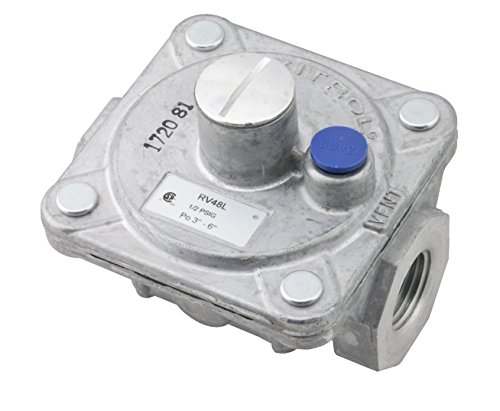
This model provides NG regulation with a 1/2″ FPT inlet and outlet. The outlet range remains 3″–6″ water column. The product notes emphasize the 13/16″ opening for 1/2″ gas pipes, underscoring the need to confirm pipe size prior to purchase to avoid fit issues. Installation should follow arrow direction for gas flow and use gas-rated thread tape for a secure seal.
Awoco RV47L Natural Gas Regulator

Awoco’s RV47L regulator uses 1/2″ FPT threads for NG service with an outlet range of 4″–8″ water column. The unit emphasizes proper installation orientation and the use of gas-rated seal tape for a leak-free connection. The spec highlights a 13/16″ opening diameter for 1/2″ piping, guiding compatibility checks with existing piping configurations.
Aupoko 1/2″ Gas Pressure Regulator with Adapters

Aupoko’s 1/2″ regulator supports two-mode operation compatible with NG and LPG applications. It includes two brass adapters: 1/2″ NPT male x 3/8″ flare male, and 1/2″ NPT male x 1/2″ NPT male. Modes mirror LPG (inlet 2.74 kPa, outlet ~10″ w.c., 30 L/min) and NG (inlet 1.74 kPa, outlet ~4″ w.c., 50 L/min). The regulator is designed for 1/2″ female NPT fittings and emphasizes straightforward installation with proper tape.
Buying Guide
Key factors to consider when selecting a natural gas regulator:
- Inlet and outlet sizes: Ensure compatibility with existing piping (1/2″, 3/4″, or 1″) and matching FPT or NPT threads. Some models also ship with adapters.
- Gas type and pressure range: Confirm NG vs LPG compatibility and the regulated outlet pressure (commonly in inches of water column). Verify required flow rate for your appliance and ensure regulator can meet demand.
- Mode flexibility: Some regulators offer dual modes for natural gas and LPG. If you switch fuels or appliances, a dual-mode regulator can simplify operation.
- Install orientation and accessibility: Correct orientation is critical for safe operation. Position the regulator where service access and leak checks are practical.
- Materials and durability: Look for robust metal construction to resist corrosion and provide long-term reliability, especially in outdoor or harsh environments.
- Safety certifications and compliance: CSA/UL listings, and compliance with local codes, are important for residential installations.
- Adapters and fittings: If your system uses adapters, verify compatibility with the regulator’s thread type and sealing requirements.
- Leak testing and maintenance: Plan for leak checks after installation and periodic maintenance to maintain safe operation.
When evaluating options, compare the regulator’s intended use, the exact outlet pressure, and the physical fit with your piping. For multi-fuel setups, regulators offering LPG/NG modes can reduce the need for additional components. Always follow manufacturer installation guides and local codes to ensure safe operation.