Best WiFi Thermostats for Electric Baseboard Heaters
Choosing the right WiFi thermostat for electric baseboard heaters can improve comfort, cut energy use, and simplify control with apps and voice assistants. This guide focuses on line-voltage high-power models that work with 120V or 240V baseboard systems. Each option below is compatible with common smart home ecosystems and includes scheduling, remote control, and energy-saving features. Review the selections to find the best fit for your heater type and wiring setup.
| Product | Brand | Key Benefit | Voltage |
|---|---|---|---|
| Mysa Smart Thermostat LITE | Mysa | Line voltage control; free app; energy reports | 120V/240V |
| meross Smart Thermostat for Electric Baseboard | meross | Works with HomeKit, Alexa, Google; 4-wire install | 120V/240V |
| Mysa Smart Thermostat for Electric Baseboard Heaters 240V | Mysa | Remote control; 100% free app; alerts | 240V |
| MOES Programmable Smart Thermostat | MOES | Remote control via app; 2.4G WiFi; voice compatibility | 120V/240V |
| MAXKOSKO WiFi Smart Thermostat for Electric Floor Warming | MAXKOSKO | Touchscreen display; energy saving; remote control | 120V/240V |
Mysa LITE Smart Thermostat For Baseboard Heaters
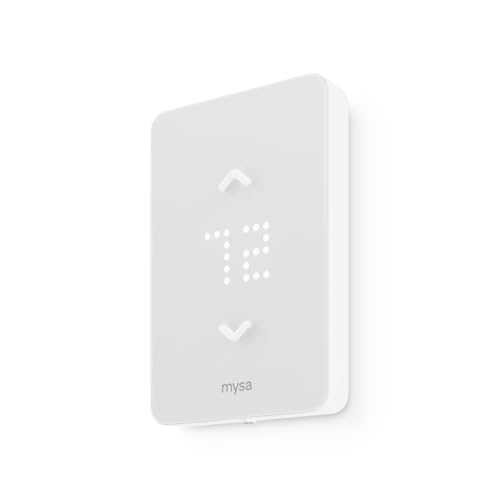
The Mysa LITE is a line-voltage thermostat designed for 120V–240V electric baseboard heaters, fan-forced heaters, wall heaters, and convectors. It supports scheduling to create daily programs, which helps reduce energy use when away and maintain comfort when home. The former is complemented by a 100% free app that includes remote control, scheduling, and energy reports with no subscriptions. It integrates with HomeKit, Alexa, and Google Assistant, enabling voice and app-based control. The device aims to deliver savings of up to an estimated 26% on heating costs when used with optimized schedules. It is a straightforward DIY install for compatible baseboard setups.
Meross Smart Thermostat For Electric Baseboard And In-Wall Heaters

This Meross model is designed for high-voltage systems, supporting 120V–240V with a maximum load per device of 16A (1920W at 120V; 3840W at 240V). It requires four wires in the electrical box (including a neutral or second live wire) and is compatible with Apple HomeKit, Alexa, Google Home, and SmartThings, enabling voice control and routines. It provides an easy install path for baseboard, convector, and fan-forced systems, and includes smart integrations that help automate heating while maintaining comfort. Note that baseboard units are the intended application, so verify wiring and compatibility prior to installation.
Mysa 240V Baseboard Heater Thermostat

The 240V Mysa thermostat targets high-voltage baseboard heating with a remote-control capability via a free app. It supports HomeKit, Alexa, and Google Home, enabling voice and smart scheduling. The device emphasizes remote management and alerting for temperature changes and system status. It requires at least four wires, including a neutral or second live wire, and is designed to work with high-voltage electric baseboard heaters, allowing precise control of heating times and comfort levels while offering energy-saving opportunities through adaptive features and scheduling.
MOES Programmable Smart Thermostat For Electric Baseboard Heaters

MOES offers a programmable smart thermostat for high-voltage baseboard heaters with 2.4G WiFi and app control. The installation notes require at least four wires, including a neutral or second live wire, to ensure proper function. The device supports remote control via the Smart Life or TUYA app and is compatible with Alexa and Google Assistant for voice commands. It emphasizes energy savings through scheduled operation and remote adjustments, making it suitable for users who want both manual and automated control over their baseboard heating.
MAXKOSKO WiFi Smart Thermostat For Electric Floor Warming

MAXKOSKO’s WiFi thermostat targets electric floor warming and other high-voltage heating systems. It provides remote control via a smartphone and supports voice assistants like Alexa and Google Assistant. The thermostat supports programmable settings to balance comfort with energy savings, offering a touchscreen display for easy local interaction and a broad compatibility profile for underfloor heating and related electric baseboard configurations. It emphasizes user control through scheduling and remote management with a contemporary design suitable for various rooms.
Buying Guide: Key Considerations For Electric Baseboard Thermostats
- Voltage and load compatibility: Ensure the thermostat supports 120V or 240V and matches your heater’s wattage and wiring configuration. Some models require up to four wires, including a neutral, for proper operation.
- Wiring requirements: High-voltage baseboard systems often need a neutral or second live wire. Verify your electrical box has the necessary conductors before purchasing.
- Smart home integrations: Look for compatibility with HomeKit, Alexa, Google Home, and others. Consider whether you want voice control, routines, and platform-specific features (e.g., Apple HomeKit scenes).
- Energy savings features: Scheduling, adaptive brightness or display, and energy reports help quantify savings and optimize usage. Some models advertise significant cost reductions with proper programming.
- App experience and updates: A free, feature-complete app with ongoing support reduces subscription dependence and ensures long-term reliability.
- Display and usability: A touchscreen or clear display helps manual adjustments. Some models offer adaptive brightness or sleep modes to reduce clutter in the room.
- Installation complexity: DIY installation is common, but verify that you’re comfortable with wiring 120V/240V circuits and following safety guidelines. If uncertain, hire a licensed electrician.
- Compatibility caveats: Some thermostats are designed for baseboard heaters and not suitable for all high-voltage setups. Double-check that your system aligns with the product’s stated use.
- Reliability and security: Check customer reviews for connection stability and firmware updates. Some devices offer energy reports and remote diagnostics that aid maintenance.