Best Water Pressure Booster Pumps for Wells: Top 5 Home Models
Finding reliable water pressure from a private well can be challenging, especially in homes with variable water demand. The following picks are among the most capable, delivering steady pressure, efficient energy use, and built-in protections to safeguard the pump and your plumbing. Each option is designed for residential use, works with shallow wells, and includes features like automatic pressure switches, tanks, and sturdy housings. Use this guide to compare performance, durability, and ease of installation to choose the best water pressure booster pump for your well.
| Product | Max Flow (GPH) | Max Head (ft) | Key Benefit |
|---|---|---|---|
| AQUASTRONG 1.6 HP Shallow Well Pump with Pressure Tank | 1320 | 164 | High lift and durable stainless steel housing |
| AQUASTRONG Smart 45 Whole House Booster | 1500 | 150 | Automatic constant pressure with smart control |
| FOTING 1.5HP Shallow Well Pump | 1340 | 164 | Automatic 4.5 bar switching with tank |
| LANCHEZ 1.6HP Shallow Well Pump | 1340 | 150 | External gauge and safety shutoff features |
| Acquaer 1.6 HP Shallow Well Pump | 1320 | 165 | Durable stainless steel, compact design |
AQUASTRONG 1.6 HP Shallow Well Pump With Pressure Tank

The AQUASTRONG shallow well jet pump combines a 1.6 HP capacitor motor with a durable impeller to deliver up to 1320 GPH and a head up to 164 ft. The stainless steel housing resists corrosion, and a built-in pressure switch enables automatic operation. Includes a compact 5-gallon pressure tank and a pressure gauge for easy monitoring. The waterproof On/Off switch and overload protection help ensure safe, quiet operation for home, garden, and lawn use.
AQUASTRONG Smart 45 For Whole House

The Smart 45 is an integrated, intelligent booster designed for domestic boosting with automatic, adaptive pressure control. It maintains constant pressure across all taps, delivering up to 1500 GPH and a head of up to 150 ft. The unit supports a pressure range of 22–80 PSI, with a preset around 44 PSI. Its stainless steel components, rustproof motor housing, and maintenance-free tank deliver durability and health safety. Inverter technology and a quiet 55 dB(A) operation suit residential settings and light commercial use.
FOTING 1.5HP Shallow Well Pump With Tank

FOTING offers a 1.5 HP motor and a robust impeller that achieves up to 1340 GPH and up to 164 ft head. The included 5-gallon pressure tank holds water pressure for smooth operation with automatic starting and stopping set to 1.5–3 bar (approximately 22–44 PSI). An external pressure gauge helps monitor pressure in real time. Built with reinforced thermoplastic and corrosion-resistant materials, it includes overheat protection to guard against motor damage during heavy use or dry-running conditions.
LANCHEZ 1.6HP Shallow Well Pump With Tank
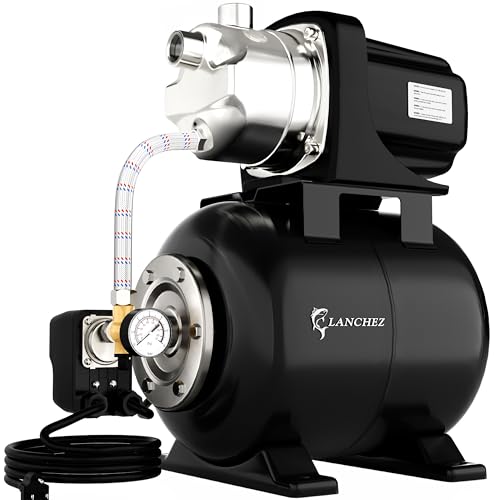
This LANCHEZ model features a 1.6 HP efficient motor with a 1340 GPH capacity and up to 150 ft head. It starts at 20 psi and shuts off at 40 psi, with a compact 5-gallon pressure tank and an external pressure gauge for real-time monitoring. The pump includes a waterproof On/Off switch, a durable carbon-ceramic seal, and automatic overload protection to prevent overheating. It is designed for home and garden irrigation and domestic water supply applications.
AQUASTRONG 1.6 HP Shallow Well Pump With Tank (NSF Certified)

This NSF-certified AQUASTRONG shallow well pump emphasizes drinking-water-grade safety while delivering solid performance: 1.6 HP motor, 1320 GPH, and up to 164 ft head. The stainless steel housing offers corrosion resistance, and a 5-gallon pressure tank with an integrated pressure gauge supports automated operation from 20 psi to 40 psi. A waterproof On/Off switch and reliable protection features contribute to safe, long-lasting use for households needing dependable water delivery.
Hanchen 3/4 HP Shallow Well Pump With Booster

Hanchen offers a smaller, automatic booster option with a 3/4 HP motor and flow-switch/pressure-switch dual-detection for automatic startup and shutdown. It is ideal for compact setups where space efficiency matters. The booster design assists with maintaining steady pressure when water demand changes, pairing well with smaller homes or apartments that require modest boost when taps are opened.
Buying Guide: Key Considerations For Choosing A Well Water Booster
- Flow rate and head: Match the GPH and maximum head to your household’s water demand and well depth. Higher GPH and head are beneficial for multi-tap scenarios or larger properties.
- Power and efficiency: Look for motors with energy-efficient ratings and inverter technology when possible to reduce running costs and noise.
- Pressure management: Decide between fixed-pressure pumps, which maintain a set pressure, and variable or smart pumps, which adjust to demand to prevent pressure fluctuations.
- Tank size and tank type: A larger pressure tank reduces cycling, extending pump life. Tanks typically range from 5 to 20 gallons for residential use; the included tank in many models is adequate for typical households.
- Durability and materials: Stainless steel housings resist corrosion, especially in harsh water conditions. Check seals and impellers for long-term reliability.
- Protection features: Overheat protection, dry-run shutoff, and automatic overload protection help prevent motor damage and extend service life.
- Noise and footprint: For indoor installs, consider pumps designed for low noise and compact footprints to avoid disturbing living spaces.
- Installation needs: Some units are self-priming; others require proper priming and foot-valve setup. Ensure compatibility with your existing plumbing and electrical supply.
- Warranty and certification: NSF certification or other safety standards may matter for drinking-water-related setups and provide assurance of build quality.
When selecting a booster pump, a balanced assessment of flow, head, efficiency, and system compatibility yields the best long-term results. Consider whether you want automatic smart control or a straightforward constant-pressure system, and ensure the chosen model includes a pressure tank and gauge for easy monitoring. Always follow manufacturer installation instructions and consult a professional if electrical or plumbing changes are needed.