Best Crawl Space Vent Fans for Dry, Healthy Basements and More
Choosing the right crawl space vent fan can improve indoor air quality, balance humidity, and reduce moisture-driven issues in basements, garages, attics, and hydroponics setups. This guide highlights five top options with built-in humidistats, thermostats, and durable construction to handle damp environments. Each product is evaluated for air output, controls, corrosion resistance, and overall suitability for crawl spaces and related areas.
| Product | Brand | Airflow (CFM) | Key Features |
|---|---|---|---|
| CADPXS Crawlspace Ventilation Fan | CADPXS | 220 | Humidistat, dehumidistat, freeze protection, 18″ x 9″ metal housing |
| ALORAIR 780CFM Crawlspace Ventilation Fan | ALORAIR | 780 | IP55, isolation mesh, antifreeze thermostat, 9.13″ foundation vent |
| ALORAIR 540 CFM Ventilation Fan | ALORAIR | 540 | Humidistat, dehumidistat, freeze protection, IP-55, isolation mesh |
| Abestorm 540CFM IP-55 Vent Fan | Abestorm | 540 | Dehumidistat, thermostat, isolation mesh, corrosion-resistant shell |
| Durablow M2D-S430 Crawl Space Vent Fan | Durablow | 220 | Dual fans, stainless steel 430, radon mitigation, dehumidistat |
When evaluating options, consider airflow needs based on space size, humidity levels, climate, and whether you need air-out or air-in operation. The following sections introduce five top choices, each with a linked product page for quick reference.
CADPXS Crawlspace Ventilation Fan With Humidistat
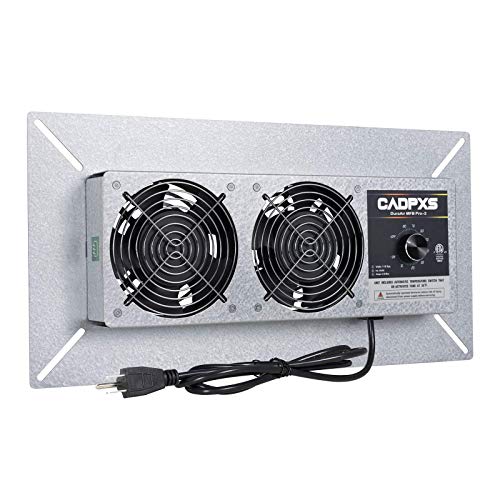
The CADPXS vent fan is designed for air-out operation in crawl spaces, basements, garages, attics, and hydroponics tents. It features a 220 CFM airflow and measures 18″ x 9″ x 2″, making it suitable for mid-sized damp areas. The unit includes a built-in humidistat range of 20% to 80% RH to automatically regulate moisture levels and improve room air quality. Freeze protection helps prevent issues during cold exterior temperatures. The dual-fan arrangement and grounded power cord support continuous, reliable exhaust, helping to minimize radon and odor migration into living spaces.
Tjernlund V2D Underaire Crawlspace Ventilator

The Tjernlund V2D is a compact solution designed to ventilate crawl spaces through existing passive vents. It delivers 220 CFM of airflow with a 40-watt, maintenance-free exhaust motor. The face plate is sized for standard brick foundation openings, making it a practical choice for retrofit projects where ductwork or routing options are limited. This unit emphasizes simple integration with existing ventilation paths for effective moisture reduction.
Durablow M2D-S430 Crawl Space Vent Fan

The Durablow M2D-S430 uses a stainless steel 430 housing and dual fans delivering robust air-out ventilation at 220 CFM. The built-in dehumidistat operates within a 20%–80% RH range, automatically adjusting humidity. A freeze protection thermostat halts operation below approximately 35°F to prevent damage in cold climates. The corrosion-resistant construction is well-suited for damp crawl spaces, basements, and foundations exposed to moisture and gases, while aiding radon mitigation and odor control.
ALORAIR 540 CFM Crawlspace Fan With Humidistat

ALORAIR’s 540 CFM model is designed for moderate-to-large crawl spaces, garages, attics, and basements. It integrates a humidistat and a freeze protection thermostat, ensuring automatic response to humidity while preventing frost-related shutdowns. The IP-55 rated housing with isolation mesh enhances protection against dust and moisture. The unit’s corrosion-resistant shell makes it suitable for long-term exposure to damp environments, and the 9.13-inch vent size fits many common foundation openings.
Abestorm 540CFM Crawlspace Ventilation Fan

The Abestorm 540CFM unit is designed for crawl spaces, basements, attics, and garages with a focus on active air exchange. It features a built-in dehumidistat and freeze protection thermostat, operating within a humidity range of 5%–80% RH and automatically turning off below 35°F. The IP-55-rated housing includes a 5.5 mm isolation mesh to deter pests while preserving airflow. The aluminum-zinc shell provides corrosion resistance for damp environments and long service life.
Buying Guide: Key Considerations For Crawl Space Vent Fans
- Airflow requirements: Match CFM to space size and moisture level. Larger spaces or highly humid areas typically need higher CFM units (e.g., 500–780 CFM) for effective air exchange.
- Humidity control: Built-in humidistats help automate moisture management. Look for adjustable ranges (often about 5%–80% RH or 10%–80% RH) for flexibility across seasons.
- Thermostats and freeze protection: Freeze protection thermostats prevent operation in extreme cold, reducing wear and preventing damage in unheated crawl spaces.
- Isolated dust and moisture protection: IP-rated housings (such as IP-55) and isolation meshes help guard against water, dust, and pests, extending the fan’s life.
- Material durability: Stainless steel (304 or 430) or corrosion-resistant shells handle damp, humid environments better than galvanized steel.
- Energy use and maintenance: Consider power consumption, ease of installation, and maintenance requirements. Some models offer dual-fan configurations for enhanced air exchange.
- Integration with existing vents: Some fans are designed to fit standard foundation openings and work with passive vents, which can simplify retrofit projects.
- Noise and comfort: Noise levels matter in occupied spaces; look for units with low decibel ratings or efficient fan designs to keep disturbances minimal.
- Radon and odor mitigation: For homes in radon-prone areas, select fans explicitly marketed for radon reduction and odor control.
- Warranty and service: Durable builds with solid warranties reduce long-term ownership costs and ensure access to support.
In practice, for crawl spaces of varying sizes and humidity levels, units with higher CFM values (such as 540–780 CFM) paired with humidistats and dehumidistat controls, offer robust performance. Stainless steel or corrosion-resistant housings help in damp environments, while freeze protection ensures reliable operation year-round. Retrofit-friendly designs that fit common foundation openings can simplify installation and maintenance.