Best Temporary Heaters for Construction Projects and Work Sites
When keeping a construction site or garage workspace warm, choosing the right temporary heater is essential for comfort and productivity. This guide highlights five reliable options, spanning propane torpedo units to electric forced-air and radiant models. Each product is evaluated for heating capacity, safety features, and suitability for large or drafty spaces. Use this overview to compare performance, installation, and operating considerations for your jobsite needs.
| Product | BTU/Power | Fuel Type | Approx. Coverage | Key Benefit |
|---|---|---|---|---|
| InoKraft MaXheat MH68 | 30,000–68,000 BTU | Propane | Up to 1600 sq ft | Wide heat range with adjustable angle |
| Habitio 125,000 BTU | 75,000–125,000 BTU/h | Propane | Up to 3125 sq ft | High capacity for large spaces |
| Flame King 60,000 BTU | 60,000 BTU | Propane | Up to 1500 sq ft | Safety features and auto ignition |
| Mr. Heater MH25CVX | 25,000 BTU | Propane | 625 sq ft (typical) | CSA certified; no electricity needed |
| DR Infrared Heater DR-PS11024 | 10,000 W electric | Electric | Small to medium spaces | Odor-free electric heat |
These options cover a range of situations—from rugged job sites requiring powerful propane warmth to electric heaters suitable for enclosed shop spaces. Always follow manufacturer safety guidelines, ensure proper ventilation for fuel-burning units, and verify electrical requirements for electric heaters before operation.
InoKraft MaXheat MH68 68,000 BTU Propane Heater

The InoKraft MaXheat MH68 delivers variable output from 30,000 to 68,000 BTU, capable of heating areas up to 1600 square feet. Its heavy-duty forced-air design promotes rapid temperature rise, reaching comfort levels within roughly 10 minutes. The unit supports adjustable heat angles for versatile coverage and is CSA certified for safety. It includes a hose and regulator setup (10 ft) for propane connection, making it suitable for garages, construction sites, and outdoor events with adequate ventilation.
Key features include a wide heat range, a compact portable form, and a focus on low-noise operation. Protection features help mitigate risks of overheating or gas leakage when used with proper ventilation and correct fuel connections.
Dura Heat EUH1465 Electric Forced Air Heater
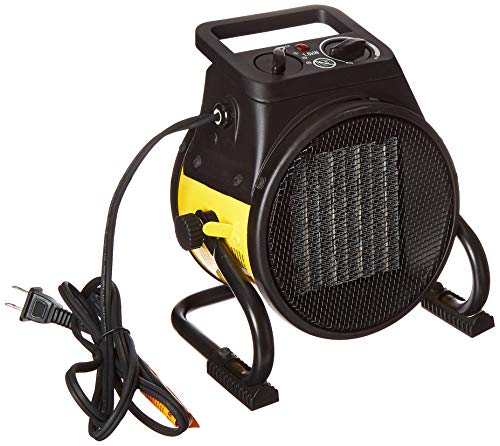
This electric forced-air heater provides 1500 watts of PTC ceramic heating and a robust steel body, ideal for garages, workshops, and commercial spaces. It offers versatile operation with heat and fan-only modes, allowing it to act as a supplemental heater or a fan circulator. The unit is well-suited for spaces where open flame or fuel isn’t practical or permitted, delivering quick warmth with a simple plug-in design.
Consider its electric power needs, footprint, and mounting options when planning installation at a construction site or shop. It pairs well with other heating strategies in mixed-winter climates or temporary work environments that require safe, electric heat without emissions.
Habitio 125,000 BTU Propane Heater
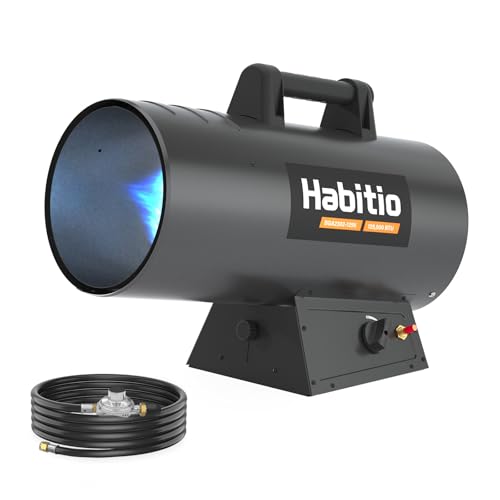
The Habitio unit offers a heating range of 75,000 to 125,000 BTU and covers up to 3125 square feet, making it suitable for large commercial spaces and expansive job sites. It includes a 10 ft hose with regulator and focuses on rapid heat generation. The safety features include overheat protection and automatic shutdown in case of a power outage, with CSA certification indicating compliance with safety standards. It is designed for quick warm-up and dependable operation in demanding environments.
When using high-capacity propane heaters, ensure proper ventilation to maintain air quality and reduce the accumulation of combustion byproducts. The unit’s performance is best evaluated with space layout and heat-loss estimations in mind.
Flame King 60,000 BTU Portable Propane Heater

The Flame King heater provides 60,000 BTU along with 1500-square-foot coverage, making it a solid option for construction sites, garages, and outdoor work spaces. Built-in safety features include a fuel shutoff, fire-detection system, and tilt shutoff to prevent accidents. It has auto piezo ignition and a gas control button for straightforward operation. This unit emphasizes safety and consistent heat output while remaining portable for use across multiple sites.
Factors to consider include fuel availability, ventilation needs for propane units, and potential noise levels during operation. The safety mechanisms help mitigate common risks associated with fuel-fired heaters on job sites.
Mr. Heater MH25CVX Propane Convection Heater
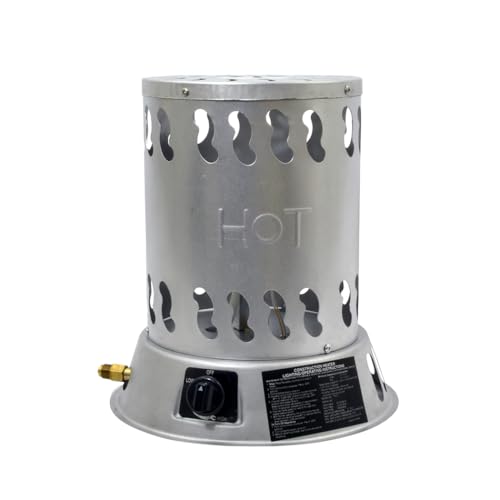
The Mr. Heater MH25CVX delivers 25,000 BTU with convection-style heating, warming up to 625 square feet and providing heat for extended operation from a standard 20-lb propane tank. It operates without electricity, using a standing pilot light and thermo-electric safety valve to shut off gas if the flame goes out. The unit includes a 10 ft hose, regulator, and P.O.L. tank connection for a quick setup, along with Piezo ignition for simple startup. It is CSA certified and designed for durability in garages, workshops, and outdoor work areas.
Consider fuel logistics, run time, and the requirement for a continuous gas supply when selecting this model for larger or wind-exposed job sites. It offers reliable heat without relying on electrical power, which can be advantageous in some environments.
DR Infrared Heater DR-PS11024 10,000-Watt Electric Model

The DR-Infrared DR-PS11024 offers 10,000 watts of electric heating, designed for portable, high-output warmth in larger shops or garages. Its 240-volt single-phase configuration makes it suitable for job sites with accessible electrical service and where fuel combustion is not desired or permitted. The unit emphasizes a clean, odor-free heat and is mounted to a floor stand for stability during operation. It requires a dedicated circuit breaker and appropriate electrical protection.
Electric heaters like this provide consistent warmth with minimal emissions, but electrical capacity and plug configuration must be verified to ensure compatibility with the site’s power supply and safety standards.
Buying Guide: Key Considerations For Temporary Construction Heaters
When selecting a temporary heater for construction work, several factors influence performance, safety, and total cost of ownership. Consider the following perspectives to balance heat output, space size, and site constraints:
- Heat output and space coverage: Match BTU or wattage to the area size, insulation quality, and refresh rate required. Larger spaces benefit from higher BTU units or multiple heaters working in tandem.
- Fuel availability and safety: Propane heaters are common on job sites but require proper ventilation and gas handling discipline. Electric heaters are emissions-free but depend on available electrical infrastructure and circuit capacity.
- Ventilation and indoor air quality: Fuel-burning heaters require adequate ventilation to avoid carbon monoxide buildup. Use CO detectors and never operate in enclosed spaces without airflow.
- Safety features: Look for overheat protection, auto shutoff, tilt sensors, and robust flame safeguards. CSA or UL certifications indicate adherence to safety standards.
- Portability and setup: Portable units reduce setup time across multiple work zones. Consider hose length, weight, and mounting options for stability and safe transport.
- Electrical requirements: Electric units vary widely in wattage and plug types. Ensure wiring, outlets, and breakers meet the unit’s power needs and local codes.
- Noise and disruption: Some models produce noticeable noise. Assess site tolerance and potential impact on workers and nearby operations.
- Operational costs: Factor fuel efficiency, run time per tank, and energy consumption to estimate ongoing costs during extended jobsite heating.
- Reliability and service: Choose brands with readily available parts and service networks to minimize downtime on critical projects.
For temporary construction heating, a mixed approach often yields best results: propane heaters for rapid, high-heat bursts in larger areas, electric heaters for controlled warmth in enclosed spaces, and a few strategically placed units to minimize cold spots. Always adhere to local safety regulations and manufacturer guidelines, and plan for adequate ventilation when using fuel-burning equipment on site.