Best Temperature Control for Grow Tent: Smart Solutions for Stable VPD
Maintaining precise temperature in a grow tent is essential for stable Vapor Pressure Deficit (VPD) and healthy plant development. The right temperature control system can automate heating or cooling, monitor humidity, and alert you to changes that affect growth. Below is a quick guide to five reliable temperature control products, followed by a buying guide to help you pick the best fit for your space and crop.
| Product | Brand | Key Benefit |
|---|---|---|
| ThermoForge T3 Heate | AC Infinity | Smart, all-in-one tent heater with VPD control |
| Inkbird ITC-308 | Inkbird | Dual-stage outlet thermostat for heating and cooling |
| H5075 Hygrometer | Govee | Remote temp and humidity monitoring with alerts |
| BN-LINK Reptile Thermostat | BN-LINK | Reliable digital control for heating mats and mats |
| GrowHub E42A | VIVOSUN | WiFi-based environmental control with VPD and schedule |
AC Infinity THERMOFORGE T3: Precise Grow Tent Heating With VPD

The AC Infinity THERMOFORGE T3 is designed specifically for grow tents and greenhouses. It integrates a VPD-oriented temperature controller with onboard sensing to trigger heat through a compact, 10-level PTC heating system. The device supports precise, PWM-controlled warmth and can operate alongside a tent’s venting setup. Its extension hose option helps place the heater away from plant canopies while maintaining uniform warmth. This model emphasizes reliability and tunable heat output to support stable root zones and canopy growth.
Key features include onboard sensor control, programmable temperature triggers, timers, and cycles. The 10-level heat output enables fine-tuning for different growth stages and environmental targets. For growers chasing consistent temperatures, the T3 offers a dedicated solution that reduces manual adjustments and helps maintain steady vapor pressure. It is suitable for tents, rooms, and light greenhouses where space efficiency matters.
Inkbird ITC-308 Digital Temperature Controller

The Inkbird ITC-308 provides a versatile dual-stage outlet thermostat, suitable for heating and cooling equipment in grow tents. It supports °C/°F display and features a dual relay to power different devices as conditions change. The dual display window shows both measured and set temperatures for quick reference. The unit excels in simple, reliable control, allowing growers to configure thermostat actions without complex programming. It pairs well with heaters, fans, and chiller devices in compact spaces.
With straightforward setup and dependable performance, the ITC-308 is popular for tents that require automated responses to temperature shifts. Its robust design and clear readouts help maintain target ranges for consistent plant development. While not a full environmental hub, it serves as a solid core controller when paired with appropriate heating or cooling equipment.
Govee H5075 Digital Hygrometer For Temp & Humidity
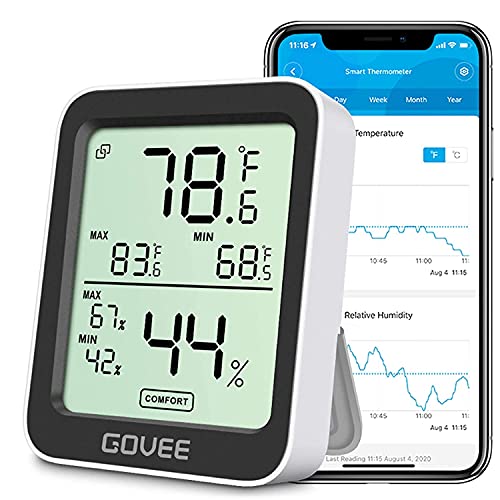
The Govee H5075 combines temperature and humidity measurement with remote app control and alerts. While primarily a hygrometer, it provides valuable data for maintaining stable grow tent conditions. The device offers Bluetooth connectivity with a range of up to 164 feet and a 3-inch LCD with high-contrast readouts. Characteristics include fast refresh rates and high accuracy for temperature (±0.54°F) and humidity (±3% RH). Data storage can record trends over time, aiding in scheduling and VPD planning.
Growers use the H5075 to monitor environmental fluctuations and trigger corrective actions through linked controllers or automation platforms. It works well as a supplemental sensor alongside a dedicated heater or cooling unit, helping ensure that target ranges stay within optimal levels for plant health and yield potential.
BN-LINK Reptile Thermostat: Simple Digital Heat Control

The BN-LINK digital reptile thermostat offers straightforward, reliable temperature control suitable for heating mats, seedling mats, and growth setups. It features easy setup with three buttons and supports Fahrenheit and Celsius. The device includes an indicator-aware display, a sensor probe, and a robust cord for flexible placement. It is designed primarily for heating devices and is a strong option for growers needing a simple plug-and-play controller with clear status indicators.
With its rugged construction and clear visuals, the BN-LINK unit helps ensure a steady warmth in the root zone or small propagation areas. The sensor probe allows precise monitoring while the 3-prong cord and extra length provide mounting flexibility. This controller pairs well with compact tents where space economy and simplicity are priorities.
iPower Digital Heating And Cooling Thermostat Controller
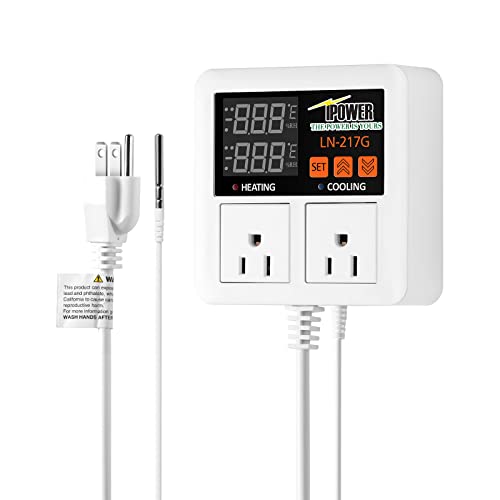
The iPower digital thermostat controller is designed for both heating and cooling needs in grow tents, seed germination, reptiles, and brewing environments. It features a dual-outlet setup for independent control of heating and cooling devices, a compressor delay, and an alarm system for high/low temperatures. The high-accuracy temperature probe operates across a wide range (-58 to 248°F) with digital display supporting Fahrenheit and Celsius. It suits growers who require a more comprehensive control package with monitoring alarms.
With its adjustable temperature settings and reliable sensors, this unit provides flexibility for managing day-night temperature swings. The integrated mounting options and clear interface make it suitable for wall mounting in tight tents, helping maintain more stable environmental conditions during critical growth phases.
VIVOSUN GrowHub E42A: WiFi Controller For Grow Tents

The VIVOSUN GrowHub E42A consolidates temperature, humidity, VPD, timer, cycle, and schedule controls into a single platform. It supports multiple devices and allows cloud or app-based management, simplifying complex environments. Built-in temperature and humidity monitoring with one probe provides real-time data, while automation can scale to stages of growth. The platform aims to unify equipment, making it easier to stabilize microclimates in a grow tent and respond to environmental shifts more quickly.
GrowHub’s strength lies in its automation capabilities and ecosystem. Growers can customize schedules for lights, fans, and vents, coordinating with VPD targets for improved plant performance. The WiFi connectivity allows remote oversight, which is beneficial for tents in remote locations or multi-tent setups where centralized control matters.
Buying Guide: Key Purchase Considerations For Grow Tent Temperature Control
- Temperature and humidity targets: Identify target ranges for your crop and stage of growth. Some systems emphasize precise heat, others emphasize balanced humidity alongside temperature.
- Control type: Decide between a single-device heater, dual-stage controllers, or a full environmental hub. Dual-stage and WiFi-enabled hubs offer more automation but may require more setup.
- Sensor placement: Place sensors where plants experience the most representative conditions, not near direct heat sources or vents. Probes influence accuracy and response times.
- Automation and alerts: Consider whether you need real-time alerts, app-based monitoring, or fully automated schedules. Remote monitoring can save time and reduce risk.
- Device compatibility: Check compatibility with your tent size, heater or cooler, and any existing fans or humidifiers. Ensure outlets and power ratings match your gear.
- Ease of use: For beginners, pick units with simple interfaces and clear displays. Advanced users may prefer programmable hubs with data logging and trend analysis.
- Reliability and safety: Choose units with robust construction, proper certifications, and overheat protection to minimize risk in enclosed spaces.
- Expansion potential: If you plan to scale, consider systems that support additional sensors and devices without a major redesign.
- Cost of ownership: Balance upfront cost with long-term benefits such as reduced labor, energy efficiency, and improved yields.