Best Snow Melting Systems for Concrete Slabs to Keep Surfaces Clear This Winter
Winter conditions can make snow and ice removal a constant chore, especially on concrete slabs like driveways, sidewalks, and patios. Snow melting systems placed under concrete provide reliable, long-lasting relief from ice buildup by warming the surface from beneath. This guide highlights five top options that perform well on concrete slabs, explaining how they work, their coverage, and key considerations for installation. Each product below is designed to reduce slips, improve safety, and lower the physical strain of shoveling in harsh weather.
Quick reference table for the featured products:
- WarmlyYours Electric Underground Cable, 342 ft — Covers 114 sq ft at up to 38.5 W/sq ft
- WarmlyYours Electric Underground Cable, 125.5 ft — Covers 41 sq ft at up to 38 W/sq ft
- WarmlyYours 2×10 ft Electric Snow Mat, 240V — 1000 W, under pavement
- WarmlyYours 2×10 ft Electric Snow Mat, 120V — 1000 W, under pavement
- SunTouch ConnectPlus WarmWire Kit, 40 Sq Ft — Includes cable, sensor, and thermostat
WarmlyYours 342-Foot Underground Cable for Large Areas

The 342-foot twin-conductor heating cable is designed for larger concrete surfaces, delivering up to 38.5 W/sq ft at a 4-inch spacing with a total heating power around 4000 W. It installs under concrete, asphalt, or pavers, making it suitable for driveways, stairs, walkways, and irregularly shaped areas where mats cannot cover every spot. With 114 square feet of coverage, this system reduces the need for manual snow removal by melting snow and ice before it accumulates, helping minimize slips and fatigue on harsh winter mornings.
Key features include broad compatibility with outdoor spaces, flexible installation under multiple surface materials, and powerful, rapid snow/ice melting performance. Because it’s wired to a 240V supply, it’s a robust option for larger properties seeking comprehensive under-slab heating. Consider layering with proper insulation and professionally routed controls to maximize energy efficiency and safety in a wide driveway or complex concrete landscape.
WarmlyYours 125.5-Foot Underground Cable for Smaller Areas
This 125.5-foot cable covers about 41 square feet and delivers up to 38.5 W/sq ft at 4-inch spacing, with 1500 W of heating power. It’s designed for installation beneath concrete, asphalt, or pavers and is well-suited for smaller driveways or entryways, as well as staircases and tight walkways. The flexible twin-conductor design provides dependable heating under outdoor surfaces, helping to keep access routes clear and safe during winter storms.
With its compact footprint, this option is ideal for homeowners who want a targeted approach—enabling you to focus heat where it’s most needed (for example, tire tracks or high-traffic entry paths) without overhauling larger slabs. Installation considerations include ensuring the spacing and power ratings align with local electrical codes and, if possible, pairing with a curbside or garage-facing control for convenient operation during snowy periods.
WarmlyYours 2×10 Ft Mat, 240V, 1000 Watts
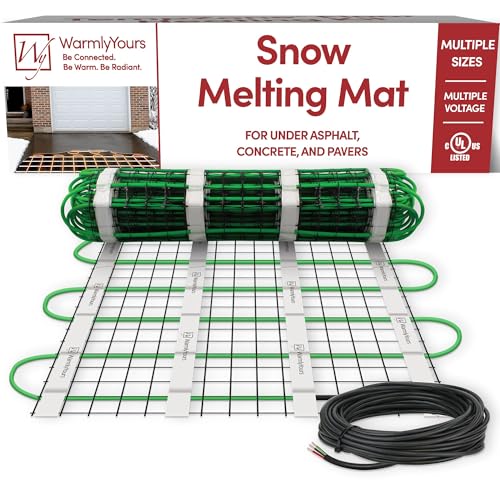
The 2×10 foot mat provides embedded, invisible ice melting under concrete, asphalt, or pavers. Rated at 240V and 1000 watts, it’s ideal for larger entryways, sidewalks, driveways, or porch borders where mats can be placed in parts of the slab needing rapid snow removal. The mat is CSA certified and uses a twin-conductor heating cable, designed to withstand heavy traffic while eliminating ice buildup and reducing the risk of slips.
Users can install multiple mats for broader coverage or use single mats for targeted de-icing, such as along tire paths or steps. The system integrates with standard outdoor electrical wiring and requires thermal management to optimize energy use. Safety considerations include proper waterproofing, temperature control, and adherence to local electrical codes during installation.
WarmlyYours 2×10 Ft Mat, 120V, 1000 Watts
This 120V version mirrors the 240V mat’s footprint but runs on a lower operating voltage, which can simplify electrical planning for some installations. With 1000 watts of heating power, it delivers reliable performance for smaller slabs such as walkways, porches, or entry steps. As with the 240V option, the mat is embedded under the surface and designed to work with concrete, asphalt, or pavers to melt snow and prevent ice formation while maintaining surface safety in winter conditions.
When selecting 120V vs 240V mats, consider electrical service availability, the total area to heat, and desired heat density. A 120V system is often easier to retrofit on smaller projects, while 240V systems support larger or multiple mats with stronger heat output. Both require proper installation, weatherproof connections, and a compatible thermostat or control strategy for operation efficiency.
SunTouch ConnectPlus WarmWire Kit, 40 Sq Ft

The SunTouch ConnectPlus kit combines a 120V WarmWire heating cable, floor sensor, and a Wi‑Fi thermostat, delivering a complete under-floor heat solution for 40 square feet. While intended for indoor use under floors, variants of WarmWire systems can be adapted to outdoor slab applications with proper weatherproofing and professional installation. This kit covers smaller surfaces efficiently and provides precise temperature control via the SunStat ConnectPlus thermostat, enabling remote access and scheduling for energy efficiency.
Key considerations include ensuring compatibility with outdoor installations and confirming local codes for any in-slab or outdoor use. The kit’s 3-inch spacing guidance helps in planning layout beneath tile, stone, or concrete surfaces. While primarily marketed for indoor flooring, with appropriate protective measures and contractor guidance, SunTouch products can translate to concrete slab applications where allowed by code and temperature control requirements.
Buying Guide: Key Purchase Considerations For Concrete Slab Snow Melting
- Surface and area coverage: Measure the total area to heat and choose a system that provides adequate wattage per square foot to handle typical snowfall in your region.
- Voltage and electrical service: 120V systems are easier to install for small areas, while 240V systems handle larger areas or multiple mats/cables. Check electrical capacity and code requirements for outdoor or in-slab installations.
- Installation surface: Systems can be embedded under concrete, asphalt, pavers, or under-floor heating assemblies. Ensure compatibility with your surface and local weather conditions.
- Controls and automation: Thermostats with weather-responsive controls or Wi-Fi connectivity offer convenience and energy savings. Consider compatibility with smart home systems if desired.
- Safety and certifications: Look for CSA or UL-listed components, proper waterproofing, and outdoor-rated equipment to address moisture, cold, and traffic.
- Maintenance and longevity: Choose robust heating cables or mats with durable insulation and protective jackets designed for outdoor exposure and thermal cycling.
- Professional installation: In-slab installations require precise layout planning, power routing, and adherence to electrical codes. Consult a licensed electrician or heating installer for best results.
- Energy efficiency: Evaluate heat density, insulation, and zoning potential to maximize efficiency and reduce running costs during winter months.
When selecting among the options above, align the system’s heat output with the size of the slab and anticipated snowfall, ensure compatibility with your electrical system, and consider whether you prefer a complete kit with thermostat and sensors or a modular approach with separate cables and mats. Proper installation and controls are essential for reliable snow melting and long-term safety on concrete surfaces.