Best Smallest Mini Split for RV: Compact Cooling & Heating for Mobile Living
The demand for compact, energy-efficient climate control in RVs is rising as travelers seek reliable comfort without bulky systems. This guide highlights five compact mini split options that fit tight RV spaces while delivering robust cooling and heating. All units feature inverter technology, energy efficiency, and easy remote or app control to simplify on-the-road comfort. The selected models span from ultra-quiet wall-mounted units to compact rooftop designs, offering a range of power levels and installation styles suitable for various RV layouts.
Summary of Selected Products:
- ROVSUN 11500 BTU Wifi Enabled Mini Split Air Conditioner & Heater — All-season 17 SEER2, pre-charged condenser, heat pump, installation kit
- ROVSUN 9000 BTU Wifi Enabled Mini Split Air Conditioner & Heater — Inverter, 19 SEER2, pre-charged condenser, installation kit
- COSTWAY 12000 BTU Mini Split Air Conditioner & Heater — 20 SEER2, wall-mounted, pre-charged, 750 sq ft capacity
- 12V AC Unit RV Air Conditioner Mini Split — 11000 BTU, for trucks and campers, 12V operation
- Kol Air 9000 BTU Mini Split Air Conditioner & Heat Pump — 19 SEER2, ultra-quiet, 16 ft installation kit
ROVSUN 11500 BTU Wifi Mini Split — All-Season Comfort

The ROVSUN model delivers 11,500 BTU of cooling and heating via an inverter-driven heat pump, suitable for mid-sized RV interiors. It operates across a broad temperature range and includes dehumidification and a fan function, helping to manage humidity and air movement while parked or on the road. An all-season design supports year-round comfort, with automatic defrost, self-diagnosis, and timer features for convenience. Energy efficiency is reinforced by a 17 SEER2 rating, which contributes to lower power draw in both cooling and heating modes.
Connectivity is a highlight: Wi-Fi enabled and voice assist compatibility allow control through a mobile app or smart speakers, enabling temperature adjustments from anywhere. The unit is AHRI and ETL certified for reliability, and its pre-charged condenser simplifies installation in a mobile setting. This model is well-suited for RV owners seeking a robust, feature-rich option with flexible installation and modern smart controls.
ROVSUN 9000 BTU Wifi Mini Split — Efficient Comfort

This 9,000 BTU system is optimized for smaller RV interiors and spaces up to about 400 square feet equivalent, delivering rapid cooling and heating through an inverter-driven compressor. Its 19 SEER2 rating emphasizes energy-conscious operation, pairing efficient climate control with a broad operating range. The unit emphasizes quiet performance, with a claimed low-noise profile that helps maintain a peaceful RV cabin. It includes a pre-charged condenser and installation kit, making installation simpler for mobile setups.
The package prioritizes flexibility: it supports all-season use and provides effective dehumidification. The combination of energy-saving technology and quiet operation makes it a practical option for RV owners who value comfort without disrupting travel plans. Remote control and potential app integration enable convenient adjustments from within the RV or from a nearby campground site.
COSTWAY 12000 BTU Mini Split — High Capacity For RVs

With a 12,000 BTU capacity and 20 SEER2 inverters, this COSTWAY unit is designed to handle larger RV interiors or cooler climates where more power is beneficial. It cools efficiently in summer and provides reliable heat in winter through a built-in heat pump, supported by a pre-charged condenser for easier installation. Five operation modes (auto, cool, dry, heat, fan) plus multiple fan speeds offer flexible all-season comfort. The remote control and timer features enable scheduling and hands-off operation, supporting restful nights and comfortable days on the road.
Energy efficiency and long-term performance are central to this model, which is AHRI certified and engineered for quieter operation. Its installation kit and pre-charged setup simplify mounting in mobile spaces, making it a solid option for RVers needing robust climate control with reliable energy usage.
12V RV Air Conditioner Mini Split — 11,000 BTU For Vehicles

This 11,000 BTU system is tailored for in-vehicle cooling and heating with a 12-volt power approach, making it suitable for trucks, campers, and trailers that rely on battery power. Its design emphasizes rapid cooling with a high-efficiency aluminum condenser and a durable build for mobile environments. The unit features a low-voltage protection mechanism to safeguard the vehicle battery and offers continuous operation during parked periods when the battery is charged.
The model targets RV operators seeking a balance between power, mobility, and electrical simplicity. Its compact dimensions and robust cooling/heating performance make it a practical choice for drivers who need a dependable climate solution without a heavy rooftop installation.
Kol Air 9000 BTU Mini Split — Quiet Inverter System
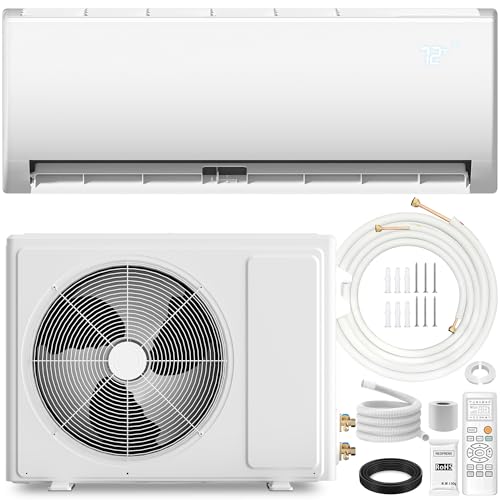
The Kol Air unit provides 9,000 BTU of cooling with integrated heating, designed for US-standard 115V outlets and energy-conscious operation aligned with ENERGY STAR guidelines. Its 19 SEER2 rating supports lower electricity usage over time, while the indoor unit operates quietly at about 25-35 dB, aiding sleep and rest during camping or stationary use. The system includes a remote for comfortable control from across a room or vehicle cabin, plus a 24-hour timer for scheduling convenience.
Suitable for RV interiors up to roughly 500 square feet, this model emphasizes a balance between performance and quiet operation. The included installation kit and standard voltage compatibility make it a straightforward pick for owners seeking reliable cooling and heating with minimal disruption to daily activities inside the RV.
Buying Guide — Key Considerations For RV Mini Splits
- Rooftop vs. wall-mounted: Rooftop units save interior space and can be less intrusive, while wall-mounted models offer easier access and potential for retrofit in tighter layouts. Measure available space and check roof clearance, mounting options, and weight limits specific to your RV.
- BTU sizing for your space: Larger RVs or climates requiring robust cooling may justify higher BTU numbers (9,000–12,000 BTU). For smaller cabins or mild climates, 6,000–9,000 BTU units may suffice. Avoid oversizing, which can reduce efficiency and dehumidification performance.
- Energy efficiency and SEER2: Higher SEER2 ratings indicate better energy efficiency, lowering long-term operating costs. Inverters adjust compressor speed for smooth and economical performance, especially helpful when running on limited power in campgrounds.
- Power requirements: 110V/115V systems suit most RVs, but some 12V DC models exist for off-grid scenarios. Verify your electrical system, generator capacity, or solar setup to support continuous operation without depleting batteries.
- Smart controls and connectivity: Wi-Fi or app-enabled units allow remote control and scheduling, useful for pre-cooling the RV before arrival or adjusting temperature from a campground site. Voice control compatibility can add convenience in busy travel days.
- Installation considerations: Many units come with pre-charged condensers to simplify installation, but professional help may still be needed for refrigerant charging and safe roof penetration. Check warranty terms and service accessibility when selecting a model for RV use.
- Noise levels: Quiet operation improves comfort for sleeping and relaxing inside the RV. Look for specified dB ranges for both indoor and outdoor components to minimize disturbance during night stops.
- Dehumidification and climate features: All-season models with dehumidification modes help reduce humidity, which is particularly important in humid climates or during high-use seasons inside compact spaces.
- Maintenance and replacement parts: Choose models with readily available replacement parts and filters. Regular cleaning of indoor coils and fans maintains efficiency and longevity in moving environments.
- Warranty and support: Consider brands offering robust warranty coverage and RV-specific support networks. This can reduce stress when traveling or parked in remote locations.
In selecting a mini split for an RV, buyers should balance capacity, efficiency, installation practicality, and smart features. The models reviewed provide a spectrum of options—from high-capacity systems suitable for larger or cooler RV interiors to compact, low-noise units optimized for off-grid or tight spaces. By aligning BTU needs with power availability and desired control features, travelers can maintain comfort without compromising mobility.