Best Portable Air Conditioners for Vehicles: Stay Cool on the Go
When you need cooling while traveling, parked, or on remote road trips, portable air conditioners designed for cars, campers, and small vehicles can be a practical choice. This guide highlights five portable options that balance energy efficiency, ease of use, and effectiveness for vehicle environments. Explore compact cooling solutions that fit in tight spaces, reduce humidity, and offer flexible operation from USB power to cigarette-lighter plugs.
| Product | Brand | Key Use | Approx. Power Source |
|---|---|---|---|
| Kaniapu Portable Air Conditioners | Kaniapu | Vehicle, home, office use | USB power |
| Dicross Triple-Head Car Fan | Dicross | Vehicle cooling | Cigarette lighter |
| Ivation Camper Air Conditioner | Ivation | RV, camper, motorhome | Vehicle window setup |
| Cisbelw Portable 3-Head Car Cooler | Cisbelw | Vehicle cooling | Cigarette lighter |
| JYew 4-in-1 Evaporative Mini AC | JYew | Room/vehicle use | Power outlet / USB |
Kaniapu Portable Air Conditioners Review

The Kaniapu portable unit emphasizes energy savings and eco-friendliness. It is freon-free and uses a USB power source. Its water tank design enables extended cooling cycles, with a fill-and-use approach that supports 6–8 hours of continuous cooling when paired with water and ice. The device operates at low noise levels (less than 45 dB), making it suitable for in-vehicle use without distracting occupants. A large 470 mL water tank helps sustain a gentle breeze through the night, while a water-shortage protection feature switches to natural wind to prevent downtime. This device is compact enough to move between rooms or small spaces such as a vehicle cabin, desk, or overnight cabin.
In addition to cooling, it provides purified airflow and a portable form factor that supports quick setup for travel scenarios. Because it’s USB-powered, it can be charged from a car’s USB port or portable power bank, offering flexibility for road trips, camping, or long drives where traditional AC isn’t available. While it excels in providing a low-cost, low-impact cooling option, users should be mindful that evaporative cooling depends on ambient humidity; effectiveness may vary based on climate. The unit’s ease of use makes it a practical companion for short trips and drive-time comfort.
Dicross Triple-Head Car Fan

This car cooling option features three adjustable fan heads, delivering airflow from multiple angles to reach passengers across the cabin quickly. The 360-degree rotation capability allows directing air where it’s most needed, making it suitable for vehicles without built-in air conditioning. Installation is straightforward: plug the unit into the car’s cigarette lighter socket, and it’s ready to operate. The design prioritizes portability and quick cooling for situations like hot commutes or long highway drives where a traditional AC system isn’t available.
Key benefits include versatile placement, targeted airflow, and no installation complexity. Potential limitations are that it functions best as a supplemental breeze rather than a standalone climate control solution. It suits short trips, camping vehicles, or emergency cooling when your primary AC is offline. If you seek a compact, low-effort way to improve in-vehicle comfort, this triple-head fan offers a compelling balance of power and practicality.
Ivation Camper Air Conditioner
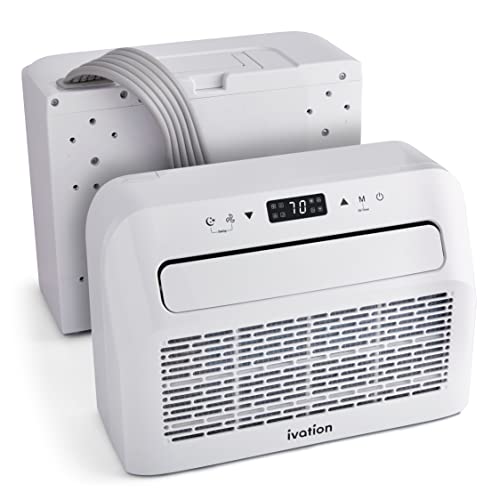
The Ivation 6,500 BTU camper air conditioner is designed for RVs, caravans, and similar small living spaces in motion. Its split design helps separate the compressor portion from the interior unit, reducing on-window obstruction and noise. The unit uses an over-the-sill installation approach, allowing natural light to enter while maintaining cooling efficiency. It supports a digital display, temperature control, timer, and sleep mode, delivering a quiet, controlled climate in compact interiors. This option is best suited for campers and motorhomes where a more robust cooling unit is needed compared with portable desk devices, especially on extended trips.
Pros include strong cooling capacity for mobile living spaces, flexible installation, and user-friendly controls. A few caveats are the need for a secure mounting setup and space to accommodate the window-sill unit. It’s a practical choice for travelers who require reliable climate control across variable climates, particularly in enclosed vehicle interiors where temperature management is essential for comfort and health on longer journeys.
Cisbelw 3-Head Car Cooling Fan
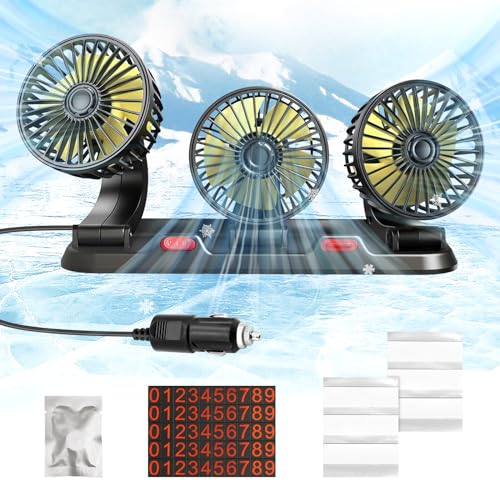
The Cisbelw 3-head car cooler provides adjustable airflow from multiple angles, leveraging a three-head design to quickly cool down a vehicle interior. It uses a cigarette lighter plug for easy power access and eliminates the need for complicated installations. The multi-head arrangement helps distribute air more evenly across the cabin, which is useful for larger vehicles or those with multiple passengers seeking a more balanced breeze.
While not a full air conditioning replacement, it offers a practical supplemental cooling option for hot days and reduces reliance on the vehicle’s main HVAC. Its compact footprint makes it suitable for SUVs, vans, or trucks where space is at a premium. Users should consider ambient noise and the reliance on the vehicle’s battery or power source when planning longer trips.
JYew 4-in-1 Evaporative Mini AC

The JYew 4-in-1 evaporative mini air conditioner offers a blend of cooling, humidification, and air circulation. It features a 120-degree rotating function to blanket spaces with cooled air and a 7-color mood light to enhance ambiance. The unit supports extended operation with a sizable reservoir and a 12-hour auto-off timer, balancing convenience with energy efficiency. While marketed for room use, its portable design and vehicle-friendly form factor make it a viable option for campers or vehicles with adequate interior space.
Key considerations include the evaporative cooling mechanism, which works best in drier climates with adequate humidity. The device’s multi-function design adds value for travelers who want light humidification or ambient lighting alongside cooling. However, it may not match the cooling power of a dedicated automotive AC unit in extremely hot conditions, so it should be viewed as a supplementary device for comfort on the road.
Buying Guide: What To Look For In Vehicle Portable Cooling
- Power source and compatibility: Check whether the unit runs on USB power, a car cigarette lighter, or a dedicated 12V connection. For road trips, USB-powered models can run off power banks, while car-plug units are convenient in-transit.
- Cooling method and climate suitability: Evaporative coolers are energy-efficient and work best in dry climates. If you’re in a humid region, consider alternatives with higher cooling power or a ventilation-focused design.
- Noise level: In-vehicle use benefits from quiet operation. Look for dB ratings or user reviews that indicate comfortable noise levels during driving and sleeping.
- Water reservoir and maintenance: Models with larger tanks offer longer cooling periods but require more frequent filling. Waterless alerts help prevent damage when water runs low.
- Portability and space: Measure your vehicle’s cabin and consider the unit’s footprint, weight, and whether it needs to be mounted or simply placed on a seat or floor.
- Humidity control and air quality: Some units combine humidification with cooling; others emphasize airflow purification. Decide which combination best fits your comfort needs.
- Durability and noise insulation: For RVs and campers, look for rugged builds and features that minimize vibration transfer to the interior, improving sleep quality and comfort.
- Installation flexibility: Windowless or over-the-sill designs can preserve space and light. Ensure any mounting or installation complies with vehicle safety guidelines.
- Brand support and availability of parts: Choose brands with accessible replacement parts, filters, and reliable customer service for ongoing maintenance.
- Cost vs. cooling power: Compare energy use, cooling capacity, and features to determine value for your typical travel scenarios, from daily commuting to extended camping.
In sum, vehicle-focused portable air conditioners range from simple multi-head fans to more robust RV units. Your choice should align with your climate, vehicle type, and how you intend to use the unit—whether for short trips, long road outings, or off-grid camping. The products above provide a spectrum of options to suit different needs, from lightweight USB-powered coolers to higher-capacity campers that can maintain a more comfortable interior climate during travel.