Best Portable Air Conditioners for Pop-Up Campers: Stay Cool on the Go
Finding a reliable portable air conditioner for a pop-up camper helps keep trips comfortable in warm weather. This guide examines five top models, focusing on cooling capacity, power use, portability, and user-friendly features. Each product is designed to fit tight spaces, simplify installation, and deliver dependable cooling for RVs, tents, and compact campers.
Product Summary
| Product | BTU | Approx. Area | Key Benefit | Brand |
|---|---|---|---|---|
| Ivation Camper AC | 6,500 | Up to ~280 sq ft | Over-the-sill mounting for quiet operation | Ivation |
| WISHILO Portable AC | 3,400 | 64–86 sq ft | Fast cooling; long reach with perfusion duct | WISHILO |
| Bancol 5,200 | 5,200 | ~140 ft | All-in-one cooling with low noise | bancol |
| Dreo 12,000 | 12,000 | Up to 16 ft reach | Smart controls; quiet operation | Dreo |
| Midea 10,000 | 10,000 | Up to 300 sq ft | Smart app with voice control | Midea |
Ivation 6,500 BTU Camper Air Conditioner
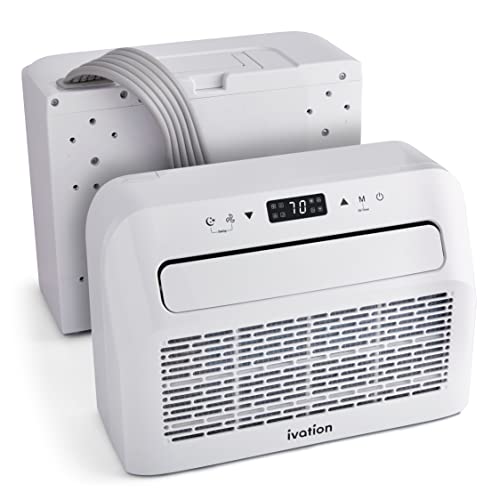
Designed for RVs, caravans, and motorhomes, this unit combines cooling, a dehumidifier, and a fan in a compact over-the-sill design. The saddle mounting helps minimize window noise, while shockproof dampers reduce vibration for quieter operation. The split design keeps the compressor outside, improving efficiency and keeping interior space clear. Temperature control ranges from 60°F–86°F with an easy digital display and remote options. Ideal for confined interiors that need reliable cooling with minimal window obstruction.
WISHILO Portable Air Conditioner

This 3,400 BTU unit targets small spaces like two-person tents, pop-ups, and compact campers. It cools quickly—in about three minutes—with a built-in Panasonic compressor and does not require water or ice. It delivers cool air up to a 10 ft range via an advanced perfusion duct system, extending cooling to harder-to-reach corners. The device supports a broad temperature range from 60℉ to 88℉ and includes a remote for convenient operation. A 1-year warranty and U.S.-based support add practical assurance for travelers.
Bancol 5200 BTU Portable AC

This 5,200 BTU unit provides cooling for small to mid-sized spaces and includes modes for cooling, dehumidification, sleep, and fan. It is designed with portability in mind and features a remote for easy operation from across the room. The compact form allows for simple transport and setup in tents, trucks, campers, or small rooms. The device emphasizes low noise during sleep mode to minimize disturbances during nighttime use.
Dreo 12,000 BTU Portable AC

The Dreo AC515S delivers robust cooling with 12,000 BTU ASHRAE and an effective reach up to 16 ft. It includes a 3-in-1 mode with cooling, dehumidifying, and fan, plus app and voice control, enabling convenient operation via smartphone or smart assistants. The device emphasizes noise reduction with a dedicated isolation system, maintaining as low as 46dB for quiet nights. It also supports a 24-hour timer and a compact remote for flexible scheduling in campers and small apartments.
Midea 10,000 BTU Portable AC

The Midea 10,000 BTU unit cools spaces up to 300 square feet and includes SmartHome app integration for iOS and Android, with compatibility for Alexa or Google Assistant. It offers a simple LED display and a remote, plus a 24-hour timer and three modes: cooling, dehumidification, and fan. This model emphasizes ease of use, versatile control, and reliable performance for larger pop-up campers or small cabins that require higher cooling capacity and modern smart features.
Buying Guide: Key Considerations for Pop-Up Campers
- Cooling capacity vs. space: Smaller pop-ups benefit from 3,400–6,500 BTU units, while larger campers may justify 8,000–12,000 BTU models. Balance BTU with the area you intend to cool.
- Ventilation and installation: Many camper units require venting or window mounting. Consider models with window kits, saddle mounts, or space-saving exhaust paths that minimize interior disruption.
- Power source and consumption: Check the voltage and wattage so the unit works with RV electrical setups or portable power stations. Look for energy-efficient modes and sleep settings to reduce draw.
- Noise level: Quiet operation is crucial for sleeping or resting areas. Units with isolation designs or low dB ratings are preferable for camp environments.
- Multifunction features: Dehumidification, fan-only, and timer modes extend comfort and flexibility. Smart controls offer remote scheduling and voice integration for convenience on the road.
- Durability and warranty: Choose models with solid customer support and a reasonable warranty, especially for off-grid or remote camping scenarios.
- Maintenance and parts availability: Consider brands with readily available spare parts and local service options in the U.S. to ensure long-term reliability.
- Portability and weight: Lightweight portable units are easier to move between vehicles or tents. Look at handle design and overall weight for quick setup.
These selections provide a range of cooling capacities, from compact tent-friendly units to larger camper-ready systems. Each option offers practical installation, energy efficiency, and user-friendly controls to support comfortable experiences in pop-up campers.