Best LP Gas Heaters for Garages: Efficient, Safe Options
Choosing a reliable LP (propane) gas heater for a garage requires balancing heating power, venting needs, safety features, and portability. The following reviews highlight five top matches designed for American garages and workshops, each offering practical performance and clear safety measures. Read on to compare heat output, installation considerations, and how these units handle cold-season workspaces.
Summary of chosen products:
- Mr. Heater F260550 Big Maxx MHU50NG — 50,000 BTU, vertical or horizontal venting, accessible thermostat & gas connections
- Gasland MHA18BN — 18,000 BTU, portable, no electricity required, safe tip-over & low-oxygen shut-off
- Mr. Heater F260560 Big Maxx MHU80NG — 80,000 BTU, large garage coverage, category 1 vertical / category 3 horizontal venting
- ThermoMate PHF18B — 18,000 BTU, portable with regulator & hose included, multiple heating modes
- InoKraft MaXheat MH68 — 68,000 BTU, 30,000-68,000 BTU range, portable forced air with long hose
Mr. Heater F260550 Big Maxx MHU50NG Review
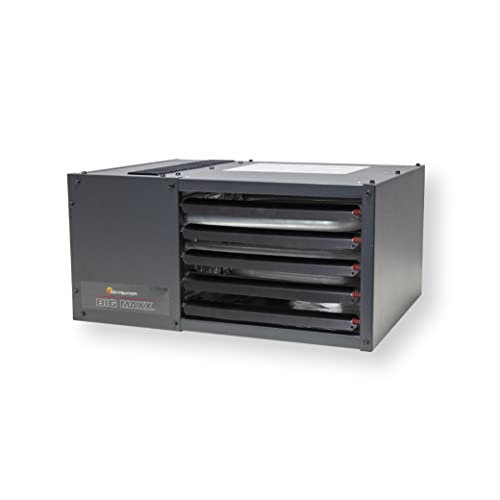
The Mr. Heater F260550 Big Maxx MHU50NG is a natural gas unit heater delivering 50,000 BTU per hour, capable of heating up to about 1,250 square feet depending on space and insulation. It supports vertical or horizontal venting, offering flexible installation in various garage layouts. The design includes easy outside access to thermostat and gas connections, simplifying adjustments from outside the workspace. This unit is well-suited for larger home garages or workshops that require steady heat across larger footprints, with robust venting options that help maintain safe indoor air quality when venting is properly configured.
Gasland MHA18BN Propane Radiant Heater

The Gasland MHA18BN is a portable propane radiant heater rated at 18,000 BTU, optimally warming up to 450 square feet. It emphasizes safety with tip-over and low-oxygen shut-off features and operates without electricity, relying on a propane cylinder for warmth. Its portability and inside-the-cabinet tank housing make it a practical choice for small garages, workshops, or temporary job sites where a corded heater isn’t feasible. While not ideal for continuous heating of very large spaces, it provides a reliable, low-maintenance solution during regular work sessions or emergency scenarios when power isn’t available.
Mr. Heater F260560 Big Maxx MHU80NG Review
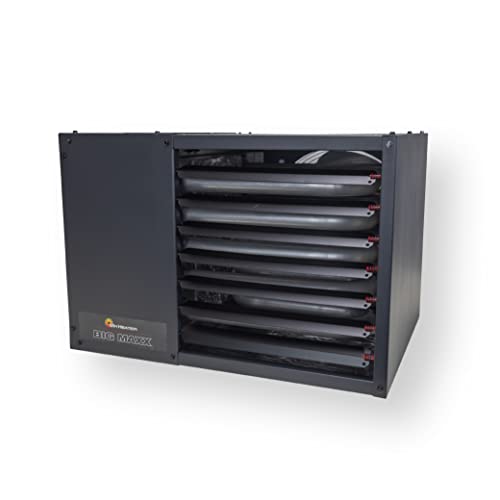
This model expands to 80,000 BTU, targeting larger garages and workshops with substantial heat demand. It features a durable build and confirms compatibility with natural gas, including venting considerations (category 1 vertical or category 3 horizontal). The package mentions brackets for mounting and notes that thermostat, hose, and regulator are not included. With its higher output and wide coverage, this heater is appropriate for colder climates or spaces with higher ceiling heights, where heat needs to reach farther across the workspace.
ThermoMate PHF18B Propane Heater

The ThermoMate PHF18B is an 18,000 BTU propane cabinet heater with included regulator and hose. It offers three heating modes (6,000/12,000/18,000 BTU) to tailor warmth for patios, garages, or workshops. Its cabinet design supports portability with relatively easy movement and storage. The unit is designed for outdoor or ventilated indoor use, and its compact size suits mid-size spaces where electric heating would be impractical or slower to respond to temperature changes.
InoKraft MaXheat MH68 Propane Heater

The InoKraft MaXheat MH68 offers a wide BTU range of 30,000–68,000 and a maximum rated output of 68,000 BTU. This portable forced-air heater is designed for garages, shops, and job sites, with a 10-foot hose included. The product highlights adjustable heat output and a compact form factor suitable for mid-to-large spaces. It emphasizes safety features and CSA certification, making it a viable option for frequent use in environments that require quick, directional warmth and mobility.
Buying Guide: Key Purchase Considerations
- Heat output and space size: For garages, calculate BTU needs based on space, insulation, and climate. Units from 18,000 to 80,000 BTU cover most garage sizes; larger spaces may require higher output or zoned heating strategies.
- Ventilation and installation: Check venting requirements (vertical vs. horizontal) and ensure proper clearance from combustibles. Venting decisions affect indoor air quality and ease of installation.
- Fuel source and reliability: Propane units are ideal where electricity is unreliable or absent. Consider supplier availability of propane, cylinder management, and regulatory considerations for outdoor use.
- Safety features: Look for tip-over protection, oxygen depletion sensors (ODS), flame safety, and automatic shutoffs. Safety is especially important in enclosed or poorly ventilated garages.
- Portability vs. permanence: Portable models offer flexibility for seasonal use or moving between spaces. Stationary units with proper mounting provide steady heat for a fixed workspace.
- Maintenance and accessories: Review included hoses, regulators, and mounting hardware. Some units require external thermostats or wiring; others include basic controls and built-in thermostats.
- Vent-free vs. vented operation: Vent-free models save installation effort but require careful indoor air management. Vented units with ducting can offer safer long-term operation in busy garages.
- Noise and running costs: Radiant heaters generally have lower noise levels than some forced-air models. Consider hourly running costs and long-term energy efficiency when selecting between radiant and forced air.
- Portability and storage: For seasonal use, consider models with wheels and handles or cabinets that accommodate storage of hoses and regulators.