Best Plumbing Leak Detection Equipment for Quick, Accurate Locating
Finding hidden leaks quickly can save water, prevent costly damage, and streamline repairs. This article reviews top plumbing leak detection devices, highlighting how they identify leak locations, adjust to different environments, and deliver precise results. Use the buying guide to compare key features and choose gear that fits residential or professional needs.
Summary of Prime Leak Detection Solutions
| Product | Brand | Core Strength | Typical Use | Notes |
|---|---|---|---|---|
| PQ125A Underground Water Leak Detector | PQWT | Two high-precision sensors, dual-mode localization | Indoor/outdoor leaks in pipes and walls | Touchscreen UI, multi-sensor setup |
| PQ125C Underground Detector | PQWT | Dual sensors + acoustic chamber sensor | Versatile indoor/outdoor environments | RC-S3 sensor integration for better chamber resonance |
| TRTYEF Professional Water Leak Detectors | TRTYEF | Dual probe design, noise-canceling sound | Underground pipes, walls, construction sites | User-friendly with clear audio amplification |
| LJCSSD Underground Water Leak Detector | LJCSSD | Four-speed frequency, LCD data display | Outdoor/underground pipe detection | Portable, adjustable frequency range |
| PQWT L50/ L4000 Series Detectors | PQWT | Resonance sensors, adjustable gain | Home and professional leak locating | Touchscreen options, multiple modes |
These devices sit at the intersection of portability, precision, and user-friendliness. Whether you’re a homeowner addressing a stubborn indoor leak or a contractor locating underground lines, the right detector helps pinpoint leaks faster, with less disruption and guesswork.
PQ125A Underground Water Leak Detector
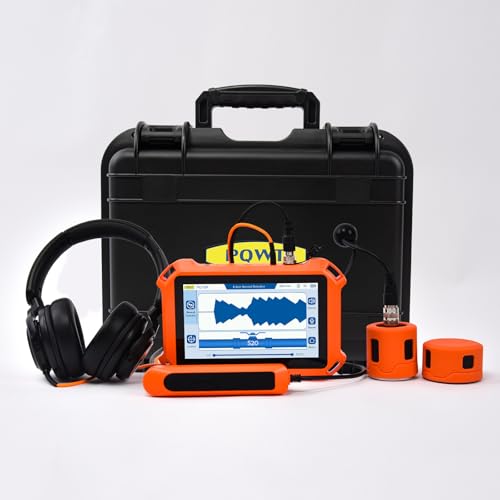
The PQ125A uses a touchscreen UI to guide users through its two-leak-detection system. GENERAL DETECTION MODE enables broad scanning across rooms or exposed pipe runs, while LOCATION MODE captures signals from sixteen discrete points for precise localization. A pair of dual membrane resonance sensors (DMR-H40 and DMR-V59) detects acoustic waves associated with leaks, distinguishing them from ambient noise. This setup supports quick identification of leak points that are otherwise difficult to hear or see, making it suitable for both homeowners and professional technicians.
Key features include: a clear, factory-developed UI that displays operation guidance and error prompts; a dual-mode detection approach for fast sweeps and pinpoint localization; and advanced sensors designed to detect faint leak noises at specific frequencies. The device emphasizes accuracy in noisy environments and is crafted to support users who may be new to leak detection as well as seasoned professionals.
PQ125C Underground Water Leak Detector

The PQ125C builds on the PQ125A with enhanced localization and sensor integration. It maintains the two detection modes for scanning and pinpointing leaks, while adding an acoustic chamber sensor (RC-S3) to improve sensitivity in varied environments. This combination supports accurate leak point identification in both indoor spaces and outdoor settings, including walls, floors, and exterior piping paths. The intuitive touchscreen control mirrors the PQ125A, helping technicians and homeowners operate the device with minimal training.
Highlights include: precise localization through multi-point data capture; high-precision sensors tailored for indoor and outdoor use; and a focus on reducing false positives by combining membrane resonance with chamber resonance data. The PQ125C is well-suited for projects requiring robust performance in challenging environments, such as construction sites or aged plumbing systems.
TRTYEF Professional Water Leak Detectors

TRTYEF offers a professional-grade leak detector featuring a dual-probe design that can switch between circular and needle probes. This flexibility supports locating leaks in underground pipes, walls, steel, concrete, and other structures. The device emphasizes audible clarity through noise-canceling headphones that amplify leaks up to 20,000X, ensuring even faint drips become audible. Operators receive clear guidance on probe mode changes to maximize detection accuracy based on the surface being tested.
Core advantages include: a practical dual-probe approach for different substrates; detailed user instructions guiding probe switching for reliable results; and a focus on high-fidelity sound detection to improve visibility of leak signals in noisy environments. The TRTYEF system is attractive for field technicians who need dependable, repeatable results across varied job conditions.
LJCSSD Underground Water Leak Detector

The LJCSSD device emphasizes adaptability with four adjustable frequency gears (200 Hz to 3000 Hz), allowing users to tailor detection to specific environments and noise profiles. Its LCD display presents data in a clear format, helping plumbers and construction workers interpret readings quickly. The detector is designed for both outdoor and underground pipe work, providing a practical balance of portability and performance for field operations.
Key points include: multi-functional detector suitable for a range of leak types (outdoor, indoor, underground); an adjustable frequency spectrum to optimize signal-to-noise ratio; and an accessible LCD that translates complex signals into actionable information. The LJCSSD unit is a versatile option for technicians dealing with diverse piping systems and job sites where environmental noise varies widely.
PQWT L50 Underground Leak Detector

The L50 model blends precise localization with a touchscreen interface and a multi-sensor array. It supports a general detection mode for broad area surveys and a location mode that records data from sixteen points, enabling accurate pinpointing of leak locations. The device also emphasizes noise reduction and a robust signal chain to help professionals distinguish true leaks from ambient sounds. This makes it suitable for home or professional use where quick, dependable leak localization is required.
Notable aspects include: resonance-based tracking to reveal leak sounds that are otherwise inaudible; a user-friendly UI with guidance and error pop-ups; and the option to record leak events for future reference. The L50 line is designed for users who need reliable performance without a steep learning curve, making it a practical choice for residential plumbers and service technicians alike.
Buying Guide: Key Considerations For Leak-Detecting Equipment
- Detection modes and localization: Look for devices offering both broad scanning and precise pinpointing. Multiple modes enable quick sweeps and targeted investigation, which saves time on larger projects.
- Sensor technology: Dual membrane resonance, acoustic chambers, and piezoelectric membranes help distinguish leak signals from background noise. More sensors can improve reliability in noisy environments.
- Environment compatibility: Ensure the detector is suitable for indoor, outdoor, underground, or mixed-use sites. Some models excel in walls and ceilings, others are tuned for underground piping.
- User interface: Touchscreen or clear LCD readouts reduce the learning curve. Clear guidance, error prompts, and intuitive controls help users of varying experience levels.
- Audio amplification: For high-noise sites, high-quality headphones or sound amplification features help contractors hear faint leaks without excessive listening effort.
- Portability and build: If contractors frequently move between sites, prioritize compact, rugged, and lightweight options with durable housings and carrying cases.
- Data recording and analysis: Some units store measurements and signal data across multiple points, enabling post-job analysis and documentation for clients or permits.
- Power and endurance: Consider battery life, charging options, and whether the device supports quick recharging for long workdays.
- Maintenance and warranties: Look for devices with reliable after-sales support and accessible replacement parts or sensors to lower long-term costs.
Choosing the right leak-detection equipment depends on job scope, environment, and user experience. For homeowners tackling occasional indoor leaks, a handheld device with straightforward localization and strong audio cues may be enough. For professional plumbers and construction teams working on underground or complex piping networks, models with multiple sensors, flexible frequency settings, and robust data capture will deliver the most value over time.