Best Humidity Switch for Fans: Auto Ventilation Solutions
Humidity switches for fans automate bathroom, laundry, and other high-moisture spaces, helping maintain air quality and comfort while reducing the risk of mold. This guide reviews top choices, explains how to pick the right model, and compares features like sensor sensitivity, wiring needs, and timing options. Below is a quick snapshot of five leading options to help you choose the best fit for your space.
| Product | Brand | Main Benefit |
|---|---|---|
| Leviton DHS05-1LW | Leviton | Slim, easy install; works with or without a neutral |
| TOPGREENER TDHS5-N | TOPGREENER | Three humidity levels for precise control |
| TOPGREENER TDHS5 (2-Pack) | TOPGREENER | Two packs with wall plate option; dual control |
| Leviton DHS05-1LT | Leviton | Light almond finish; compact and versatile |
| Ortis In-Wall Humidity Switch | Ortis | Updated run-time options and dehumidification features |
Leviton Humidity Sensor Switch DHS05-1LW

The Leviton DHS05-1LW is designed to automate bathroom ventilation by sensing ambient moisture and turning the fan on or off accordingly. The device is described as convenient for auto-ventilation, with a slim profile that fits most wallboxes. Its flexible wiring supports installation with or without a neutral wire, making it adaptable for various electrical setups. This model is suitable for ¼ HP fan loads and provides single-pole operation, presenting a straightforward option for standard bathroom exhaust fans. Installation ease and compatibility with common wiring make it a practical choice for many homes.
Key considerations include sensor sensitivity, how quickly the fan responds to rising humidity, and compatibility with existing neutral wiring. Leviton emphasizes ease of installation and a slim form factor, which can help maintain a clean wall appearance. For spaces where a neutral wire is available, this switch offers flexibility; in older wiring without a neutral, it remains a viable option. Users should ensure the mounted box depth is sufficient for the device’s profile and confirm the fan load matches the ¼ HP rating to avoid overload.
TOPGREENER TDHS5-N Humidity Sensor Switch

The TOPGREENER TDHS5-N integrates humidity sensing with automatic fan control, ideal for bathrooms, laundry rooms, and basements where moisture levels fluctuate. It supports neutral-wire installations and provides a three-level humidity setting to tailor ventilation to the room’s needs. Automatic operation turns the fan on when humidity exceeds the preset level and turns it off when humidity returns to normal, helping maintain comfort and reduce humidity-related issues. A notable feature is the ability to bypass the sensor and manually run the fan when desired, offering flexible control for users who intermittently require ventilation beyond sensor-driven operation.
When evaluating this model, consider the humidity levels and the time it takes for the space to reach the target moisture balance. The three sensitivity levels (low/medium/high) enable customization for small powder rooms or larger, more humid spaces. Installation typically requires a neutral wire, which is standard in many modern homes but may require wiring adjustments in older dwellings. Reliability, UL listing, and compatibility with common fan loads are important for ensuring long-term performance.
TOPGREENER TDHS5 Humidity Sensor And Fan Control Switch

This 2-pack from TOPGREENER offers a dual-sensor solution with wall plates included, presenting an efficient option for homes with multiple high-humidity zones. The device automatically activates the connected ventilation fan when humidity rises above the preset threshold and deactivates once humidity returns to normal, reducing energy waste. With a three-level humidity setting, users can fine-tune response to different rooms, such as bathrooms versus utility rooms. As with single-pole sensors, these switches can be wired with or without a neutral, depending on the house wiring. The two-pack arrangement can simplify multi-room installations and ensure consistent humidity control across spaces.
Pros include scalable coverage, straightforward operation, and unobtrusive installation. Consider if your electrical box can accommodate two devices in the same area and whether you need wall-plate included hardware. The ability to bypass the sensor is useful for timing-based preferences where manual override is preferred during certain activities. Opt for this solution if you’re upgrading multiple rooms or seeking a cohesive set of humidity-activated controls.
Leviton DHS05-1LT Humidity Sensor Switch

The Leviton DHS05-1LT is a variant with a light almond finish, designed to blend with specific decor while delivering the same automatic humidity-based fan control. The device features a slim profile suitable for most wallboxes and remains flexible for installations with or without a neutral wire. This model is commonly used in bathrooms and utility spaces where a subtle, unobtrusive switch is preferred. As with other Leviton products, it emphasizes reliability and compatibility with standard fan loads, making it a solid choice for updated or repair projects where aesthetics matter as much as function.
Consider the overall finish to ensure it matches nearby switches and wall plates. If you’re retrofitting an existing switch, verify the existing wiring and available space in the electrical box. The sensor’s responsiveness to humidity changes, combined with its ease of installation, can help maintain compliant moisture levels and reduce drying times after showers or laundry activities.
Ortis New Generation In-Wall Humidity Sensor Switch
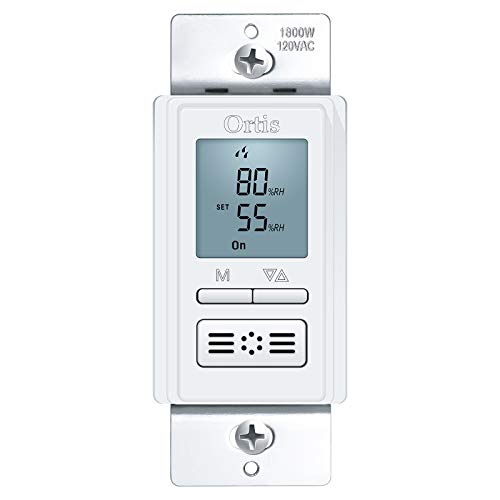
The Ortis in-wall humidity control switch represents a newer generation with emphasis on adjustable run times for auto mode, defaulting to a practical one-minute minimum but offering longer durations up to an hour. It supports automatic dehumidification and includes humidification options when connected to a humidifier. Auto mode detects room humidity and runs the fan accordingly, while manual modes provide explicit control with run-time settings and timers. This versatility makes it suitable for bathrooms with inconsistent humidity or multi-peak moisture events, such as post-shower periods or laundry cycles.
Key buying points include the ability to set minimum run times to prevent short cycling, compatibility with humidifier integration, and the balance between automatic control and manual overrides. Ensure your wiring and power supply support the unit’s voltage (120V/220V) and that the device can integrate with your existing fan load profiles. If you need a nuanced approach to humidity-driven ventilation, Ortis could offer the right combination of automation and control.
Leviton Dual Humidity Sensor With Separate Light Switch

This Leviton dual combination device handles humidity-driven fan control along with an independent light switch. The humidity sensor automatically activates the bathroom fan based on measured moisture, while the separate light switch provides direct control for lighting needs in the same area. As with other Leviton products, installation is described as easy, with a slim profile suitable for standard wallboxes and compatibility with various fan and light loads. This option is particularly useful for bathrooms where lighting changes are frequent and may benefit from a dedicated control alongside humidity-driven ventilation.
When deciding on a dual-control unit, assess your wiring configuration, the necessity of a separate light control in the same box, and how the fan and light loads will be managed together. The device supports both auto and manual operation, giving you flexibility for different routines and times of day. Ensure the device’s neutral requirements align with your existing wiring for a straightforward installation.
Buying Guide: Key Purchase Considerations
- Wiring requirements: Determine whether your electrical box has a neutral wire. Some models work without a neutral, while others require it for full functionality.
- Humidity sensing levels: Look for switches offering multiple sensitivity levels (low/medium/high) to tailor ventilation to room size and humidity intensity.
- Auto vs. manual modes: A good switch should offer automatic operation with an optional manual override or run-time timer to prevent short cycling.
- Run-time settings: Models vary in the minimum and maximum fan run durations. Longer runtimes can prevent rapid cycling after showers, while shorter runtimes save energy in drier spaces.
- Load compatibility: Check fan horsepower and electrical load ratings to ensure compatibility with your exhaust or bathroom fan.
- Finish and wall plate: If aesthetics matter, choose a color that matches nearby switches and consider wall-plate inclusion for a cohesive look.
- Multi-room options: If you want uniform humidity control across spaces, consider a dual-pack or a system that supports multiple rooms.
- Durability and standards: Look for UL-listed devices and reputable brands to ensure safety, reliability, and long-term performance.
- Humidification compatibility: Some models support optional humidifier control, which can be useful in dry climates or for seasonal comfort.
- Installation complexity varies by model; consult a professional if you’re unsure about wiring safety or neutral requirements.
- For bathrooms with shared walls or limited space, a slim-profile sensor switch can minimize wall intrusion while delivering reliable humidity control.
- Consider future expansion: If you plan to control multiple rooms, a two-pack or compatible system can simplify upgrades and ensure consistent performance.
In summary, humidity sensor switches for fans offer a practical, energy-conscious approach to managing moisture and improving indoor air quality. The options above cover a range of needs—from slim, single-pole devices to multi-load combinations and newer-generation models with flexible run-time controls. Choose a model aligned with your wiring, humidity needs, and aesthetic preferences to optimize ventilation in your home.