Best Kitchen Extractor Fans for Efficient Ventilation and Fresh Air
Searching for effective extractor fans to keep kitchens free of smoke, steam, and lingering odors? This guide highlights top-rated kitchen exhaust and portable range hood options, focusing on performance, energy efficiency, and ease of use. Each product below is selected for American homes, apartments, or light commercial spaces where reliable ventilation matters. Read on to compare features, installation needs, and filtering capabilities to pick the right fit for your cooking style.
Summary of chosen products
| Product | Brand | Key Benefit | Airflow | Notes |
|---|---|---|---|---|
| HG Power 8 Inch Kitchen Exhaust Fan | HG Power | High CFM with metal construction | 576 CFM | |
| HG Power 6 Inch Exhaust Fan | HG Power | Compact, efficient for small spaces | 308 CFM | Versatile for kitchen, attic, or shop |
| Quini 512M 6-Inch Through the Wall Exhaust Fan | Quini | Adjustable duct fits various walls | 80 CFM | Quiet, retractable duct |
| TUCO Portable Range Hood | tuco | Triple filtration, no installation | Varies by setting | Desktop, plug-and-play |
| AMZCHEF Portable Range Hood | AMZCHEF | Four-speed, high flexibility | 120 CFM | Telescoping height, low noise |
HG Power 8 Inch Kitchen Exhaust Fan

The HG Power 8 Inch Kitchen Exhaust Fan combines robust metal construction with substantial airflow. Its 8-inch blades and an efficient motor deliver 576 CFM, helping to clear smoke, humidity, and odors from kitchens, basements, or commercial spaces. The unit is designed for durability and long-term use, featuring a premium metal build that stands up to frequent operation. Energy efficiency is highlighted by a low 53.5W power draw, balancing strong ventilation with lower operating costs. This model is suitable for wall mounting in larger kitchens or workspace areas needing reliable extraction.
HG Power 6 Inch Exhaust Fan

This 6-inch exhaust fan from HG Power focuses on compact but capable ventilation. With a 308 CFM airflow and a 38 W motor, it provides efficient extraction for kitchens, attics, garages, or small workshops. The design emphasizes a durable metal build and reliable performance over time. It’s a versatile option when space is limited but strong airflow is still required, offering a balance between power and energy usage for continuous operation in moderate-sized areas.
Quini 512M 6-Inch Through the Wall Exhaust Fan

The Quini 512M is designed for through-the-wall installation with a 6-inch diameter and a retractable duct. It offers practical flexibility for wall thicknesses from 6 to 19 inches and features a copper motor coil for durability. The vent design includes a protective flap to prevent backdrafts and an outer wall that protects against rain and wind. With an 80 CFM airflow, it’s suited to smaller kitchens, bathrooms, or corridor ventilation, especially where a retrofit through-wall solution is needed and quiet operation is preferred.
TUCO Portable Range Hood
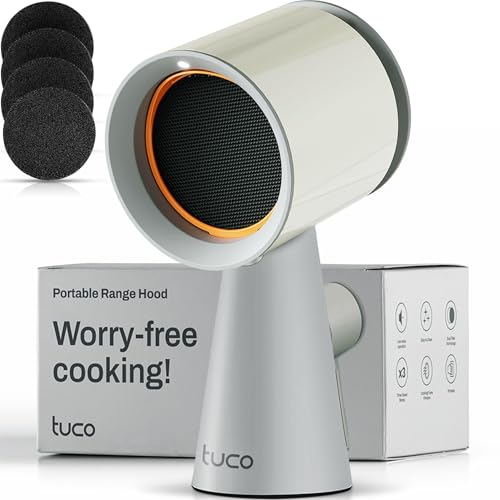
The TUCO Portable Range Hood emphasizes plug-and-play convenience with three speed levels and triple filtration. Its polymer filter, aluminum condensation net, and activated carbon work together to reduce oil vapors and odors without requiring installation or external venting. A user-friendly design includes a long 70-inch power cord for flexible placement, making it ideal for apartments, small kitchens, or indoor BBQ setups where venting is not feasible. It is dishwasher-safe for easy cleaning and maintenance.
AMZCHEF Portable Range Hood

The AMZCHEF portable range hood offers a four-speed control and large-caliber dual carbon filters to purify smoke before it exits the unit. With a compact 10.2″ x 8″ footprint, it fits smaller kitchens and RV setups while providing 120 CFM of airflow and recirculation with no external venting required. A 40° tilt range and a telescoping height extension make it versatile for different pan sizes and stove layouts. The product includes a ring light option for visibility during cooking and a heat-safe oil cup for easy cleanup.
Buying Guide: Key Purchase Considerations
Ventilation needs vary by kitchen size, usage, and layout. Consider the following factors to choose the best extractor fan for your space:
- Airflow and space size: Larger kitchens or open-plan areas benefit from higher CFM ratings (e.g., 576 CFM or more). Smaller kitchens or apartments may do well with 80–308 CFM units.
- Installation type: Wall-mounted exhausts and through-the-wall models require mounting access and clearances. Portable/recirculating hoods are ideal where venting is impractical or prohibited.
- Filtration: Metal or copper motors indicate durability, while triple or multi-stage filtration (including carbon) helps reduce grease and odors more effectively in cooking-heavy environments.
- Energy efficiency: Look for fans with low wattage relative to airflow. Models around 38–53 W for hundreds of CFM deliver strong performance without excessive energy use.
- Build material: Metal housings tend to be more durable and easier to clean than plastic. Metal options are common in higher-CFM models.
- Noise level: High-velocity or high-CFM units can generate noticeable noise. If keeping sound levels manageable is important, check dB ratings or user feedback on real-world operation.
- Maintenance and cleaning: Removable filters, dishwasher-safe components, and accessible backdraft dampers simplify upkeep and longevity.
- Placement flexibility: Portable hoods offer placement versatility but rely on recirculation rather than external venting, which can affect odor control compared with ducted exhaust.
- Compatibility: For through-the-wall options, confirm wall thickness, duct diameter, and available mounting space to ensure a proper fit.
These considerations help compare products across installation type (ducted vs. recirculating), airflow needs, and long-term costs. When selecting, balance initial installation with ongoing maintenance and compatibility with your cooking habits. The listed models provide a mix of wall-mounted, through-wall, and portable options to address diverse kitchen layouts, from compact apartments to larger home kitchens and light commercial spaces.