Best Exhaust Fans for Roof: Top Roof Mount Ventilators for Attics
The roof is a crucial ventilation point for any attic or shed space. The following selection highlights five roof-mounted exhaust fans that balance airflow, durability, and energy efficiency. Each option is suitable for different attic sizes and climate needs, helping maintain cooler temperatures and better moisture control in American homes.
Summary Table of Chosen Products
| Product | Brand | Approximate Airflow | Key Benefit |
|---|---|---|---|
| Master Flow ERV6BL | Master Flow | Up to 1,500 CFM | Thermostat-controlled attic cooling |
| Master Flow PT6 | Master Flow | Up to 1,000 CFM | Easy installation and efficiency |
| FICBXRA 171 CFM Roof Vent | FICBXRA | 171 CFM | Low-noise, durable steel construction |
| Direct Drive 500 CFM Exhaust Fan | FICBXRA | 500 CFM | Direct drive, weather-protected design |
| AIR VENT 53827 Roof Vent | Air Vent | Variable performance | Simple, reliable roof-mounted vent |
When selecting a roof exhaust fan, consider attic size, climate, noise tolerance, and installation ease. The following sections break down five products with performance details, helping you compare airflow, construction quality, and long-term efficiency.
Master Flow ERV6BL Roof Mount Attic Fan

The Master Flow ERV6BL is designed to cool large attic spaces, with the ability to ventilate up to 2,800 square feet. It features a built-in thermostat/humidistat to optimize cooling when it’s most needed, integrating an HT1 control for energy-aware operation. With a high airflow capacity of up to 1,500 CFM, this model balances power and efficiency for mid- to large-size homes. The galvanized steel construction provides durability and weather resistance, while a built-in screen helps minimize debris ingress. This fan is suitable for intensively ventilated spaces where consistent attic cooling is a priority.
Key points to consider: installation around the gable or roof access, compatibility with existing thermostat controls, and the impact of a high-CFM unit on your overall cooling strategy. The ERV6BL is well-suited for homeowners seeking a robust, thermostat-regulated roof exhaust solution that does not require frequent maintenance beyond basic cleaning of the screen.
Master Flow PT6 Roof Mount Attic Vent Fan

The PT6 model provides 1,000 CFM of airflow and emphasizes easy installation. It is constructed with galvanized steel for durability in outdoor conditions and to resist corrosion over time. The unit is designed to vent attic air efficiently while helping to reduce heat buildup in the living spaces below. The PT6 aims to strike a balance between performance and installation simplicity, making it a practical option for retrofits or new installations where a straightforward, reliable exhaust solution is desired.
Consider how this unit fits with your attic size and whether you need a slightly more modest airflow than the ERV6BL. The PT6’s benefit is reliable performance with simpler setup, which can be attractive for DIY projects or homes with limited roof clearance.
FICBXRA Roof Extractor Fan, 171 CFM
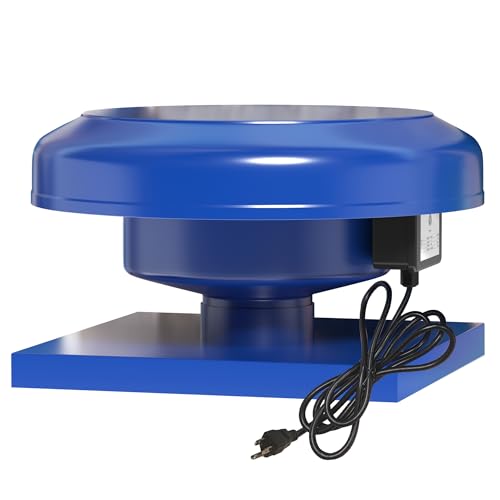
This roof-mounted ventilator offers 171 CFM airflow, suitable for smaller attic spaces or rooms requiring steady air exchange without excessive noise. The fan uses a corrosion-resistant metal shell and bearings designed for long life, which is beneficial in variable outdoor conditions. A low-noise profile helps minimize acoustic impact in and around living spaces. For installations where quiet operation and compact footprint are prioritized, this unit provides dependable ventilation with straightforward maintenance.
Key considerations include noise tolerance, attic size, and the need for consistent airflow during extreme heat. The FICBXRA option delivers solid performance at a modest airflow level, making it a practical choice for smaller structures or supplementary ventilation in larger spaces.
Direct Drive Axial Roof Exhaust Fan, 500 CFM

This 500 CFM direct-drive axial exhaust fan combines a sturdy die-formed blade design with a weather-protected hood. The unit uses permanently lubricated ball bearings, reducing maintenance needs over time. A built-in bird screen reduces intrusion by birds and debris, contributing to hassle-free operation in exposed roof locations. The simple direct-drive configuration tends to deliver reliable performance with fewer moving parts than belt-driven alternatives, which can be advantageous for long-term reliability.
Consider this option if you need a dependable midrange performance roof vent with practical protection features. Its straightforward design can be advantageous for DIY installations where a robust, low-maintenance exhaust solution is desired.
AIR VENT 53827 Roof Mounted Ventilator

The Air Vent 53827 offers a communications-friendly, brown-colored roof vent designed for roof-mounted installation. While product details focus on form and color, the unit is positioned as a reliable, straightforward solution for attic ventilation. It provides basic airflow support suitable for smaller to medium-sized spaces and is designed to fit well within typical residential roofing installations. This option can be appealing for homeowners seeking a simple, durable vent without extra features.
When evaluating the Air Vent model, assess attic square footage, typical climate conditions, and the need for additional moisture management. Its simplicity and color compatibility with many roofs can be a practical reason to choose it for standard attic ventilation tasks.
Buying Guide
Key purchase considerations for roof-mounted attic fans include airflow needs, attic size, climate, energy efficiency, noise levels, and installation constraints. The following perspectives help cover different use cases:
- Attic size and airflow: Measure the attic square footage and select a model with sufficient CFM to achieve effective air exchange. Larger attics may benefit from higher CFM units, like the 1,500 CFM Master Flow ERV6BL, while smaller spaces can work well with 171–500 CFM options.
- Thermostat and humidity control: Models with built-in thermostats or humidistats optimize cooling and moisture management. If you experience humidity issues, a unit with automatic or programmable controls can reduce energy use while maintaining comfort.
- Construction and durability: Galvanized steel construction and weather-protected housings improve longevity in outdoor roof environments. Look for corrosion resistance and reliable bearings for low maintenance.
- Noise and comfort: Evaluate the noise level, especially if the attic is near living spaces. Look for low-noise motors or insulated housings to minimize disruption.
- Installation and compatibility: Check mounting options (gable vs. roof mount), required clearances, and whether the unit supports retrofits. Simpler installations save time and reduce professional installation costs.
- Maintenance needs: Debris screens and easy access for cleaning help maintain airflow and prevent clogging. Consider models with removable screens for easier maintenance.
- Energy considerations: Even high-CFM fans can be energy-efficient if paired with thermostatic control. Evaluate long-term energy use versus initial cost to determine overall value.
- Warranty and support: Durable devices with solid warranties and accessible customer support offer better long-term protection for your investment.
In sum, choose a roof-mounted exhaust fan that aligns with attic size, climate, and operational priorities. For large, heat-prone homes, higher CFM fans with thermostat control deliver noticeable comfort and efficiency gains. For smaller spaces or retrofit projects, simpler units with protective features and durable construction offer reliable performance with lower upfront costs.