Best Exhaust Fans for Basement Bathrooms: Quiet, Efficient Ventilation Solutions
Basement bathrooms require reliable ventilation to control moisture, odors, and mold risks. The following five exhaust fans are well-suited for Basement or lower-level bathrooms, offering a range of CFMs, noise levels, and installation options. Each product is chosen for performance, energy efficiency, and ease of installation in tighter, non-traditional spaces.
Product Overview
- Broan-NuTone Bathroom Exhaust Fan, 50 CFM, 2.0 Sones, Energy Star
- Fanspex Bathroom Ceiling Exhaust Fan, 110 CFM, 1.0 Sones
- Broan-NuTone Bathroom Exhaust Fan with Light, 80 CFM, LED, 1.5 Sones
- ARSFAN 3 Speed Humidity Sensor Bath Fan, 85 CFM
- Amico Bathroom Exhaust Fan, 80 CFM, 1.0 Sones
Choosing the right bath exhaust fan for a basement space involves balancing airflow with noise, installation constraints, and energy use. The following sections highlight five top picks with practical details to help homeowners compare options and select a model that fits their basement bathroom size and layout.
Broan-NuTone 50 CFM Quiet Energy Star Fan

This compact 50 CFM fan is designed for smaller bathrooms up to 45 sq. ft., making it a solid option for basement half baths. It operates at 2.0 sones, balancing effective moisture control with low noise—an important factor for basement spaces where sound carries differently. The unit is Energy Star certified, providing energy efficiency alongside dependable performance. Installation is straightforward with foldable mounting brackets, allowing a no-cut setup in many configurations and no attic access required. Typical dimensions include a 7-1/4″ x 7-1/2″ housing and about 3-5/8″ depth, with a matching 8-5/8″ x 8-3/8″ cover.
Fanspex 110 CFM Quiet Bath Vent

Fanspex offers a higher airflow option suitable for larger basement bathrooms or open layouts. With 110 CFM and a claimed 1.0 sone quiet operation, this model aims to deliver robust ventilation while minimizing noise disruption. The housing size is approximately 9.1″ x 9.1″, so installation should be verified against available ceiling space. This unit is versatile for bathrooms, kitchens, or other spaces up to around 172 ft². Potential buyers should confirm duct size and room configuration to ensure a snug fit without compromising performance.
Broan-NuTone Exhaust Fan With Light, LED, 80 CFM

This unit combines airflow and illumination, featuring an Energy Star certified 80 CFM exhaust fan with a long-lasting LED light rated for about 50,000 hours. The fan operates at 1.5 sones, delivering quiet performance ideal for basement bathrooms where discreet operation matters. It is designed for fast installation with no-cut roomside installation, suitable for retrofits where attic access is limited. The housing is around 7.5″ D x 7.25″ W x 5.75″ H, with a cover about 9.5″ x 9.5″. This model is a solid choice for combining moisture control and daily lighting in one fixture.
ARSFAN 3 Speed Humidity Sensor Bath Fan
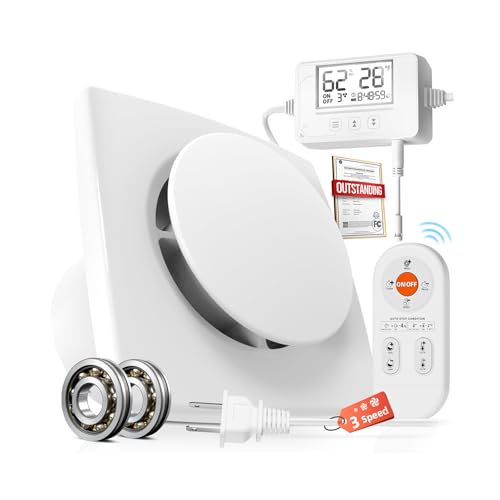
This model emphasizes automatic humidity-based ventilation with a smart sensor and optional timer control. The fan features a high airflow of up to 85 CFM and a broad motor speed range (1450–2600 RPM) to balance rapid moisture removal with quiet operation—reportedly in the 24–35 dB range. The copper dual-ball AC motor is designed for efficiency and longevity, with robust performance in damp basement environments. The unit includes a digital display for monitoring humidity and temperature, aiding proactive moisture management in lower-level bathrooms or areas prone to humidity buildup.
Amico 80 CFM Quiet Ceiling Exhaust Fan

Amico’s model is designed for ceiling retrofit installations without attic access. At 80 CFM and 1.0 sone, it aims to deliver efficient moisture removal with minimal audible distraction. The housing measures about 7.5″ x 7.2″ x 4″, with a 4-inch duct connection and a ceiling cutout around 7.6″ x 7.3″. This configuration suits basement bathrooms up to roughly 80 sq ft and is marketed for easy retrofit installations where space is constrained. Users should verify ceiling thickness and duct routing to ensure a clean, secure fit.
Buying Guide: key considerations for basement bathroom exhaust fans
- Room size and CFM: Calculate the bathroom’s volume (length × width × height) and choose a fan with at least the recommended air changes per hour. Basements often require stronger ventilation due to limited natural ventilation paths.
- Noise and location: In subterranean spaces, even small noise can be noticeable. Look for low sone ratings (1.0–2.0 sones) and consider placement to minimize sound transmission to living areas above.
- Humidity sensing vs. timer: Humidity-sensing fans auto-activate to combat moisture buildup, especially when bathrooms are infrequently used. Timers help ensure continued ventilation after use without leaving the fan running excessively.
- Energy efficiency: Energy Star certifications and efficient motors reduce long-term electricity costs, a meaningful factor for basements where ventilation may run longer during humid months.
- Installation constraints: Basement bathrooms may lack attic access, requiring no-cut installations, compact housings, or reversible wiring. Confirm duct size, rough-in opening, and ceiling space before purchasing.
- Lighting combination: If you need lighting in addition to ventilation, units with integrated LEDs can simplify wiring and reduce the number of fixtures, but check light lifespan and color temperature suitability for the space.
- Maintenance and durability: Stainless or coated housings resist basement humidity. Look for durable motors with long service life and accessible filter or duct connections for periodic cleaning.
- Placement and duct routing: Plan straight duct runs with minimal bends for optimal airflow. Short, direct paths reduce noise and improve efficiency.
- Compliance and safety: Ensure models meet local building codes and are UL listed or certified as appropriate for damp locations, especially in basements.