Best Wine Room Cooling Units for Home Cellars and Bars
Answer: For wine collectors and home bartenders, these cooling units maintain proper temperature and humidity to protect vino and keep beverages at ideal temperatures. Top picks include dedicated wine coolers with dual zones and glass doors, plus reliable general-purpose coolers that double as wine storage when space is tight. This guide highlights five options—each suited to different room sizes, budgets, and storage needs—so you can choose the right unit for your wine room or beverage area.
| Product | Best For | Capacity | Key Benefit |
|---|---|---|---|
| Wine Enthusiast 32-Bottle Dual Zone MAX | Wine collectors with mixed reds and whites | 32 bottles | Dual zones for precise temps |
| EUHOMY Mini Fridge 130 Can Beverage Cooler | Small spaces with glass-door display | 130 cans | Precise digital control, glass door |
| COWSAR 4.5 Cu.Ft Wine Fridge | Showcase-ready wine and beverages | 37 bottles / 145 cans | Double-layer glass door and humidity seal |
| Wine Enthusiast 6-Bottle Countertop | Compact wine storage on countertop | 6 bottles | Small footprint with digital temp control |
| Arctic Air Pure Chill 2.0 Evaporative Cooler | Room cooling where dedicated wine storage isn’t necessary | Personal space | Low energy, portable cooling |
Arctic Air Pure Chill 2.0 Evaporative Cooler

- Best For: Small spaces, desks, or nightstands in home bars or wine rooms with open layouts.
- Why Selected: Low-powered cooling with Hydro-Chill technology; compact and portable for easy placement near wine storage to help reduce ambient temperature fluctuations.
- Caution: Not a primary temperature control for a dedicated wine cellar; best used as a supplementary device in dry climates.
Wine Enthusiast 32-Bottle Dual Zone MAX Compressor Wine Cooler

- Best For: Larger wine collections needing separate red and white zones.
- Why Selected: Advanced MAX compressor cooling provides quiet, stable temperatures and helps preserve wine quality longer.
- Caution: Dual-zone configuration requires space; ensure ventilation around the unit for optimal performance.
EUHOMY Mini Fridge 130 Can Beverage Cooler

- Best For: Small wine collections or mixed beverages in a kitchen or bar area with glass-door display.
- Why Selected: Precise digital temperature control from 37°F to 61°F plus a UV-blocking glass door for visible, reliable storage.
- Caution: Not a traditional wine cellar; temperature stability is best with ambient room temperatures under 75°F.
COWSAR 4.5 Cu.Ft Wine Fridge 37 Bottle
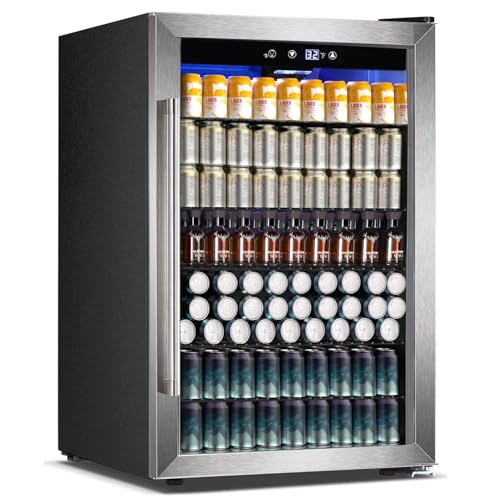
- Best For: Showcasing a wine collection with reliable climate control and elegant display.
- Why Selected: Double-layer glass door, UV protection, and humidity management help protect corks and flavor.
- Caution: Ensure layout allows for adequate ventilation around the cabinet for best efficiency.
Wine Enthusiast 6-Bottle Countertop Cooler

- Best For: Compact spaces like a small kitchen, office, or bedroom with limited room for a larger unit.
- Why Selected: Digital temperature control and a compact footprint make it easy to maintain ideal storage for a few bottles.
- Caution: Limited capacity means it’s best for small collections or as a dedicated wine companion alongside a larger cooler.
Buying Guide: Key Considerations For Wine Room Cooling Units
What should you consider before buying a wine room cooling unit? Temperature range, humidity control, bottle capacity, energy use, and door design all affect wine preservation. Consider dedicated wine coolers for stability and humidity management, plus versatile units that can double as beverage fridges for mixed spaces. Place emphasis on noise levels, ventilation, and the ability to maintain a consistent temperature even with frequent door openings.
How much space do you have? If you’re building a dedicated wine room, aim for a built-in or freestanding unit with dual zones and uniform airflow. For smaller rooms or home bars, a compact or countertop model may suffice, provided it can maintain ideal conditions with limited bottles. If your climate is hot or humid, prioritize units with strong insulation, humidity seals, and UV-protective glass.
What storage approach works best? Glass doors showcase collections but require higher humidity management to prevent cork issues. Solid doors may offer better temperature stability but hide the bottles from view. Adjustable shelves and flexible layouts help maximize space for different bottle sizes and formats.
Frequently Asked Questions
- What is the ideal temperature for a wine storage unit?
Most wines store best around 45-65°F, depending on style; reds slightly warmer than whites. - Is humidity control important in wine storage?
Yes. Humidity around 60-70% helps prevent cork drying and keeps wine aging gracefully. - Should I choose dual-zone or single-zone wine coolers?
Dual-zone units are better for mixed wine collections; single zones are suitable for a focused collection. - Do glass doors harm wine due to light exposure?
UV-blocking glass reduces light exposure and protects wine quality. - Can a general evaporative cooler help a wine room?
It can reduce ambient temperature in dry climates but isn’t a substitute for dedicated wine cooling in a room-wide cellar. - What maintenance is needed for wine coolers?
Regular cleaning, door gasket checks, and ensuring proper airflow help maintain consistent performance.