Best Wine Cellar Temperature Control Options for Precise Wine Storage
If you need reliable, accurate temperature control for a home wine collection, these select coolers offer precise ranges, stability, and practical features. They’re best for homeowners building a small to mid-size cellar, casual collectors, or anyone wanting consistent aging conditions without fuss. Below is a quick product comparison and a buying guide to help you choose the right unit for your space.
| Product | Best For | Capacity | Temp Range | Notable Feature |
|---|---|---|---|---|
| Icyglee 25 Bottle Cooler | Young collectors or staggered aging | 25 bottles | 40–64°F | Double-layer glass door with UV protection |
| Ivation 12 Bottle Cooler | Quiet, compact storage | 12 bottles | 41–64°F | Built-in lock for security |
| EUHOMY 25 Bottle Cooler | Under-counter or freestanding versatility | 25 bottles | 41–64°F | Double-paned glass door and interior LED |
| Tecnolove 18 Bottle Cooler | Small apartment or office spaces | 18 bottles | 38–65°F | Quiet compressor, compact footprint |
| ORYMUSE 30 Bottle Dual Zone | Red and white wine segregation | 30 bottles | 40–65°F (upper/lower zones) | Dual zone with memory function |
Icyglee 25 Bottle Compressor Wine Cooler Refrigerator
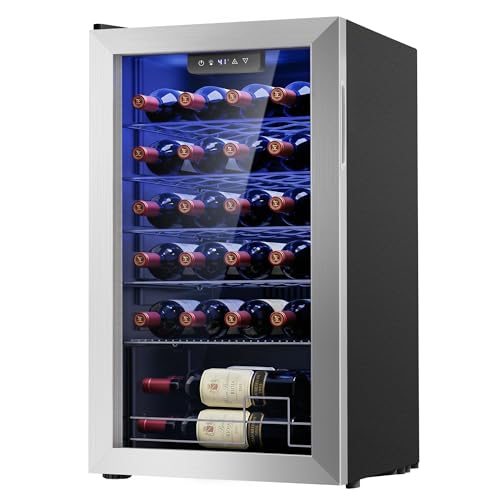
Best for dedicated home bars or kitchens that need consistent aging conditions. This model offers a wide 40–64°F range suitable for reds, whites, or sparkling wines while protecting corks and labels with a UV-shielding glass door. The interior layout uses adjustable shelves to accommodate varying bottle sizes.
Best-suited buyer: a small- to mid-sized collector who wants adjustable storage and reliable temperature stability in a freestanding unit. Caution: ensure clearance for the door to open fully in compact spaces.
FOHERE 8 Bottles Small Wine Fridge
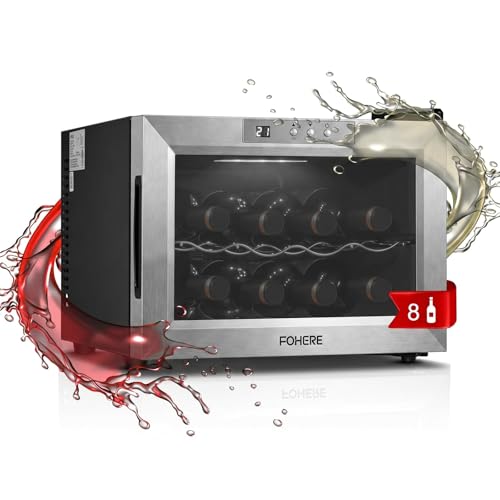
Best for countertop use and under-counter flexibility. This compact unit stores up to 8 standard bottles with a low-profile footprint, a digital temperature control range of 46.4°F–64°F, and a blue LED interior light for easy selection. It’s ideal for simmering reds or chilling whites in smaller spaces.
Best-suited buyer: someone needing a discreet, under-counter option with easy access. Limitation: small capacity may require more frequent rotation for larger collections.
Ivation 12 Bottle Compressor Wine Cooler
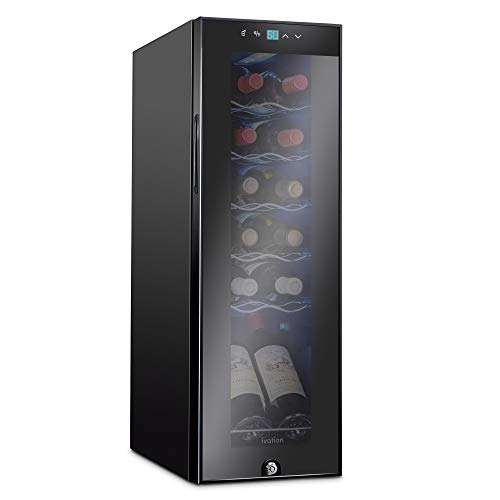
Best for long-term storage with security. It maintains 41–64°F and uses a built-in fan for consistent temperatures, plus UV-resistant double-pane glass to guard against UV damage. A locking door adds an extra layer of protection for valuable bottles.
Best-suited buyer: a home cellar owner who wants stable cooling, low noise, and bottle security. Caution: larger rooms may require additional cooling power in hot environments.
Tecnolove 18 Bottle Wine Cooler

Best for space-constrained living areas needing real compressor cooling. It cools down to 38°F, operates quietly, and holds up to 18 standard bottles. Removable shelves accommodate larger bottles and the interior LED light makes selections easy in dim rooms.
Best-suited buyer: an apartment or small office user who wants a quiet, compact cooler with flexible bottle storage. Caution: the interior may feel crowded if you stock many oversized bottles.
ORYMUSE 15 Inch Dual Zone Wine Cooler

Best for red and white wine segregation in a built-in or freestanding setup. It features dual cooling zones (upper 40–55°F, lower 55–65°F), enough space for up to 30 bottles, and a brushed stainless steel door with double-layer tempered glass to reduce heat transfer and UV exposure.
Best-suited buyer: someone needing distinct temperature zones for mixed collections. Limitation: built-in installation is recommended; freestanding use is possible but may affect airflow in tight spaces.
Buying Guide: Key Purchase Considerations
- Capacity vs. space: Match bottle count to your available space. Larger units hold more bottles but require more floor or counter space.
- Temperature control: Look for a precise range (ideally 38–65°F) and a stable temperature with a built-in fan or compressor for even cooling.
- Door construction: Double-paned glass reduces UV exposure and heat transfer; UV protection helps preserve flavor and aromatics over time.
- Shelving and layout: Removable or adjustable shelves accommodate different bottle shapes and sizes; consider full-width vs. partial-width racks.
- Noise and vibration: Compressor-based coolers are common; check decibel ratings if the unit will sit near living areas.
- Security: A locking door is beneficial for collections in shared spaces or busy homes.
- Power efficiency: Energy-saving designs and LED lighting reduce consumption and heat output.
- Installation flexibility: Freestanding units offer portability; built-in units require cabinet space or a dedicated alcove.
FAQ
- What is the ideal wine storage temperature? Most wines age best around 55°F, with slight adjustments for red or white preferences.
- Is dual-zone better for mixed collections? Yes, dual zones help keep whites and reds at their optimal temperatures simultaneously.
- Do these units protect wine from light? Many feature UV-resistant glass to minimize light exposure that can affect flavor.
- Can these be built into cabinets? Some models are designed for built-in use; check clearance and ventilation requirements.
- Is a lock important for home use? It helps protect valuable bottles in busy households or offices.
- Do smaller fridges affect aging compared to larger cellars? Smaller units can maintain stable temps well, but larger spaces may require better insulation and cooling capacity for long-term aging.