Best Window Air Conditioner Cleaner Solutions for Clean Coils and Fresh Air
Answering common buyer questions, these window air conditioner cleaners target dirty coils, mold, and odors to improve efficiency and air quality. The top picks below are best for DIY homeowners, apartment renters, and small-business spaces looking for easy, effective coil and duct cleaning. Each product is evaluated for ease of use, odor control, and impact on indoor air quality.
The following quick reference table highlights five strong options, showing their intended use and who benefits most from each choice.
| Product | Best For | Key Benefit | Notes |
|---|---|---|---|
| Frost King ACF19 | Homeowners with basic coils and drain pans | Heavy-duty foam for coils, fans, and filters | Neutralizes odors from standing water |
| Concrobium Mold Control | Mold-prone spaces and mold prevention | Eliminates mold and forms a barrier | EPA-registered; odorless, VOC-free |
| Foam Blaster AC Coil Cleaner | Professionals or advanced DIYers | No-rinse options for evaporators | Neutral citrus scent; deep foam action |
| Arm & Hammer AHCC-19 | Biodegradable-cleaning enthusiasts | Biodegradable, self-expanding foam | Odor-banishing and performance-focused |
| Nordicare Cleaner Spray | Residential and small offices | Deep cleaning for ducts, filters, and vents | Odor neutralizer for home and car systems |
Below are five selected products that align with typical window AC and duct cleaning needs. Each entry includes who benefits most, why it was chosen, and a practical note to help you compare quickly.
Frost King ACF19 Foam Coil Cleaner
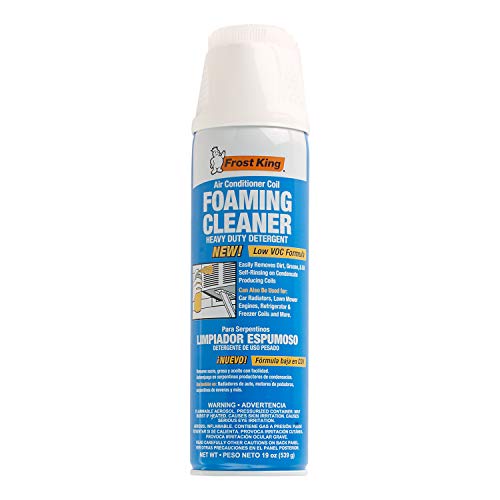
Best for homeowners cleaning basic coils, fans, and reusable filters. The Frost King ACF19 uses heavy-duty foam to dissolve stains, grease, and dirt while neutralizing odors from standing water in drain pans. This product is straightforward to apply and leaves coils cleaner with less manual scrubbing. A potential limitation is that it targets ordinary coil buildup; severe corrosion or mineral deposits may require additional treatment.
Best for: Quick, hands-off coil cleaning in residential window units. Why selected: Great foam formula for regular maintenance and odor control. Caution: Avoid contact with electrical components; rinse thoroughly if advised by the manufacturer.
Concrobium Mold Control Aerosol

Best for spaces with mold concerns or where mold prevention is a priority. This EPA-registered formula eliminates existing mold and forms an invisible barrier to deter future growth. It is bleach-free, odorless, and VOC-free, making it suitable for indoor application. Limitation: It focuses on mold control; it may not address heavy physical dirt on coils without mechanical cleaning.
Best for: Mold-prone apartments or basements with window AC units. Why selected: Provides mold destruction and preventive barrier without harsh odors. Caution: Follow directions for proper ventilation during application.
Foam Blaster AC Coil Cleaner

Best for professional-level cleaning or serious DIY projects. The Foam Blaster uses a high-pressure spray to penetrate deep and expand into a dirt-liquifying foam, effectively cleaning evaporators (no rinse) and condensers (light rinse). It leaves a mild citrus scent. Limitation: No-rinse claim applies to evaporators only; condensers may require rinsing.
Best for: Users seeking strong cleaning power with minimal rinsing on evaporator coils. Why selected: Deep-penetrating foam action improves cleanliness and efficiency. Caution: Use in well-ventilated areas and avoid electrical exposure during application.
Arm & Hammer AHCC-19 Coil Cleaner Foam
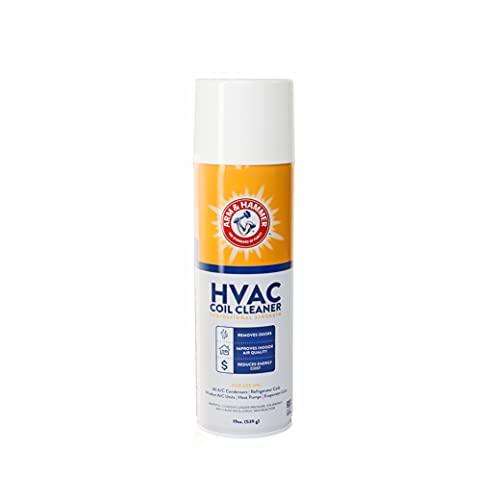
Best for eco-conscious shoppers seeking biodegradable foam. This self-expanding formula targets dirt and buildup on coils and aims to improve indoor air quality by removing odor-causing contaminants. Selecting this option supports a greener cleaning approach. Limitation: Availability and performance can vary with unit type; test on a small area first.
Best for: Homeowners prioritizing biodegradable chemistry. Why selected: Combines effective dirt removal with odor control and environmental considerations. Caution: Ensure compatibility with your unit’s seals and plastics before full application.
Leak Saver Foam Blaster 3-Pack

Best for professionals and heavy-cleaning cycles. The 3-pack provides multiple applications with the same high-pressure, expanding foam action for evaporators and condensers. It’s designed for professional use and offers the same no-rinse (evaporators) or light rinse (condensers) approach. Limitation: Requires careful handling of multiple units and proper ventilation during use.
Best for: HVAC technicians and serious DIYers who want multiple cleanings from a single purchase. Why selected: Consistent cleaning action across three bottles and a proven formula. Caution: Protect surrounding surfaces during application and follow all safety instructions.
InterDynamics A/C Pro Vent and Duct Cleaner

Best for automotive and HVAC-specific odor control. This cleaner targets odors from mold, mildew, stale air, or smoke within vents and ducts. It works as an odor neutralizer for cars, trucks, and HVAC systems. Limitation: Marketed primarily toward automotive use; effectiveness on window AC coils may vary by situation.
Best for: Cars and small vehicles, or integrated systems with odor issues. Why selected: Focuses on odor neutralization alongside cleaning. Caution: Use as directed to avoid over-application around sensitive components.
Buying Guide
What should you consider when choosing a window air conditioner cleaner?
- Coil type and accessibility: Evaporator vs. condenser coils may require different cleaners or no-rinse formulas.
- Odor control versus mold control: If odors are the primary issue, prioritize odor-neutral or odor-eliminating products.
- Environmental and safety preferences: Bleach-free, VOC-free, or biodegradable options suit sensitive indoor air environments.
- Ease of use: No-rinse formulas save time but may have limited effectiveness on heavy buildup.
- Application method: Foaming cleaners, aerosols, and sprays have different coverage and contact requirements. Always follow label directions.
How to use a window air conditioner cleaner effectively?
- Turn off power and remove any removable filters where safe. Ventilate the area during application.
- Apply cleaner to coils, fans, and drain pans as directed. Allow foam to dwell for the recommended time before rinsing if required.
- Rinse only when the product specifies rinsing, and ensure no water enters electrical components.
- Reinstall filters and run the unit on a fan setting to dry and verify airflow improves.
What about mold and odor concerns?
For mold-prone environments, an EPA-registered mold control product can offer long-lasting protection when used as directed. For odors, choose products that explicitly target odor neutralization and consider combining with regular maintenance to prevent buildup.
Maintenance tips for better air quality
- Clean coils every 6–12 months, or as buildup dictates.
- Replace or clean filters regularly to maintain airflow and efficiency.
- Inspect drain pans and condensate lines to prevent standing water and mold growth.
FAQ
- Which cleaner works best for no-rinse evaporator coils? Foam Blaster and similar no-rinse formulas are designed for evaporators, reducing downtime.
- Is mold control necessary for all units? It depends on the environment; rooms with moisture or prior mold issues benefit from mold-control products registered with the EPA.
- Are biodegradable foams as effective as traditional cleaners? Biodegradable foams can be effective for routine buildup, though severe deposits may require stronger formulas or physical cleaning.
- Can I use these cleaners on a car’s HVAC system? Some products are marketed toward automotive use; read labels carefully to ensure compatibility with your vehicle’s system.
- How often should I clean window AC coils? For regular homes, cleaning every 6–12 months is common, or sooner in dusty or humid environments.
- Do these products require professional installation? Most residential cleaners are designed for DIY use; professional help is recommended for severe mold, electrical concerns, or stubborn buildup.