Best Window AC With Dehumidifier: Efficient Cooling for Any Room
Direct answer: If you want a compact cooling solution that also reduces humidity, a window air conditioner with a built-in dehumidifier is ideal. These units fit standard windows, lower energy use, and are best for small to medium rooms, bedrooms, or home offices. This guide highlights five dependable options and explains who each is best for, plus practical buying tips and a quick FAQ.
| Product | Best For | Why It Stands Out |
|---|---|---|
| LG 8,000 BTU Window AC With Dehumidifier | Medium rooms up to 350 sq ft | Quiet operation and flexible cooling options |
| Midea 6,000 BTU EasyCool (Remote) | Bedrooms and small offices up to 250 sq ft | Low noise, 3-in-1 function with dehumidifier |
| Midea 6,000 BTU EasyCool (Different Model) | Same space needs, similar features | Easy installation, quiet and energy-friendly |
| Whirlpool 5,000 BTU Window AC With Dehumidifier | Small apartments and dorm rooms up to 150 sq ft | Reliable cooling with simple mechanical controls |
| Keystone 5,000 BTU Window AC With Dehumidifier | Small living spaces up to 150 sq ft | Quiet operation and adjustable airflow |
LG 8,000 BTU Window AC With Dehumidifier
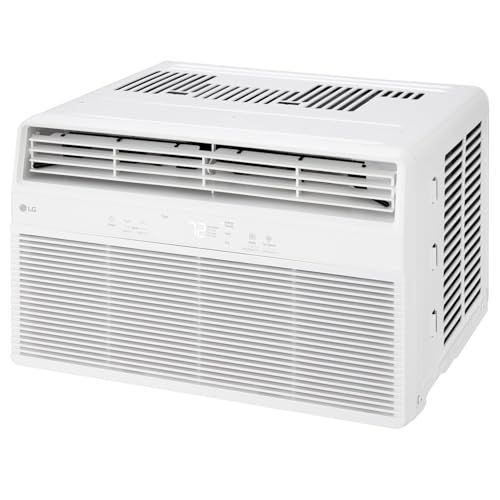
Best for: Medium rooms up to 350 sq ft. This LG model pairs quiet operation with flexible cooling settings thanks to three speeds and a user-friendly control panel plus a remote. It includes Auto Restart for power outages, ensuring consistent comfort after interruptions.
Why chosen: It balances low noise (as low as 54 dB in low mode) with effective dehumidification and standard window-fitting ease. The Auto Cool and timer features support convenient daily use.
Limitation: Real-world energy use may vary; ensure your window frame accommodates the unit’s dimensions for proper sealing.
Midea 6,000 BTU EasyCool Window AC With Dehumidifier

Best for: Bedrooms or offices up to 250 sq ft. Features three modes (cool, fan, dehumidifier) and a remote control for easy adjustment from across the room.
Why chosen: Low noise (as low as 52 dB) supports quiet environments, and the removable filter helps maintain air quality. Includes installation accessories and straightforward setup guidance.
Limitation: Installation may require pilot holes or basic tools; check window frame compatibility before purchasing.
Midea 6,000 BTU EasyCool Window AC With Dehumidifier (Model 2)

Best for: Similar use case as the first Midea EasyCool—small rooms up to 250 sq ft needing cooling with humidity control.
Why chosen: It delivers quiet operation and intuitive LED display plus remote control for convenient control from across the room. The included installation kit facilitates setup in standard window frames.
Limitation: As with most window units, ensure your window opening and sill can support the unit weight and mounting requirements.
Whirlpool 5,000 BTU Window AC With Dehumidifier
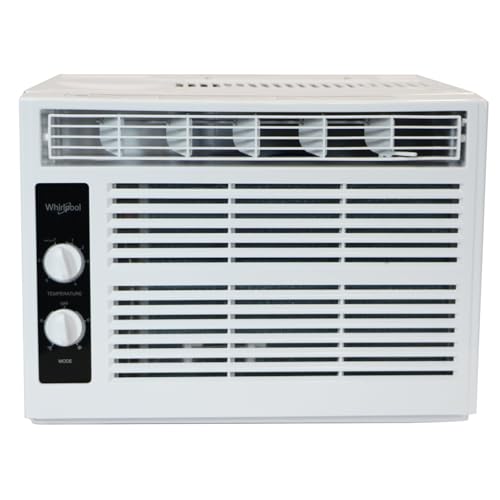
Best for: Small apartments, dorm rooms, or compact spaces up to 150 sq ft. Mechanical controls provide straightforward operation for users who prefer tactile knobs.
Why chosen: Combines cooling with dehumidification in a compact form factor, using a simple mounting kit for quick installation.
Limitation: Smaller BTU rating means less cooling power in hotter climates or poorly insulated spaces; pairing with ceiling fans can help distribute cool air more effectively.
Keystone 5,000 BTU Window AC With Dehumidifier

Best for: Small living spaces up to 150 sq ft where quiet operation is a priority and remote control is preferred for convenience.
Why chosen: Quiet performance (low 52 dB) supports nighttime use and streaming while dehumidification helps maintain a comfortable humidity level in compact rooms.
Limitation: 5000 BTU may struggle on hot days in sunny rooms; consider room shading or supplemental cooling if needed.
MERXENG 8000 BTU Window AC With Dehumidifier

Best for: Medium to larger rooms up to 450 sq ft needing stronger cooling with moisture control.
Why chosen: 8000 BTU capacity helps maintain comfortable temperatures in bigger spaces; built-in dehumidifier reduces humidity efficiently for improved comfort.
Limitation: Higher BTU units can consume more energy; ensure home insulation and window fit are adequate to maximize efficiency.
Buying Guide: Key Considerations for Window AC With Dehumidifier
- Room size and BTU: Match the unit’s BTU rating to the room size to ensure efficient cooling without overworking the compressor.
- Dehumidification capacity: Look for explicit dehumidification specs or modes; if humidity is a primary concern, compare pints per hour or Dry Mode performance.
- Noise level: For bedrooms or offices, prioritize units with low dB levels in cooling mode.
- Installation and window fit: Check window dimensions and sill support; most units include mounting kits, but some frames need extra hardware or tools.
- Controls and convenience: Remote control, digital displays, programmable timers, and auto-restart can simplify daily use.
- Energy efficiency: Inverter systems or Energy Star-rated models save energy; consider long-term operating costs.
- Maintenance: Removable, washable filters help maintain air quality and efficiency.
- Ventilation and airflow: Adjustable louvers and multiple fan speeds improve comfort distribution across the room.
FAQ
- Do window ACs with dehumidifiers work in humid climates? Yes, they combine cooling and moisture removal to improve comfort in humid conditions.
- Can these units be installed in any window? Most fit standard single-hash sill windows, but measurements and mounting hardware vary by model.
- Is a dehumidifier mode always energy-efficient? Dehumidifier modes can save energy by reducing the compressor usage, but overall efficiency depends on room humidity and temperature.
- What size should I choose for a 200 sq ft room? A 6,000 BTU unit generally works well for spaces around 150–250 sq ft; for exact sizing, consult the product’s BTU guidance and room conditions.
- Should I prioritize quiet operation over cooling power? For bedrooms or studies, prioritize quieter models; for hot spaces, higher BTU with acceptable noise levels may be better.
- Do portable dehumidifiers replace window units? They are different appliances. A window unit with a dehumidifier handles cooling and humidity in a single unit with window installation, while a standalone dehumidifier requires separate cooling.