Best Water Chiller Heat Exchangers for Homebrew and Hydronic Heating
Answering the question “which water chiller heat exchanger should I buy?” this guide highlights top options suitable for serious homebrewers, hydronic heating setups, and cooling systems. Each product is selected for high heat transfer, durable construction, and easy installation. Best for different needs—from compact beer wort chilling to larger-scale hot water loops—these picks help you compare performance, materials, and port options at a glance.
Summary table of selected products
| Product | Plate Count | Material | Ports | Best For |
|---|---|---|---|---|
| BestEquip Heat Exchanger 60 Plates | 60 | 316L Stainless Steel | 4 thickened BSP FPT | High-demand brewing and hot-water loops |
| BestEquip Heat Exchanger 40 Plates | 40 | 316L Stainless Steel | 4 thickened MNPT | Compact, efficient wort cooling |
| MRbrew Wort Chiller 60 Plates | 60 | 304 Stainless / Copper brazed | 1/2 or 3/4 NPT | Fast wort cooling, water-saving |
| Ferroday 60 Plate Wort Chiller | 60 | 304 Stainless / Copper brazed | 1/2 NPT & 3/4 NPT | Ultra-fast cooling with easy cleanup |
| Water to Air Heat Exchanger (AB) | 12×15 fins | 316L Stainless Steel | 1″ Copper Ports, 2″ & 1.5″ FPT | Outdoor wood boilers and solar heating |
BestEquip Heat Exchanger 60 Plates

The BestEquip 60-plate heat exchanger uses 316L stainless steel sheets brazed together to form a robust, high-heat-transfer unit. The turbulent-flow design improves efficiency by moving media in opposite directions, creating strong turbulences for superior heat transfer. This model is CE-certified and designed to handle high pressure and temperature, making it suitable for demanding hot-water loops and beer wort cooling in larger setups.
Who it’s best for: professional-grade homebrewers and hydronic systems needing reliable performance under higher thermal loads. Why selected: higher plate count offers increased surface area for faster cooling or heating, with durable construction for long-term use.
Caution: installation requires careful port alignment; ensure correct MP/NPT adapters to avoid leaks. Also, the absence of integrated controls means you’ll rely on external temperature management.
BestEquip Heat Exchanger 40 Plates

This 40-plate heat exchanger features 316L stainless steel with four thickened MNPT ports, offering a compact yet capable option for beer wort chilling or small hydronic circuits. Its turbulent-flow design increases heat transfer efficiency, and the unit is built to withstand high pressure and temperature in demanding environments.
Who it’s best for: homebrewers seeking a balance of performance and footprint, or small-lavor systems where space is at a premium. Why selected: strong efficiency for its size and durable stainless construction.
Caution: the smaller plate count means lower maximum heat transfer than larger exchangers; plan for slightly longer chill or heat times in peak scenarios.
MRbrew Wort Chiller 60 Plates

MRbrew’s 60-plate copper brazed design uses 304 stainless steel plates to deliver rapid wort cooling. The multiple plates increase surface area, allowing wort to pass through channels more efficiently and reduce the time needed to reach pitching temperatures. The assembly promises low leakage risk due to copper brazing in an oxygen-free environment.
Who it’s best for: brewers in warmer climates or those who need quick, repeatable cooling for several batches. Why selected: high plate count and copper brazing improve heat transfer while maintaining durability.
Caution: cleaning requires running cleaning solution through the system; ensure thorough rinsing to avoid debris affecting flow.
FERRODAY 60 Plate Wort Chiller

FERRODAY’s 60-plate heat exchanger uses 304 stainless steel plates with 99.9% copper brazed joints for superior corrosion resistance and fast cooling. It offers both 1/2 and 3/4 NPT connections, making setup versatile for standard homebrewing equipment. The design emphasizes rapid chilling while reducing oxidation through robust plate construction.
Who it’s best for: homebrewers wanting a fast, efficient chiller with flexible port options. Why selected: high plate count supports quick cooling and durable copper brazing improves longevity.
Caution: the unit cannot be disassembled for deep cleaning; use cleaning solution through the chiller as directed and rinse thoroughly before storage.
AB 300 kBTU Water-to-Air Heat Exchanger
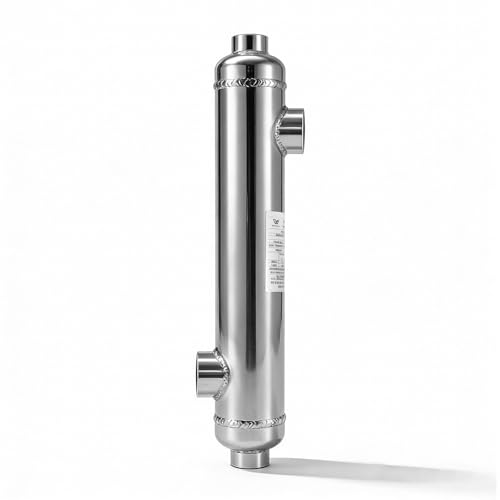
This unit is built for outdoor wood boilers, solar heating, and pool or spa applications. With a 300 kBtu/hr capacity and 316L stainless steel construction, it supports a water-to-air transfer that can feed various heating sources. It’s designed to withstand chemical-treated water typical of pool and spa environments.
Who it’s best for: outdoor heating or combined solar/water-to-air systems needing robust stainless performance. Why selected: large capacity and corrosion-resistant materials suit long-term outdoor usage.
Caution: compatibility with existing fans or ducts should be verified; this model emphasizes heat transfer efficiency more than compact indoor fit.
Buying Guide: Water Chiller Heat Exchangers
- Plate count and surface area: More plates generally mean faster heat transfer. Choose based on desired cooling or heating rate and available space.
- Material: 304 vs 316L stainless steel affects corrosion resistance and longevity, especially with copper brazed joints in contact with wort or chlorinated water.
- Port sizes and connections: Ensure compatibility with your hoses and fittings (NPT, BSP, or custom adapters). Consider future expansion when selecting port types.
- Maintenance needs: Some units are easier to disassemble for cleaning; others require through-flow cleaning. Plan cleaning routines accordingly.
- Intended use: Wort chillers focus on rapid cooling of hot liquids, while water-to-air exchangers suit hydronic heating or pool/spa systems. Match the design to your primary application.
- Installation environment: Indoor vs outdoor placement affects exposure to elements and potential corrosion. Choose models with appropriate enclosure and protection.
Frequently Asked Questions
- What is a plate heat exchanger used for in brewing?
It rapidly transfers heat between wort and cooling water to lower wort temperature efficiently, reducing time to reach fermentation temps. - Why choose a copper-brazed plate exchanger?
Copper brazing improves thermal conductivity and creates robust seals, reducing the risk of leaks under high flow and pressure. - What ports do I need for my system?
Check your pump and hoses for compatible thread types (NPT or BSP) and common sizes like 1/2″ or 3/4″. - Are these exchangers easy to clean?
Cleaning varies by model; some are not easily dissembled, so plan for through-flow cleaning with suitable solutions. - Can I use a water-to-air exchanger for heating a home?
Yes, water-to-air units can integrate with boilers and solar systems to transfer heat to air via ducted fans. - What should I consider when choosing a plate count?
Higher plate counts offer faster cooling/heating but require more space and power for pumping fluid; balance with system needs.