Best Solar Powered Swamp Coolers for Summer Cooling
Looking for efficient, off-grid cooling? A solar powered swamp cooler can lower indoor and outdoor temperatures using evaporative cooling with solar power. This guide highlights five practical options, focusing on who each cooler is best for and why. Think “best for portable use,” “best for large spaces,” or “best for energy savings.” The following quick-reference table summarizes the top picks to compare at a glance.
| Product | Best For | Key Benefit |
|---|---|---|
| Hessaire DC18 Mobile Evaporative Cooler | Compact spaces, on the go | 900 CFM, battery optional, portable design |
| Swamp Cooler 1800 CFM Mountman | Medium rooms, energy efficiency | Large water tank, 1800 CFM, remote control |
| Hessaire MC18M Outdoor Evaporative Cooler | Outdoor spaces, patios | 1300 CFM, larger coverage, outdoor performance |
| MEPTY 3600 CFM Swamp Cooler | Large spaces, workshops | 3600 CFM, 13.5 gal tank, long run time |
| Roodike 18″ Solar Rechargeable Floor Fan | Budgets and portability for outdoor use | 18″ blades, 22500 mAh battery, solar plus AC options |
The selections prioritize off-grid capability, space coverage, and ease of use. Each product section explains who benefits most and why it was chosen, along with a practical caveat when relevant.
Hessaire DC18 Mobile Evaporative Cooler

The Hessaire DC18 is a compact, portable evaporative cooler designed for small to medium spaces. Best for individuals who need lightweight, battery-optional operation and easy mobility. Features include a max airflow of 900 CFM and coverage up to 300 sq. ft. It is not an air conditioner, but it helps reduce heat stress in dry environments. A suitable choice for dorm rooms, garages, or sunrooms where plug availability is flexible.
Best for: users needing a portable, low-energy option in tight spaces. Why selected: compact form factor and truck-ready portability meet frequent relocation needs. Caution: battery not included, so you’ll rely on plug-in power or a separate battery pack if you want full mobility away from outlets.
Swamp Cooler 1800 CFM Mountman
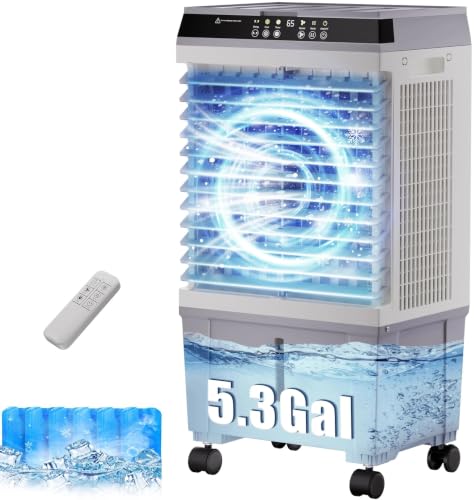
This Mountman model targets medium-sized rooms and spaces such as bedrooms, living rooms, or home offices. With 1800 CFM and a 5.3-gallon tank, it balances cooling power and runtime, supported by six ice packs for quick chill. Best for: users who want stronger cooling than compact units but still need energy-efficient operation. Why selected: wide 120° oscillation improves uniform coverage. Caution: wired control and manual settings may require periodic adjustments for optimal comfort.
Hessaire MC18M Outdoor Evaporative Cooler
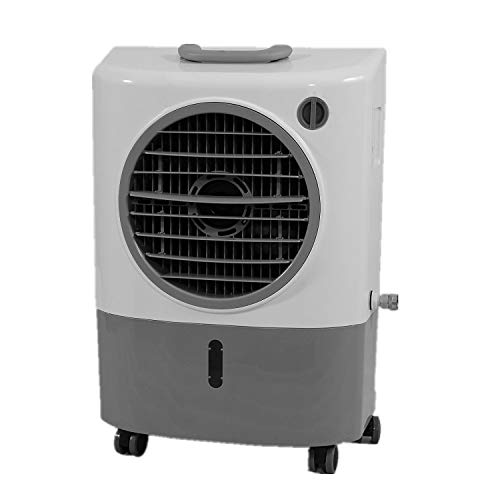
The Hessaire MC18M is designed for outdoor cooling and larger spaces. Best for patios, decks, or garages where outdoor usability is necessary. With 1300 CFM and a single cooling pad, it delivers extended coverage and a straightforward setup. Why selected: outdoor suitability and a simple, low-maintenance design. Caution: external weather protection is advised to maximize longevity in harsh conditions.
MEPTY 3600 CFM Swamp Cooler

MEPTY targets large spaces such as garages, workshops, or expansive patios. This model delivers 3600 CFM with a 13.5-gallon tank and 12-hour timer. Best for: users who need maximum airflow and extended run time without frequent refills. Why selected: high output and flexible operation modes accommodate varied cooling needs. Caution: higher power draw means more energy use when compared to smaller units.
Roodike Solar Rechargeable Floor Fan

The Roodike floor fan integrates solar charging with a long cord option, delivering flexibility for outdoor cooling. Best for: users who want a larger outdoor fan with solar support and extended battery life. Why selected: 18-inch blades provide strong air movement, and a 22500 mAh battery offers longer operation. Caution: solar charging can be weather-dependent, and performance may vary with sunlight conditions.
Buying Guide
What should I consider before buying?
Key factors include space size, desired mobility, and power source. For off-grid use, confirm solar compatibility and whether the unit includes a battery or requires a separate pack. Measure the area to ensure the unit’s airflow (CFM) aligns with room size and airflow needs.
How much space will it cover?
Smaller rooms benefit from 900–1300 CFM units, while garages and large patios may require 1800–3600 CFM. For open floor plans, consider models with oscillation and multiple speed settings to prevent hot spots.
What about energy use and maintenance?
Evaporative coolers generally use less energy than traditional AC units. Look for models with refill indicators, easy-to-clean pads, and water tanks large enough to reduce the frequency of refills. Outdoor models should be weather-rated for durability.
Is solar power reliable in all locations?
Solar performance depends on sun exposure. Some units offer hybrid options that also run on AC power. If you’ll operate mostly indoors, verify that a solar panel is not required for basic cooling, unless you want true off-grid use.
What is a good setup tip?
Place the cooler where airflow can circulate across the space. Use ice packs or a chilled water option when available to extend cooling effect. For outdoor setups, ensure the unit is protected from direct rain while allowing ventilation.
FAQ
- Do solar powered swamp coolers work well in humid climates? Evaporative cooling performs best in dry air; humidity reduces effectiveness. Consider models with higher airflow and good ventilation strategies in humid spaces.
- Can I run these at night without power? Some units offer battery options or solar charging, but many depend on some level of outdoor sun or a battery pack for night operation. Check battery capacity and charging time.
- What maintenance is required? Regular water tank refills, pad cleaning or replacement, and clearing dust from fans extend performance and life.
- Are there safety concerns with solar fans outdoors? Look for IP ratings, weather sealing, and stable bases to prevent tipping or water ingress in rain.
- Can these replace traditional air conditioning? They provide cooling comparable to mid-range units in dry environments, but are not substitutes for cooling in high humidity or extremely hot climates. Use as a supplementary cooling solution where appropriate.
- Which model is best for a small apartment? The Hessaire DC18 or Arctic Air Pure Chill 2.0 offer compact form and lower energy use, suitable for limited spaces.