Best Solar Powered Attic Vents for Efficient, Quiet Cooling
Solar powered attic vents are an energy-smart way to reduce attic heat and improve home comfort. This guide highlights five top options, focusing on durability, cooling capacity, and ease of use. The best choice depends on attic size, climate, and preferred power source. Below, you’ll find concise product details, who each vent is best for, and practical buying tips to help you compare quickly.
| Product | Best For | Up To | Power |
|---|---|---|---|
| VEVOR 42W Solar Attic Fan | Large spaces with smart control | 2800 CFM | Solar + Electric |
| iLiving Hybrid Smart Thermostat Solar Roof Attic Exhaust Fan | Smart control enthusiasts | 1150 CFM | Solar |
| DuskSnug 40W Solar Attic Fan | DIY installation, quiet operation | 1800–2000 CFM | Solar |
| Hon&Guan Solar Attic Fan With Thermostat | Versatile temperature control | 2000 CFM | Solar + AC/DC |
| DC HOUSE 32W Solar Attic Fan | Large areas, robust build | 2400 CFM | Solar |
VEVOR 42W Solar Attic Fan, 2800 CFM

The VEVOR 42W model uses an MPPT regulator to maximize sunlight and pull hot air from the attic. With a brushless DC motor, it delivers up to 2800 CFM and is suitable for metal or masonry roofs. This unit aims to cut cooling costs by actively exhausting heat during daylight. It’s best for larger attics or spaces where higher airflow is needed and where roof types are compatible with an integrated solar solution.
Who it’s best for: homeowners with hot, sun-drenched attics and a need for strong airflow. Why selected: high cooling capacity and weatherproof design support steady venting even in challenging climates. Caution: performance depends on sun exposure; remote control adds convenience but does not replace proper installation checks for roof integrity.
iLiving Hybrid Ready Smart Thermostat Solar Roof Attic Exhaust Fan

The iLiving unit blends solar power with smart thermostat control and a 1150 CFM capacity, cooling up to about 2900 sq ft. Features include an adjustable solar panel, IP68 waterproof brushless motor, and a long warranty window. It’s best for tech-forward homes seeking programmable temperature management and reliable performance across a mid-sized attic. Caution: extra setup time for thermostat integration and outdoor mounting may be required.
DuskSnug 40W Solar Attic Fan, 2000 CFM

This 12-inch model uses a heavy-duty copper motor in a weatherproof housing to deliver 1800–2000 CFM. It’s designed for quick, controller-free operation—automatically turning on at sunrise and off at dusk. Best for DIY installers who want a straightforward, all-solar solution with minimal setup. Caution: some users may prefer a thermostat option for variable climate control.
Hon&Guan Solar Attic Fan With Thermostat
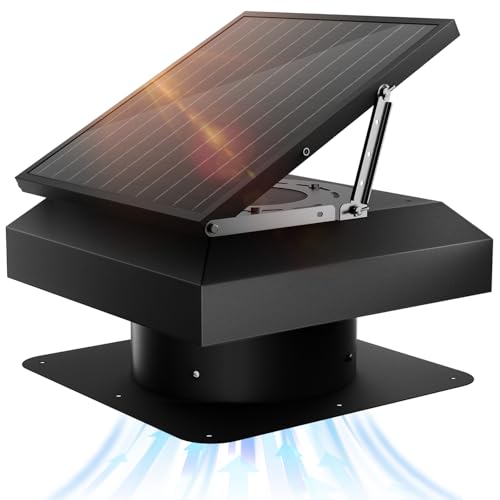
The Hon&Guan unit features a 2000 CFM output with dual power modes, adjustable thermostat, and a combination AC/DC adapter option for continuous operation. It cools up to 2500 sq ft and supports auto-start at set temperatures. Best for homeowners who want a flexible hybrid setup that can run even when solar input is low. Caution: Mode 2 requires the AC/DC adapter for full speed control.
VEVOR Gable Mount 14 Inch Solar Power Attic Exhaust Fan

This gable-mount design delivers about 1300 CFM to cover up to 1850 sq ft. It includes an adjustable thermostat and a corrosion-resistant steel housing. Best for attics or shops where a roof-penetrating option isn’t ideal and where space permits a gable installation. Caution: airflow is lower than some 42W roof-mounted fans; consider attic size when choosing.
4SEASONS Solar Attic Vent Fan – 400 CFM

This compact model uses a 12W solar panel to deliver up to 400 CFM for attics up to 500 sq ft. It’s CSA A93 certified and features impact-resistant polycarbonate housing. Best for small to mid-sized spaces or budget-conscious installations. Caution: lower airflow means it may be less effective in extremely hot climates.
DC HOUSE 32W Solar Attic Fan
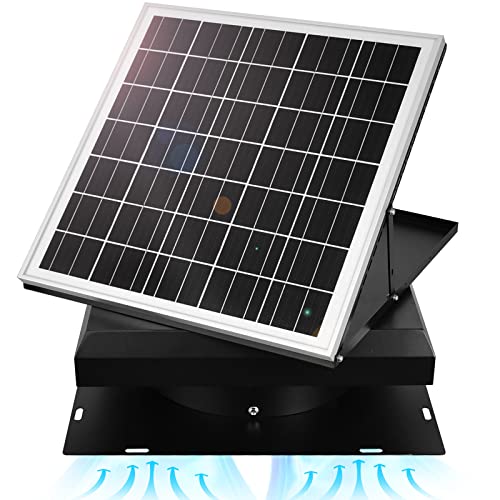
This 32W model offers up to 2400 CFM for spaces up to 3000 sq ft. It emphasizes a fully solar-driven operation with a robust, weatherproof build and quiet 9″ aluminum blades. Best for large homes seeking strong solar performance with reliable daytime activation. Caution: 43 dB typical operation is reasonable but not ultra-quiet for very sound-sensitive spaces.
Buying Guide: Key Considerations For Solar Attic Vents
- Attic Size And Cooling Needs: Match CFM to attic area. Larger spaces benefit from higher airflow ratings like 1800–2800 CFM, while smaller spaces can use lower outputs with proper placement.
- Power Source And Reliability: Solar-only models save energy but are weather-dependent. Hybrid options with AC/DC adapters provide continuous operation in low sunlight or at night.
- Installation And Roof Type: Roof-penetrating fans suit metal or asphalt roofs; gable-mount designs work where roof vents aren’t feasible. Consider mounting ease and required wiring or adapters.
- Durability And Weather Resistance: Look for IP ratings, corrosion-resistant housings, and robust motors for long-term performance in sun and rain.
- Controls And Automation: Thermostats and remote controls improve convenience. MPPT regulators optimize solar capture for higher efficiency.
- Noise And Vibration: Fan blade design and motor type affect noise. If quiet operation matters, compare decibel levels and blade materials.
- Maintenance: Brushless motors and sealed housings reduce servicing needs. Check for removable grilles or mesh to prevent debris buildup.
Frequently Asked Questions
- What is the difference between solar attic fans and hybrid fans?
Solar attic fans run on sunlight, while hybrid fans can use an AC adapter or the solar input to maintain operation during low sun exposure. - How many CFM do I need for a typical attic?
Common guidance ranges from 800 to 3000 CFM depending on attic size, insulation, and climate; larger spaces require higher airflow. - Can solar attic fans replace an air conditioner?
They reduce attic heat load and cooling demand but generally do not replace central AC in all homes. - Are solar attic fans durable in heavy weather?
Look for weatherproof housings and corrosion-resistant materials; many models are designed for outdoor use year-round. - Do I need professional installation?
Some models are DIY-friendly with simple mounting, while others may require electrical wiring or controller integration. - What maintenance is required?
Periodic cleaning of vents and checking for debris is typical; brushless motors reduce servicing needs.