Best Small RV Air Conditioners for Tiny Campers and Van Life
Finding a compact cooling solution for a small RV, van, or tent space begins with identifying units that balance power, weight, and energy use. This guide highlights five small RV air conditioners well suited for tight spaces, off-grid setups, and light sleepers. Each option targets a specific buyer profile—from ultra-portable 12V units for off-grid adventures to quieter rooftop models for weekend caravans. The selections emphasize clear, practical differences to help you compare performance, installation, and energy needs at a glance.
Summary table of selected products:
| Product | Best For | Cooling / Heating | Install Type |
|---|---|---|---|
| BougeRV PC35 Portable Air Conditioner | Tent and small RVs; app-controlled cooling | 3500 BTU cooling | Portable |
| Line Blaster Portable AC 8500 BTU | Small apartments, home offices with limited space | 8500 BTU cooling; 61–104°F | Standalone window mount kit included |
| Somokg 12V 11000 BTU Unit | Off-grid campers, vans; battery/solar setup | 11000 BTU cooling | Portable 12V DC |
| iRooVee 12V RV AC with Heat | All-season off-grid travelers | 11000 BTU cooling / 3500 BTU heating | Portable 12V DC |
| Furrion Chill Cube 18k BTU (Rooftop) | Rooftop rooftop setups for mid-sized RVs | 18,000 BTU cooling | Rooftop, unit only |
Note: Each unit has trade-offs related to installation, power sources, and noise levels. Use this article to identify which configuration best matches your camping style, electrical setup, and space constraints.
BougeRV PC35 Portable Air Conditioner
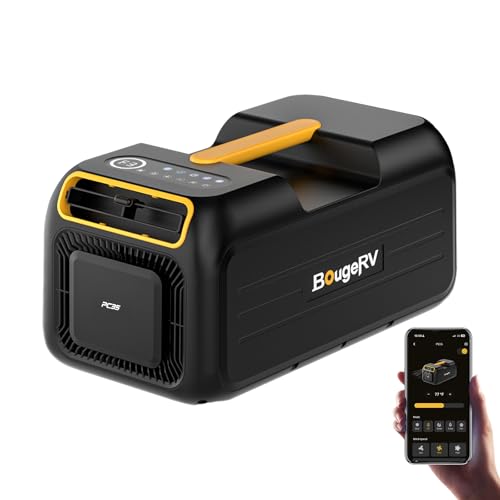
Best for tent setups and compact RV interiors, the BougeRV PC35 delivers rapid cooling in small spaces up to about 64 ft². It claims a 18℉ (10℃) drop in 15 minutes on strong mode, with a temperature range of 61℉ to 90℉. An app-based control lets you adjust temperature, modes, and timer from up to 33 feet away, making it convenient for outdoor lounging or when you’re seated far from the unit. The ergonomic handle and portable design support flexible placement for both indoor and outdoor use.
Who it’s best for: campers who want app-controlled, portable cooling for tents or tiny RV bunks, with easy transport between indoor and outdoor spaces. Caution: some users may prefer stronger airflow in very hot climates, as this small unit is primarily designed for compact spaces.
Line Blaster 3-in-1 8500 BTU Portable AC

Best for small apartments and light-duty home offices, this 8500 BTU unit cools up to 450 ft² efficiently. It cools to about 61°F within 8–15 minutes and offers 61–104°F as a temperature range. It combines Cool, Dry, and Fan modes, providing year-round comfort beyond summer cooling. The unit operates quietly (below 52dB) and features a programmable timer to minimize energy use. It’s suitable for bedrooms or nurseries where quiet operation matters.
Who it’s best for: buyers seeking a single, compact device that handles cooling, humidity control, and air movement for small living or working spaces. Limitation: higher-energy demand than ultra-portable 12V units when used in hot, dry conditions.
Somokg 12V RV Air Conditioner 11,000 BTU
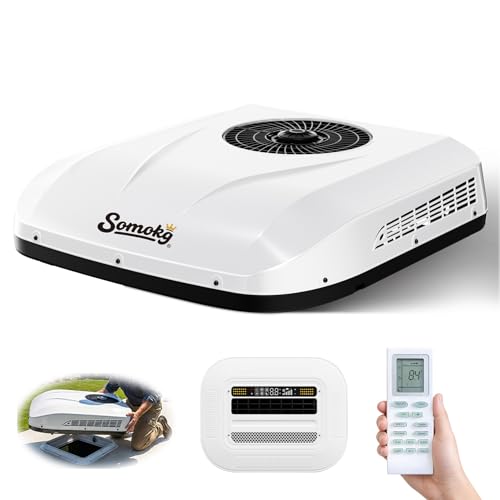
This 12V unit emphasizes off-grid capability with 11,000 BTU cooling powered by a high-frequency compressor. It supports battery-powered operation and can deliver cooling for extended periods when paired with a suitable 12V battery bank. It uses soft-start technology to reduce startup surge by about 70%, protecting batteries and extending life. It’s notably quiet for a 11k BTU class unit, with a 35dB air output for relaxed camping nights.
Who it’s best for: off-grid campers who rely on battery systems or solar and need reliable cooling without a large grid footprint. Caution: performance and runtime depend on battery size and solar input; not ideal without adequate power storage.
iRooVee 12V RV AC With Heat

Best for year-round travelers, this unit combines 11,000 BTU cooling with 3,500 BTU heating in a single system, suitable for cross-season use in RVs, vans, and trailers. It emphasizes rapid temperature control—cooling or heating within about 10 minutes—and targets off-grid use with battery or solar setups. Ultra-quiet operation (around 45dB) supports uninterrupted sleep and work in quiet campgrounds.
Who it’s best for: campers seeking a versatile 12V system that handles both cooling and heating for variable climates. Beware: integration and fit depend on roof or space compatibility; verify installation requirements before purchase.
Furrion Chill Cube 18k BTU Rooftop AC

Best for mid-sized RV rooftop setups, the Furrion Chill Cube 18k BTU units offer variable-speed compressors to move air more efficiently, aiming to deliver rapid cooling for camper interiors. This unit is designed for rooftop installation and supports high cooling capacity with energy efficiency advantages that help extend battery life during off-grid use. It is unit-only, with installation components sold separately.
Who it’s best for: owners upgrading a rooftop system who want high cooling capacity and quieter operation. Limitation: installation requires rooftop compatibility and appropriate mounting hardware; may not suit very small camper shells without roof space.
Furrion Chill Cube 18k BTU (Black) Rooftop AC

This black variant provides similar capabilities to the white Chill Cube, with identical 18,000 BTU cooling and variable-speed performance for roof installation. It emphasizes high efficiency and extended battery runtime for off-grid expeditions, with a note that the unit is for rooftop use and is sold as AC unit only, with installation components sold separately.
Who it’s best for: buyers who want consistent rooftop cooling as part of a larger rooftop AC solution. Caution: color choice does not affect performance; confirm roof clearance and electrical compatibility before purchasing.
Dometic FreshJet 3 Series 13.5K BTU

Best for established rooftop setups in compact RVs, the Dometic FreshJet 3 Series offers 13.5K BTU cooling with higher airflow compared to some competing rooftop models. It is noted for lighter weight and a design that supports efficient cooling with strong airflow management. It aims to deliver reliable performance for standard RV sizes while maintaining energy efficiency.
Who it’s best for: buyers seeking a trusted rooftop option with balanced cooling capacity and lighter footprint. Limitation: real-world performance depends on vehicle electrical capacity and proper installation.
Buying Guide: Small RV Air Conditioners
What space will you cool? Measure the area in square feet and compare with each unit’s cooling capacity (BTU). Portable units are best for tents and small RVs, while rooftop models suit mid-sized campers with existing roof access.
What power source do you have? Off-grid setups benefit from 12V DC units, battery compatibility, or solar options. Rooftop ACs typically rely on the vehicle’s electrical system, while portable units vary from 110V operation to 12V compatibility.
Noise and comfort matter. If you sleep in a room next to the unit, prioritize quieter models under 50–55dB. Variable-speed compressors can reduce runtime by adapting cooling power to demand.
Portability vs. installation. Portable units provide flexibility but may require frequent relocation. Rooftop units deliver integrated cooling but need professional installation and roof space compatibility.
Maintenance and seasonality. Consider units with dehumidification modes, timers, and durable construction for seasonal camping. In climates with both hot days and cool nights, a model with heating (12V option) can extend usability.
FAQ
What size RV air conditioner do I need for a small space?
For spaces up to 64–450 ft², models in the 3500–8500 BTU range are common starting points. Larger areas require higher BTU ratings.
Can I install a rooftop AC myself?
Some rooftop units include bolts and guides, but professional installation is recommended to ensure proper sealing and electrical safety.
Are 12V RV air conditioners efficient for off-grid use?
Yes, especially when paired with adequate battery storage or solar; soft-start and efficient compressors help extend runtime.
Do all RV AC units produce cooling and heating?
Many units provide cooling only, while some offer both cooling and heating. Check the BTU ratings for both modes where available.
Is noise a major concern with RV air conditioners?
Yes, particularly in quiet campgrounds. Look for units rated around 45–52dB for comfortable overnight use.
What maintenance helps sustain performance?
Regular cleaning of filters, ensuring proper vent clearances, and sealing rooftop penetrations help maintain efficiency and prevent leaks.