Best Small Heat Recovery Ventilators for Fresh Air and Energy Efficiency
If you’re shopping for a compact heat recovery ventilator (ERV/HRV) for a single room or small living space, you want models that balance energy savings with effective air exchange. This guide highlights five small yet capable options, detailing who they’re best for and what to consider before buying. The selections emphasize quiet operation, easy installation, and intelligent filtration to support healthier indoor air. A quick comparison table follows to help you choose at a glance.
| Product | Best For | Key Benefit |
|---|---|---|
| Heat Recovery Ventilator 4-inch 5W EC Motor Two-Way Wall Ventilation Fan | Small bedrooms or apartments needing simple, plug-in installation | Plug-and-play operation with reversible airflow |
| Wi-Fi-Enabled Pioneer 50 Single-Room Wall-Mounted Energy Recovery Ventilator | Smart, connected rooms with moderate airflow needs | Wi‑Fi control and adjustable airflow up to 35 CFM |
| Panasonic Intelli-Balance Elite Plus+ ERV | Small homes seeking precise airflow and strong filtration | SmartFlow ECM motors and customizable 30–120 CFM |
Heat Recovery Ventilator 4-Inch 5W EC Motor Two-Way Wall Ventilation Fan

Best for compact spaces where a simple, wall-mounted solution is ideal. This 4-inch EC motor unit operates as a two-way fan, allowing quick exhaust of stale air and intake of fresh air. It is designed for stable wall mounting in bedrooms or small living areas and does not require complex wiring—plug into a standard outlet.
- Best for renters or DIY installers who want a plug-and-play ERV/HRV option
- Better for rooms with limited wall depth or where a slim profile matters
Best matched with spaces that prioritize straightforward installation over high-volume ventilation. A potential limitation is its smaller airflow capacity, which may not meet rooms with higher occupancy or pollutant loads. The stainless steel rain hood adds outdoor durability and weather resistance for outdoor-mounted intakes.
Wi-Fi-Enabled Pioneer 50 Single-Room Wall-Mounted ERV
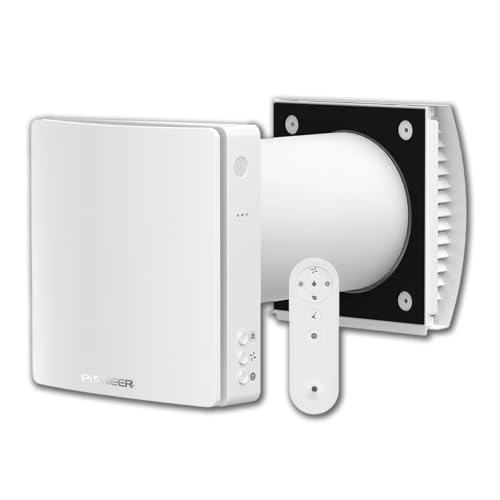
Best for small rooms where smart control and filtration matter. This Pioneer model offers automatic, Wi‑Fi controlled operation with a compact footprint and a built-in filter suite, including F7 (MERV13) filtration. It delivers up to 35 CFM, balancing air exchange with energy efficiency.
- Best for tech-friendly spaces needing remote operation
- Better for rooms with moderate air exchange requirements
Limitation to consider: higher-end features can introduce additional setup steps or app reliance. The unit’s ducting and wall cavity requirements should be reviewed to ensure compatibility with existing vent paths. Its CO2 monitoring and optional remote controls support steady air quality management.
Panasonic Intelli-Balance Elite Plus+ ERV

Best for users seeking precise, balanced ventilation with strong filtration. The unit uses SmartFlow ECM motors that adjust speed for quiet operation and reliable airflow. It supports a customizable range of 30–120 CFM and employs an energy-recovery core to temper incoming air.
- Best for homes needing adjustable, balanced ventilation
- Choose this if you want advanced motor control for low-noise performance
Note: For optimal performance, ensure the installation allows for the intended duct run and that the environment can support the integrated energy recovery core. The system is designed to maintain comfortable temperatures while recovering humidity and heat.
Panasonic WhisperComfort 60 ERV

Best for homes needing a quiet, centralized exhaust and intake with straightforward installation. The WhisperComfort 60 offers a fixed low-to-mid airflow range with a boost option up to 60 CFM, suitable for living spaces that require steady ventilation without noticeable noise. It is HVI certified for energy recovery and sound.
- Best for areas prioritizing low noise while maintaining fresh air
- Better for ceiling or wall installation depending on space and duct routing
Limitation: with a maximum of 60 CFM, large rooms or very open floor plans may require additional units to meet full-air exchange needs. The unit’s performance is best when installed in properly sealed spaces to prevent short-circuiting of intake and exhaust.
Pioneer ECOasis 150 Ductless ERV
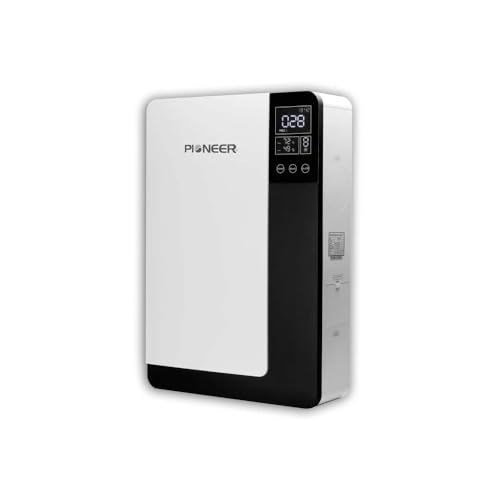
Best for mid-sized rooms up to 500 sq ft with a need for strong air purification. The ECOasis 150 includes an 8-speed fan, PM2.5 sensor, CO2 monitor, and a 4-stage filtration system with HEPA and activated charcoal filters. It emphasizes energy-efficient operation with an 82% efficient heat exchanger and about 35W power use.
- Best for highly refreshed spaces with pollutant monitoring
- Choose this for robust filtration and energy recovery in a compact layout
Limitation: ductless design can simplify installation but may require careful placement for optimal air distribution. The filtration system, while comprehensive, may necessitate periodic replacement to maintain performance.
Buying Guide
- What space and airflow do you need? For small rooms, aim for units offering 20–35 CFM. Larger or open-plan areas may require up to 60 CFM or more.
- Does it fit your installation? Wall-mounted, ceiling-mounted, or ductless options suit different home layouts. Confirm wall thickness, clearance, and power access.
- Filtration and air quality features. Look for MERV filtration, PM2.5 sensors, CO2 monitoring, and activated charcoal filters to reduce odors and pollutants.
- Energy efficiency. ERV/HRV units with energy recovery cores help temper incoming air and reduce HVAC load. Check heat exchanger efficiency ratings.
- Smart features and control. Wi‑Fi control, onboard interfaces, and remotes can simplify operation and scheduling, especially in living areas or bedrooms.
- Noise considerations. Some models advertise decibel ratings; prioritizing low-noise operation is important for bedrooms and study rooms.
- Maintenance and durability. Consider maintenance needs, filter replacement intervals, and exterior weather resistance for outdoor intakes.
Frequently Asked Questions
- What is the difference between ERV and HRV? ERVs transfer both heat and humidity to temper incoming air, while HRVs focus on heat transfer with less moisture exchange.
- Do ERVs require professional installation? Some plug-in and ductless models are DIY-friendly, but many wall or ceiling-mounted units may require professional installation for best performance.
- Can ERVs reduce conditioning costs? Yes, by preconditioning incoming outdoor air with exhaust air, reducing the load on heating and cooling systems.
- Is filtration necessary with ERVs? Filtration helps improve indoor air quality by capturing dust, pollen, and pollutants before air circulates.
- How do I choose the right CFM? Assess room size (cubic feet) and activity level; rooms with more occupants or sources of moisture may need higher CFM.
- What maintenance is required? Regular filter replacements and occasional cleaning of heat-exchanger pathways help sustain efficiency.