Best Shipping Container Heating and Cooling for Food Delivery
Answering the need for reliable temperature control during transit, these insulated shipping options are suited for small businesses and home-based food delivery. They are designed to help maintain hot or cold conditions, protect contents, and simplify handling. The top picks below target different buyer profiles, from small food startups to perishable product shippers and hobbyists.
| Product | Best For | |
|---|---|---|
| Convivium 2 Pack Insulated Boxes | Small business & home shippers | Aluminum foil liner for temperature reflection |
| EmmChill SF12A EcoFriendly Cooler | Milk/biotech perishables | Bio-stable polyurethane foam insulation |
| Tinlade Insulated Box (6 Pack) | Food delivery with bulk needs | Reflective metallized film lining |
| QIQIDAI Thermal Bubble Mailers | Lightweight cold shipping | Thermal bubble envelope with insulation |
| AojSup Insulated Shipping Boxes (10 Pack) | High-volume packaging | Internal insulation and reflective film |
Convivium 2 Pack Insulated Boxes

Brand: Convivium
Features: Includes 2 insulated shipping boxes and 2 aluminum foil liner bags. Thermal insulation helps with cold or hot shipments; outer carton is thick kraft paper with cushioning. Not included: cold packs.
Who this is best for: Small food businesses and home shippers needing compact, temperature-stable packaging for hot or frozen items. Why selected: Dual-box kit with foil liner offers an added layer of temperature reflectivity for brief transit times. Caution: Cold packs are not included, so plan ice packs separately.
EmmChill SF12A EcoFriendly Insulated Cooler

Brand: EmmChill
Features: Eco-friendly polyurethane foam insulation; durable, recyclable, U.S.A.-manufactured. Pack of 2 with 12″ x 12″ x 12″ external dimensions.
Who this is best for: Shippers needing high-insulation performance with an emphasis on environmental impact. Why selected: Superior insulation with domestically manufactured components; suitable for perishable shipments like dairy or biotech items. Caution: Foam materials may require careful handling to avoid punctures during transit.
Insulated Shipping Box Cold Double Insulated Carton

Brand: Tinlade
Features: 6 pieces per pack; internal insulation layer; reflective metallized film lining; compact 8.7 x 4.5 x 6.1 inches interior 8.3 x 4.1 x 5.1 inches.
Who this is best for: Businesses delivering smaller portions in a pack-friendly format. Why selected: Balanced size and insulation for short-to-mid-range deliveries. Caution: Limited quantity per box may require more units for bulk shipments.
QIQIDAI Thermal Bubble Mailer 8×11

Brand: QIQIDAI
Features: 8 x 11 inch thermal bubble mailers with durable surface; multilayer polyethylene shields against heat transfer; lightweight and economical.
Who this is best for: Lightweight items, cosmetics, or perishable samples shipped in padded mailers. Why selected: Combines insulation with bubble protection for handling during transit. Caution: May not be suitable for bulky hot foods requiring rigid boxes.
AojSup Insulated Shipping Boxes (10 Pack)
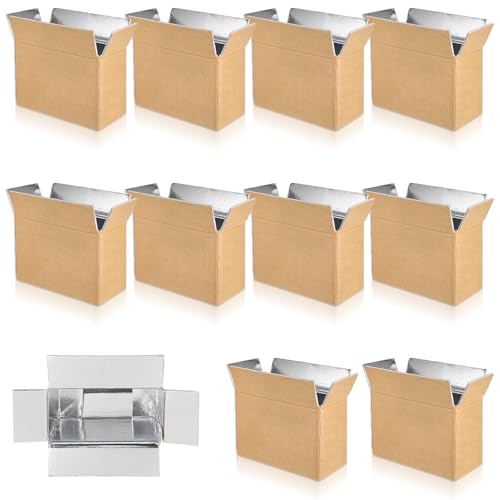
Brand: AojSup
Features: 10 pieces with internal thermal insulation; reflective metallized film lining; external dimensions around 8.66 x 4.52 x 6.3 inches.
Who this is best for: High-volume shipping operations that need many consistent units. Why selected: Bulk pack supports larger batching needs and reduces reordering frequency. Caution: Box size is compact, so plan item dimensions accordingly to maintain temperature control.
Buying Guide
What to consider before choosing shipping containers for temperature control:
- Container size and internal volume: Ensure your items fit with enough clearance for insulation and liners.
- Insulation type: Foil liner, foam, and metallized films offer different thermal performance; choose based on transit time and temperature range.
- Packaging contents: Some kits include liners or foam; others require separate ice packs or cold packs.
- Durability: Consider outer carton material and cushioning for bumps during shipping.
- Perishables vs. non-perishables: Perishables may need stricter insulation and faster transit; non-perishables can tolerate longer handling windows.
- Quantity: Packs with multiple boxes reduce reorders, but ensure you have a scalable plan for seasonal spikes.
- Compliance and cleanliness: Choose materials that meet food-contact guidelines and are easy to sanitize.
Practical comparison questions
- Which option is best for hot foods over short rides? Look for boxes with reflective liners and sturdy outer cartons.
- Which is better for cold shipments that require ice packs? Prefer systems that accommodate cold packs and insulated liners.
- What if I ship in bulk? A multi-pack kit with higher unit counts offers better value and consistency.
- Is environmental impact important? Eco-friendly foam and recyclable materials are preferable where available.
FAQ
- What is the primary benefit of insulated shipping boxes? They help maintain temperature to protect food or perishable items during transit.
- Do I need to buy ice packs separately? Some kits include liners but not ice packs; plan accordingly.
- Are these boxes reusable? Some designs support reuse with careful handling; check material durability and guidelines.
- Can these be used for non-food items? Yes, any temperature-sensitive items can benefit from insulation and reflective liners.
- Which packaging is best for small businesses? Packs offering multiple units and a balance of insulation and protection typically suit most small operators.
- Are there any safety considerations? Ensure edges are not sharp and that containers are properly sealed to prevent leaks.