Best Rectangular Duct Booster Fans for Quiet, Even Temp Control
Answer: Rectangular duct booster fans are ideal for homeowners who want to improve airflow to individual rooms without rebuilding ductwork. The top picks below are best for small-to-medium rooms, retrofit projects, and zones where you notice hot or cold spots. This guide compares five models based on compatibility with rectangular ducts, airflow, ease of installation, and noise levels to help you choose the right booster fan for your space.
| Product | Best For | Key Benefit |
|---|---|---|
| Tjernlund DB-2 Duct Booster | Small to mid-sized rooms | Compact, supports rectangular ducts, up to 275 CFM |
| Tjernlund DB-2F Duct Booster | Rectangular duct runs | External motor, paddlewheel pull for trunk lines |
| Howeall Super Quiet Register Booster | Smart control lovers | Dual thermostat and Wi‑Fi app control |
| VIVOHOME Register Booster Fan | Quiet operation with remote | EC motor, up to 120 CFM, 10-speed remote |
| BIOWIND Quiet Register Booster Fan | Balanced rooms | Quiet operation with smart sensor and remote |
Note: The table highlights suitability for rectangular ducts and general use cases. Always measure your vent opening and confirm duct dimensions before purchasing.
Tjernlund DB-2 Duct Booster
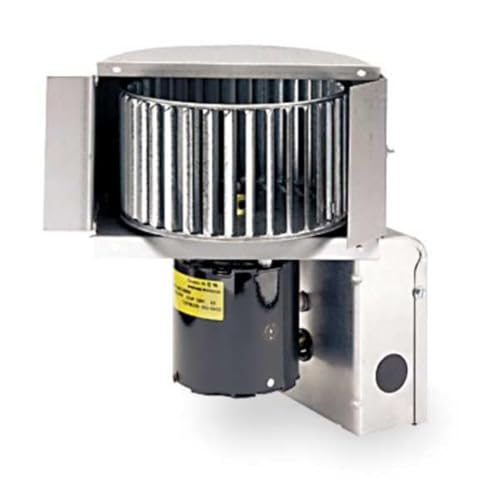
Best for: Small to mid-sized rooms where a balanced airflow is needed without major duct changes. This model fits 5 to 8 inch round ducts and can be installed in shallow rectangular ducts as little as 3.25 inches. It is rated to 200F, making it a practical upgrade for typical home heating and cooling zones.
Why chosen: The DB-2 offers straightforward installation in rectangular or round ducts and provides reliable boost in airflow for zone comfort. Its compact design helps minimize space requirements in closets or utility rooms.
Caution: Performance depends on existing duct layout; in very long or complex runs, consider additional booster units or a higher-CFM option.
Tjernlund DB-2F Duct Booster

Best for: Rectangular duct runs where air needs a targeted boost to reach individual rooms. The DB-2F uses a paddlewheel design and keeps the motor outside the airstream, which can simplify servicing in some installations.
Why chosen: This model is specifically described for rectangular ducting and provides a focused solution for rooms that struggle with airflow, especially in warmer or cooler seasons where occupant comfort matters most.
Caution: The unit is designed for branch ducts serving single rooms, not the main supply trunk; avoid using it as the primary duct booster in large homes.
Howeall Super Quiet Register Booster

Best for: Homes needing precise airflow and smart control to reduce temperature disparities without manual adjustments. It supports 4″ x 10″ register openings and comes with dual control options.
Why chosen: Its smart features let the booster respond to temperature and occupancy patterns, potentially saving energy. The combination of button and app control offers flexible operation for different users.
Caution: Smart features depend on compatibility with your home network; basic installation is still possible with manual control.
VIVOHOME Register Booster Fan

Best for: Quiet operation in rooms that require steady air movement with remote control. It fits 4″ x 10″ openings and offers a 10-speed remote and thermostat-controlled operation.
Why chosen: The EC motor delivers higher efficiency and the wide speed range helps tailor airflow to seasonal needs. The remote adds convenience for multi-room setups or rooms with frequent occupancy changes.
Caution: Ensure vent opening dimensions match the 4″ x 10″ standard; install in a location where the remote signal won’t be obstructed by furniture or walls.
BIOWIND Quiet Register Booster Fan

Best for: Balanced rooms with quiet operation and smart control. Fits 6″ x 10″ register holes and includes temperature sensing with remote control.
Why chosen: The 2026 stability upgrade and smart temperature sensor help maintain even temperatures with reduced noise, making it suitable for bedrooms or home offices where quiet performance matters.
Caution: Check that your vent opening aligns with the 6″ x 10″ sizing; some installations may require adapter or trim customization for a flush look.
Buying Guide: Rectangular Duct Booster Fans
- Vent size compatibility: Measure the width and height of the rectangular duct or the register opening to ensure the booster matches standard sizes (commonly 4″ x 10″ or 6″ x 10″).
- Airflow needs: Determine the desired CFM range for the target room. Higher CFM boosts more air but may increase noise; balance with desired quiet operation.
- Control and smart features: Decide if you prefer manual controls, a Wi‑Fi/App, or automatic thermostat-based operation for energy savings.
- Installation considerations: Consider whether the motor should be inside or outside the airstream, and whether the unit suits a shallow or deep duct housing.
- Noise and comfort: Look for units with quiet motors or EC (electronically commutated) motors for lower noise at typical room speeds.
- Energy efficiency: Prioritize models with efficient motors and automatic speed adjustments to reduce running costs over time.
- Placement strategy: For multi-room homes, plan a layout that minimizes long duct runs and avoids obstructed routes that reduce performance.
Frequently Asked Questions
- What is a rectangular duct booster fan? A device added to a rectangular duct or register that increases airflow to a specific room or zone, improving heating or cooling distribution.
- Which size should I choose for a 4″ x 10″ vent? Look for boosters labeled as 4″ x 10″ or compatible adapters; ensure the unit fits the register opening.
- Are booster fans energy-efficient? Many models use EC motors and smart controls to adjust speed automatically, reducing energy use when cooling or heating isn’t needed.
- Can I install these myself? Most are designed for homeowner installation, but verify duct compatibility, electrical wiring, and safety guidelines before proceeding.
- Will a booster fan fix an uneven HVAC system? It can help balance airflow to individual rooms, but severe imbalances may require duct redesign or additional zones.
- Do booster fans require professional wiring? Some models include simple plug-and-play power cords, while others may require direct wiring to a dedicated circuit.