Best Pre Insulated Metal Ductwork Solutions for Efficient HVAC Systems
Answering buyers seeking durable, energy-efficient duct components, this guide highlights five top pre insulated metal duct options. Each choice is explained for specific needs—residential upgrades, professional installations, or tight spaces. Use these summaries to compare installation practicality, insulation performance, and long-term reliability when choosing duct components for heating and cooling systems.
Summary of selected products
| Product | Best For | Why Selected |
|---|---|---|
| F&L Johns Manville Duct Insulation Panels | Rigid ductboard installations requiring high R-values | High thermal performance with moisture-resistant facing and solid density for rigidity. |
| Air 360 Aluminum Foil Tape | Sealing duct seams and joints | Heavy-duty, heat-resistant, moisture-tight aluminum foil tape for durable seals. |
| VEVOR 6 Inch Insulated Flexible Duct (R-6) | Flexible duct runs with good insulation | Three-layer construction with fiberglass insulation for energy efficiency and quiet operation. |
| HVAC Insulated Flex Ductwork – 6″ x 25 Ft (R6) | Residential supply and return runs | Durable aluminum core with thick insulation and outer jacket for efficiency. |
| SmartSHIELD 5mm Foam Core Reflective Insulation | Radiant heat barrier and vapor control | High reflectivity, vapor barrier, and sound-damping properties for radiant heat control. |
F&L Johns Manville Duct Insulation Panels

Best For: Rigid ductboard projects and installers needing solid panel insulation with moisture resistance. These panels offer an approximate R-value of 6.5, which helps reduce heat loss in duct systems. The 3 lb density fiberglass construction provides lasting strength for rigid applications, and the Foil Scrim Kraft Facing (FSK) adds protection against moisture and code compliance concerns.
Why selected: The combination of high thermal performance, durable construction, and moisture-friendly facing makes these panels a solid option for ductwork that benefits from rigid, pre-insulated panels rather than flexible runs. Good choice for new builds and retrofit projects where rigidity improves fit and sealing.
Caution: Panels are best used where rigid installation is feasible; flexible routes may require alternative products or adapters.
Air 360 Aluminum Foil Tape 2″ x 210 ft

Best For: Sealing seams, joints, and connections on HVAC ductwork, foil insulation, and dryer vents. This high-tack, heat-resistant tape provides a moisture- and UV-resistant seal suitable for indoor and outdoor use, helping prevent air leakage and condensation issues.
Why selected: Its thick aluminum foil construction plus strong adhesive makes it a reliable, long-lasting sealing option for metal ducts, reducing leakage and improving overall system efficiency.
Caution: While highly durable, surface prep and alignment are important for each seam to ensure maximum adhesive performance over time.
VEVOR 6 Inch Insulated Flexible Duct (R-6.0)

Best For: Flexible duct runs in residential or light commercial HVAC where you need a balance of insulation and flexibility. It measures 6 inches in diameter and 25 feet long, with a three-layer design and fiberglass insulation to minimize heat loss and reduce noise.
Why selected: The R-6 rating offers solid thermal resistance for flexible runs, and the combination of durable outer foil and fiberglass layer helps extend life in standard installations.
Caution: Flexible ducts can be prone to kinking or crushed sections; ensure proper routing to maintain airflow and insulation performance.
HVAC Insulated Flex Ductwork – 6″ x 25 Ft (R6)
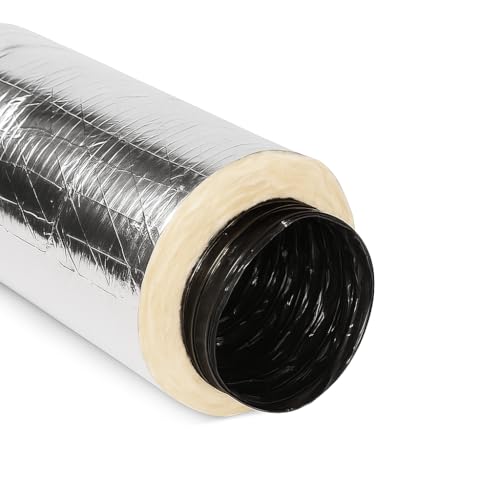
Best For: Residential heating and cooling supply and return runs where an easy-to-install flexible option is preferred. This duct features a durable aluminum inner core and a thick insulation layer capped by an outer jacket for overall efficiency.
Why selected: It provides a pragmatic combination of insulation value, ease of installation, and compatibility with standard residential HVAC layouts. Choose this if you want a straightforward flex duct with reliable R6 performance.
Caution: Avoid sharp bends or compression near connections to prevent airflow restrictions and insulation damage.
SmartSHIELD Foam Core Reflective Insulation

Best For: Radiant heat control and vapor barrier in duct runs where radiant energy is a primary concern. This roll is a 24-inch by 25-foot foam core reflective insulation with high reflectivity, offering significant radiant barrier properties.
Why selected: The extreme radiant reflectivity helps reduce radiant heat transfer, contributing to overall HVAC efficiency in spaces with high temperature fluctuations. The vapor barrier feature adds protection against condensation buildup.
Caution: This product focuses on radiant control; for full duct insulation, combine with appropriate insulating layers that address total conductance and airflow.
Buying Guide
Key purchase considerations for pre insulated metal ductwork:
- Insulation performance: Look for R-values suitable for your climate. Higher R-value reduces heat transfer and energy loss.
- Application type: Choose rigid panels for ductboard installations and flexible ducts for easier routing through tight spaces.
- Moisture resistance: Foil facing or moisture barriers help prevent mold and degradation in damp environments.
- Durability and handling: Density and material construction affect long-term rigidity and resistance to damage during installation.
- Seal integrity: Quality foil tape and proper sealing methods minimize air leaks and improve system efficiency.
- Compatibility: Ensure duct size, fittings, and connection types align with existing HVAC components and local codes.
- Installation environment: Consider indoor vs. outdoor exposure, humidity, and temperature ranges when selecting materials.
FAQ
- What is the difference between rigid duct insulation panels and flexible insulated ducting?
– Rigid panels are best when a solid, stable ductboard path is needed, offering higher rigidity and uniform insulation, while flexible ducting is easier to route around obstacles and through tight spaces. - How do I seal insulated duct joints effectively?
– Use high-quality aluminum foil tape designed for HVAC, plus proper joint preparation and, if needed, mastic sealants for extra sealing strength. - Is a higher R-value always better for ducts?
– Higher R-values reduce heat loss but may add stiffness or cost; select based on climate, duct routing, and installation constraints. - Can reflective insulation be used alone for duct insulation?
– Reflective insulation improves radiant heat control but may need additional insulation to address conductive losses in some installations. - What should I avoid when installing insulated ducts?
– Avoid sharp bends, compression, and improper support that can damage insulation and reduce airflow. - Are there moisture concerns with duct insulation?
– Moisture-resistant facings and vapor barriers reduce condensation risks, especially in humid spaces.