Best P Trap for AC Drain: Top 5 Condensate Traps to Protect Your HVAC System
Answer: If you need a reliable condensate trap for an air conditioner drain line, these five options provide dependable water sealing, easy maintenance, and clear inspection features. Best for residential ACs, commercial HVAC lines, and installations requiring simple cleaning or added overflow protection. The list focuses on 3/4″ PVC traps with clear visibility, optional cleaning brushes, and compatibility with standard drain fittings. Use this guide to compare design, maintenance needs, and suitability for different HVAC setups.
| Product | Best For | Key Benefit |
|---|---|---|
| Gulfmew 3/4 Inch Standard Condensate Trap | Home AC systems seeking reliable drainage | Gradient design with water-filled U to prevent backflow |
| Gulfmew 3/4 Inch Condensate Trap + SS2 Float Switch Kit | Prevention of overflow in sensitive spaces | Integrated float switch for automatic shutdown on blockage |
| WESUA 3/4 Clear PVC U Trap | Visible inspection and easy cleaning | Transparent design with cleaning brush included |
| RectorSeal EZ Trap 3/4″ | Budget-friendly upkeep with easy access | Watertight caps and transparent trap for simple maintenance |
| Oatey PVC Condensate P-Trap | Standard condensate drain installations | Simple, reliable P-trap design |
Gulfmew 3/4 Inch Standard Condensate Trap

The Gulfmew standard condensate trap uses a gradient design to drain condensate effectively across various HVAC systems. The U-shaped water-filled pipe prevents backflow, ensuring condensate exits the line rather than re-entering the air conditioner. This helps maintain indoor air quality by stopping potential dirty air from being drawn back into the system. A transparent PVC U-shaped section with openable blue caps allows quick visual checks for sediment and easy cleaning.
Best for: Homeowners and small business systems that require straightforward drainage with visible maintenance access. Choose this if you want a simple, reliable trap with easy inspection and no extra components.
Caution: The trap design relies on proper water seal height; ensure the installed orientation maintains a full U-water column for effective backflow prevention.
Gulfmew 3/4 Inch Standard Condensate Trap + SS2 Float Switch Kit

This kit combines the standard condensate trap with the SS2 low-voltage float switch. The float switch detects condensate overflow and triggers a shutdown to protect floors and ceilings from water damage. The system uses a magnetic reed switch and can connect to thermostat wires when a blockage occurs. Best for: installations where a proactive overflow safety feature is required, such as basements, equipment closets, or areas with limited drip pan clearance.
Limitation: The added switch requires wiring and compatibility with your control circuit; verify wiring before installation and consult a professional if unsure.
WESUA 3/4 Clear PVC U Trap

The WESUA trap features a transparent 3/4″ PVC U-shaped design, making it easy to inspect for clogs or sediment buildup. It includes a 16″ cleaning brush to facilitate maintenance. This trap is best for: users who want straightforward visual inspection and quick cleaning as part of routine HVAC maintenance. The clear body helps detect blockages without disassembly.
Limitation: Transparency is convenient, but UV exposure or long-term weathering can affect plastics in some environments; ensure indoor installation away from direct sunlight or extreme heat where applicable.
RectorSeal EZ Trap 83113
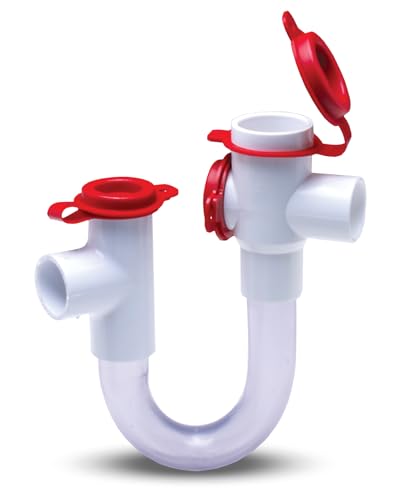
RectorSeal EZ Trap offers easy maintenance with watertight red caps for quick access to the trap and drain pan outlet. The trap is designed for applications where easier maintenance and code compliance are priorities. It features a transparent body to aid inspection and a flexible cleaning brush mounts for convenient cleaning. Best for: budget-conscious installers who want reliable maintenance capabilities and clear visibility without extra components.
Caution: Thinner-walled versions are intended for light-duty use; ensure the trap is suitable for your system’s duty cycle and condensate load.
PROFLO PF42860 3/4″ PVC Condensate P Trap

The PROFLO PF42860 P Trap is a standard 3/4″ PVC condensate trap designed for straightforward condensate line installations. Best for: installations requiring a simple P-trap solution with dependable drainage and minimal maintenance. Limitation: This option emphasizes basic functionality; it may lack integrated cleaning aids or overflow-safety features found in higher-end kits.
Buying Guide
- Drain size compatibility: Most 3/4″ traps fit common residential HVAC drain lines; verify your pipe diameter before purchasing.
- Backflow prevention: Look for traps with water-filled U sections and clear visibility to monitor sediment and water seal height.
- Maintenance features: Transparent traps, flushing ports, and included cleaning brushes simplify routine upkeep and reduce service calls.
- Overflow protection: Consider a float switch kit if the installation is in an area prone to clogging or limited drainage clearance.
- Material and durability: PVC is common and cost-effective, while thicker walls or enhanced fittings may be better for high-traffic or commercial settings.
- Ease of inspection: Transparent or clear bodies allow quick checks for buildup and clog accumulation.
- Code compliance: Some installations require specific trap types or accessories; consult local codes or a professional if in doubt.
FAQ
- What is a condensate trap used for? It prevents backflow and ensures condensate drains properly from an air conditioner or HVAC system.
- Why choose a trap with a float switch? It provides automatic shutdown if the condensate line clogs or overflows, preventing water damage.
- Are clear traps better than opaque ones? Clear traps allow quick visual inspection for sediment and blockages, facilitating maintenance.
- Do I need a P-trap or a U-trap? P-traps and U-traps serve similar purposes; choose based on install space, fittings, and code requirements.
- Can I install these traps myself? Basic installation is possible for many units, but complicated or code-sensitive setups may require a professional.
- How often should I clean a condensate trap? Inspect during routine HVAC maintenance and clean whenever you notice slow drainage or visible buildup.