Best Hybrid Solar Mini Split Solutions for Year‑Round Comfort
If you’re looking for energy‑efficient cooling and heating with solar compatibility or hybrid features, a hybrid solar mini split system can offer low operating costs and flexible installation. This guide highlights five strong options and explains who each one is best for, so you can pick the right mini split for your home or small business. Top buyers include homeowners wanting off‑grid capability, multi‑room cooling needs, and energy‑conscious upgrades for existing spaces.
Overview of our top picks at a glance. The table below compares size, cooling/heating capacity, and standout benefits to help you decide which unit fits your space and usage pattern.
| Product | BTU (Cooling) | Best For | Notable Benefit |
|---|---|---|---|
| Albott 12,000 BTU SEER2 18 | 12,000 | Small to mid‑sized homes | Self‑cleaning, app control |
| Photon AC 18,000 BTU Solar Hybrid | 18,000 | Off‑grid or solar‑ready homes | True solar powered daytime cooling |
| Temprium 12,000 BTU 22 SEER2 | 12,000 | Quiet spaces, bedrooms | Very low noise, strong energy efficiency |
| EXNOS 12,000 BTU 19 SEER2 | 12,000 | Budget‑friendly, eco mode users | High efficiency with ECO mode |
| Albott 20,000 BTU 25 SEER2 | 20,000 | Medium to large homes | Two zones, WiFi enabled |
Albott 12,000 BTU Inverter Mini Split — SEER2 18

This 12,000 BTU ductless unit provides cooling, heating, dehumidifying, and fan modes with a broad 61°F–90°F comfort range. An energy‑efficient inverter heat pump drives SEER2 18 performance, helping lower electricity costs without sacrificing comfort. Suitable for spaces up to 750 sq. ft., it supports year‑round use in extreme temperatures from 5°F to 122°F. Best for smaller homes or renovations where a single cooling/heating zone is needed.
Who it’s best for: homeowners seeking a trustworthy mid‑size option with app control and self‑cleaning features. Why selected: strong energy efficiency, reliable all‑season performance, and easy installation. Caution: while versatile, it’s most cost‑effective in spaces under 750 sq. ft.; larger rooms may benefit from a higher BTU or multiple units.
Photon AC 18,000 BTU Solar Hybrid Mini Split
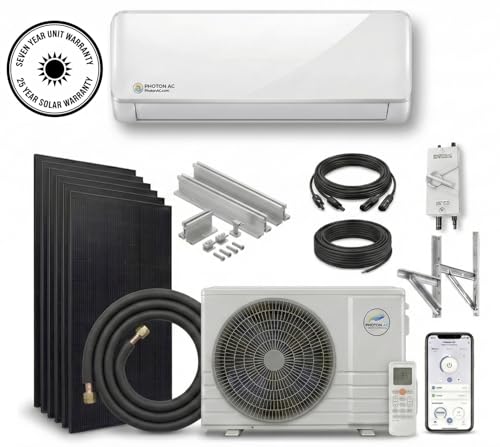
This 18,000 BTU solar hybrid mini split kit emphasizes true off‑grid daytime cooling. It prioritizes DC solar power but also supports a standard 220V–240V connection for uninterrupted comfort. The complete kit includes an indoor unit, a pre‑charged eco‑friendly R‑32 outdoor condenser, solar racking, and a plug‑and‑play wiring harness. Best for: solar enthusiasts or remote homes where daytime cooling should run on solar energy. Why selected: off‑grid capability and a robust solar installation package. Caution: long‑term warranty details are substantial, but installation requires roof or mounting area planning that matches the kit’s points.
Temprium 12,000 BTU 22 SEER2 Mini Split

Temprium’s 12,000 BTU system pairs a 22 SEER2 rating with fast year‑round comfort. It uses an inverter DC compressor that adapts to demand, minimizing energy use while delivering cooling up to 122°F and heating down to 5°F. It’s a quiet choice with sleep mode features, suitable for bedrooms, home offices, or sunrooms up to 750 sq. ft. Best for: users prioritizing energy efficiency and quiet operation. Why selected: high SEER2 with strong all‑season performance. Caution: performance can vary in extremely hot or cold extreme climates; ensure proper room sizing for best results.
EXNOS 12,000 BTU Mini Split — 19 SEER2

EXNOS offers 12,000 BTU cooling and 12,500 BTU heating for spaces up to 750 sq. ft. with a 19 SEER2 rating and Eco mode to curb energy use. This model emphasizes year‑round comfort with quiet operation and a straightforward installation. Best for: budget‑conscious buyers seeking practical energy savings. Why selected: solid efficiency with a practical eco mode, suitable for smaller living spaces. Caution: may lag behind higher‑end units in ultra‑hot days; consider larger capacity if you frequently exceed 700 sq. ft.
Albott 20,000 BTU Dual Zone Mini Split

This 20,000 BTU system supports two zones with a 25 SEER2 efficiency rating and inverter control. It includes pre‑charged condenser, a 16.4 ft line set, and WiFi for remote operation. Best for: medium to large homes needing independent temperature control across two spaces. Why selected: high efficiency across two zones, adaptable for multi‑room layouts. Caution: higher upfront cost and installation complexity due to dual indoor units and longer line set.
Albott 24,000 BTU Mini Split — 18 SEER2
This 24,000 BTU system provides 18 SEER2 efficiency with self‑cleaning, remote, and app control. It’s suited for larger homes up to 1,550 sq. ft. and can operate in a wide temperature range from 5°F to 122°F. Best for: larger living spaces or additions where robust cooling is needed. Why selected: strong coverage and modern controls. Caution: 208‑230V power supply is required, which may complicate some installations.
Buying Guide: How To Choose A Hybrid Solar Mini Split
What to consider for size and zone needs
Air conditioning capacity measured in BTU should align with your space size and insulation. For multi‑room homes, consider a multi‑zone model with separate indoor units, so you can tailor comfort by room. If you anticipate off‑grid use or daytime solar cooling, prioritize solar compatibility and inverter efficiency.
Energy efficiency and SEER2 rating
Higher SEER2 ratings indicate lower operating costs over time. Look for units with 18 SEER2 or higher for better long‑term savings, especially in homes with extended cooling seasons. Eco mode can further reduce usage during milder days.
Hybrid and solar features
Hybrid or solar kits are beneficial for off‑grid living or daytime cooling via solar power. Check whether the system includes a complete installation kit, solar panels, mounting hardware, and compatibility with existing electrical infrastructure.
Noise and comfort features
Consider sleep modes, quiet operation levels, and adjustable fan speeds when choosing a unit for bedrooms or quiet spaces. Lower decibel ratings contribute to comfortable nighttime use.
Installation considerations
Evaluate whether your space supports the required line sets, outdoor condenser placement, and electrical requirements. Some models are pre‑charged and easier to install, while others may need professional help for refrigerant charging and wiring.
Smart features and connectivity
WiFi or app control allows scheduling, remote adjustments, and integration with smart home ecosystems. Alexa or voice control can add convenience for hands‑free operation.
Frequently Asked Questions
- What is a hybrid solar mini split? A mini split system that combines traditional heat pump cooling with solar or hybrid power options to reduce grid energy use.
- Do these systems support off‑grid operation? Some models come with solar panels and day‑time DC power capability, while others require grid connection for full operation.
- How many zones should I choose? For multiple rooms, a single‑zone unit is best for targeted spaces, while a dual/three‑zone unit covers multiple areas with independent control.
- Is a higher SEER2 always better? Yes for long‑term energy savings, especially in hot climates, but upfront costs and installation complexity should be weighed.
- What maintenance is required? Regular filter cleaning and occasional professional service for refrigerant checks or inverter components help maintain efficiency.
- Can I install these myself? Some models are designed for simpler installation, but many require professional HVAC installation, especially with higher BTU ratings and 208‑230V power.