Best Generator for Deep Freezer: Reliable Power Options for Frozen Essentials
Answering the question, the best generators for keeping a deep freezer running during outages provide stable, clean power, enough running watts to cover a freezer plus essential peripherals, and fuel efficiency for longer outages. This guide compares five generators suitable for home backup and outdoor use, highlighting who they’re best for, and where to choose one over another. The top picks vary from compact, quiet inverter models to higher-watt open-frame units that can run multiple appliances. Below is a quick summary to help you decide quickly.
| Product | Best For | Key Benefit |
|---|---|---|
| AMERISUN 4500W | Home backup with CO alert | Safe indoor-adjacent operation |
| Oxseryn 4400W Open Frame | RV and outdoor use | Long runtime with ECO mode |
| Mutaomay 4400W | Everyday home backup | Low fuel costs with ECO mode |
| WEN 4750W Dual Fuel | Versatile fuel options | Dual fuel flexibility and 240V option |
| ERAYAK 2400W Inverter | Compact camping or backups | Quiet operation for small loads |
The following sections detail five carefully chosen models. Each entry explains who benefits most, what makes it strong, and a practical caution to consider before purchase.
AMERISUN 4500W Open Frame Inverter Generator

- Power Output: 4500 peak watts and 3800 running watts—suitable for refrigerators, freezers, sump pumps, and RV appliances.
- CO Alert: Built-in carbon monoxide detector with automatic shutdown for safety in indoor-adjacent outdoor operation.
- Parallel Ready: Optional parallel kit to increase output for larger RV setups or multiple appliances.
Best for: households seeking strong backup power with enhanced safety features. Choose this if you want CO protection and the option to add more power with a parallel kit. Limitation: Parallel operation requires the optional kit and compatible partners.
Oxseryn Power Equipment 4400W Inverter Generator
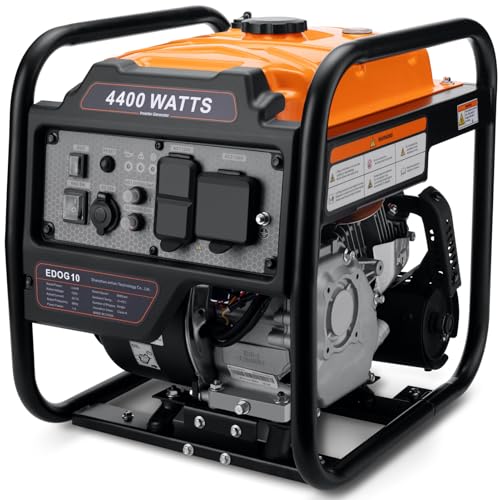
- Powerful Output: 4400 peak watts and 3400 running watts, with multiple outlets including 2x120V, 1x12V DC, and RV port.
- Runtime: Up to 14 hours at 25% load with ECO mode; 2-gallon tank with fuel gauge.
- RV Ready: Meets RV usage needs and emergency home backup scenarios.
Best for: campers and homeowners who need reliable, long-running power with flexible outlets. Choose this if you value long ECO-mode runtime and a clear fuel gauge. Caution: Open-frame design requires attention to ventilation and placing away from enclosed spaces.
Mutaomay 4400-Watt Open Frame Inverter

- Reliable Backup Power: 4400 peak watts and 3400 running watts keeps refrigerators, freezers, lights, and routers running.
- Run Time and Fuel Costs: 14 hours at 25% load with an ECO mode; 2-gallon fuel tank keeps costs under control.
- Outlets: 2x120V, 1xTT-30R RV outlet, 1x12V DC; good for RVs and home essentials.
Best for: homeowners needing consistent daily backup with reasonable fuel usage. Choose this if you want clear, practical run-time and multiple outlets. Caution: As with many open-frame models, proper ventilation and outdoor placement are essential.
WEN 4,750-Watt Dual Fuel Portable Generator

- Fuel Flexibility: Switch between gasoline (4750 surge, 3800 running) and propane (4350 surge, 3500 running).
- Voltage Versatility: 120V and 240V output enable transfer switches and broader backup options.
- Electric Start: Key-start for easy startup of a 224cc engine.
Best for: users needing dual-fuel versatility and 240V capability, useful for larger backup loads. Choose this if you want options beyond gasoline and the ability to run a wide range of home equipment. Limitation: Dual-fuel operation can add complexity and maintenance considerations.
Oxseryn 4400-Watts Inverter Generator (Second Oxseryn Pick)
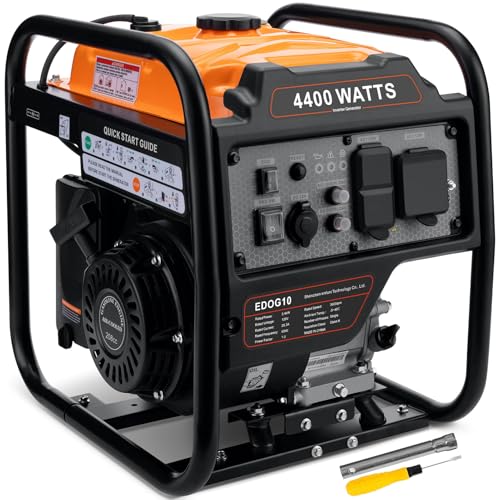
- Powerful Output: 4400 peak watts and 3400 running watts; 2x120V, 1x30A RV, 1x12V DC.
- Runtime and Safety: 14 hours at 25% load; EPA-compliant; ECO mode for efficiency.
- RV Ready: 30A port supports RV equipment; multiple outlets for home use.
Best for: those who want a compact, RV-friendly power source with a mix of outlets and EPA compliance. Choose this if you need strong inverter performance with practical RV compatibility. Caution: Similar to other open-frame units, ensure adequate ventilation and outdoor placement.
Buying Guide: Key Considerations For Choosing A Deep Freezer Backup Generator
What wattage do you need to run a deep freezer and essentials during outages? For most residential freezers, you’ll want a unit that can deliver at least 1500–2000 running watts for a short period, plus surge capacity to handle the compressor start-up. If you also need to power lights, Wi-Fi routers, and a refrigerator, consider models in the 3000–4500 running watts range with at least 4000–5000 surge watts.
Inverter vs Open Frame: Inverter generators provide cleaner power, are quieter, and are better for sensitive electronics, making them ideal for a deep freezer plus small devices. Open-frame units generally offer higher wattage and are better for home backup or RV use, but are louder and require more ventilation.
Fuel options: Gasoline is common, but dual-fuel (gas/propane) models add flexibility during supply disruptions. CO safety features are important when operating near living spaces or in semi-enclosed areas.
Runtime and fuel capacity: Look for models with ECO or smart mode that extend run time by adjusting engine speed. A gauge for fuel level helps plan refueling during outages.
Portability and setup: If you’ll move the unit between indoors and outdoors, consider weight, wheels, and handle design. Always follow manufacturer placement guidelines to maintain safe operation.
FAQ: Quick Answers For Deep Freezer Backup Generators
- What size generator do I need for a deep freezer?
Most deep freezers require 1000–1500 running watts for compressor start-up. If you power additional items, a generator in the 3000–4500 running watts range is typically sufficient.
- Is an inverter generator better for a freezer than a standard generator?
Yes, inverter generators deliver cleaner power with lower total harmonic distortion, which is gentler on sensitive electronics and ideal for a freezer with other electronics.
- Should I choose dual-fuel or single-fuel?
Dual-fuel offers flexibility during fuel shortages, but may add cost and maintenance considerations. For many outages, a reliable single-fuel option is sufficient.
- What safety features matter most?
CO detection, automatic shutdown, and overload protection are important for safe operation around living spaces and during extended outages.
- Can I parallel two generators?
Some models support parallel operation with a kit. This can increase total available power for larger loads, but ensure compatibility and proper setup.
- How loud will these generators be?
Quiet inverter models hover around 50–60 dBA at a distance, while open-frame units can be louder. Consider location and noise restrictions in residential areas.